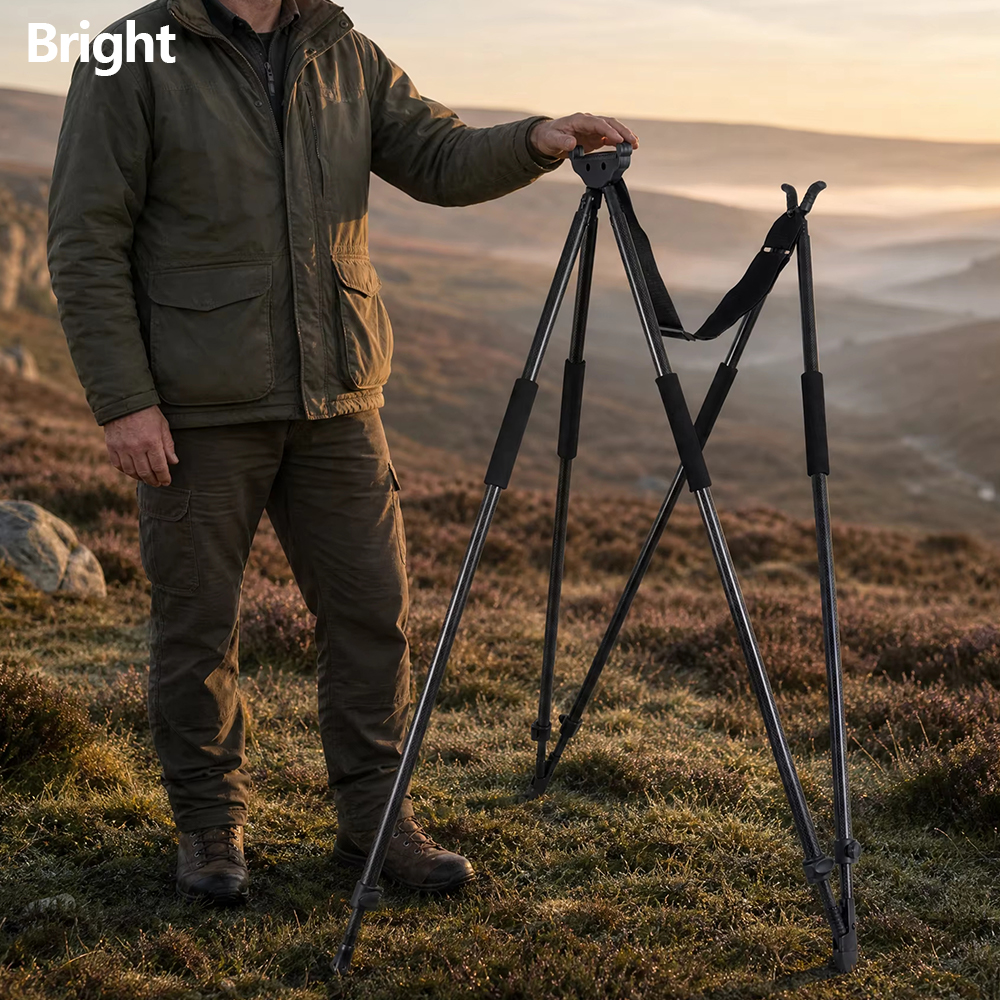
 A shooting stick looks simple until it fails in the field. For hunting brands, importers, and distributors, the wrong factory choice can mean slipping locks, bent tubes, delayed shipments, and defect rates climbing above the 3% threshold that quickly erodes profit. Choosing a dependable manufacturer requires more than comparing quotes on a sourcing platform; it demands a structured review of materials, load capacity, samples, inspections, and communication behavior. This guide highlights the most important warning signs to watch for before placing an order, helping buyers separate normal supplier friction from issues that can damage product quality, customer trust, and long-term margins.
Key Red Flags When Choosing a Shooting Stick Manufacturer
Having spent years in international procurement, I have learned that finding a reliable shooting stick manufacturer requires strict diligence. You cannot simply select the first factory offering a cheap quote on a B2B platform. When dealing with hunting gear that must perform in freezing rain or rough terrain, a poor factory choice can easily cause defect rates to spike over 3%—an absolute margin-killer in this industry.
To protect your brand and bottom line, you must know how to spot warning signs early. Let’s break down the most critical red flags to look for before ever wiring a deposit.
Normal Supplier Friction vs Serious Warning Signs
First, it is important to separate normal operational friction from genuine supplier red flags. A factory taking 10 to 15 days to turn around a custom sample is completely normal, just as imperfect English in an email is acceptable.
However, if a supplier flat-out refuses a third-party inspection or suddenly changes bank account details on a proforma invoice without warning, those are serious red flags. Legitimate factories expect you to protect your investment and have established protocols for overseas buyers.
Critical Quality Issues: Stability, Locks, and Materials
When evaluating the product, pay close attention to structural integrity. Too many cheap bipods collapse because the factory cut corners on the locking mechanisms. Whether using cam locks or twist locks, they must hold tight under pressure.
A quality shooting stick should comfortably support at least 15 to 20 kg of downward pressure without the legs slipping. If the factory cannot guarantee that load capacity, their materials or lock designs are fundamentally flawed.
Quick Comparison: Good Signs vs Red Flags
To simplify the evaluation process, keep a checklist of what constitutes a green light versus a glaring red flag during initial conversations. Here is a quick breakdown:
| Evaluation Area | Green Light (Good Sign) | Red Flag (Warning Sign) |
|---|---|---|
| Communication | Answers technical questions directly within 24-48 hours. | Dodges questions about materials; gives vague ‘yes’ to everything. |
| Transparency | Welcomes third-party audits and provides factory address. | Refuses outside inspectors; claims their ‘internal QC’ is enough. |
| Prototyping | Charges a standard, refundable sample fee ($50-$150). | Demands massive upfront fees or refuses to make a custom sample. |
Red Flag 1: Vague Product Specifications
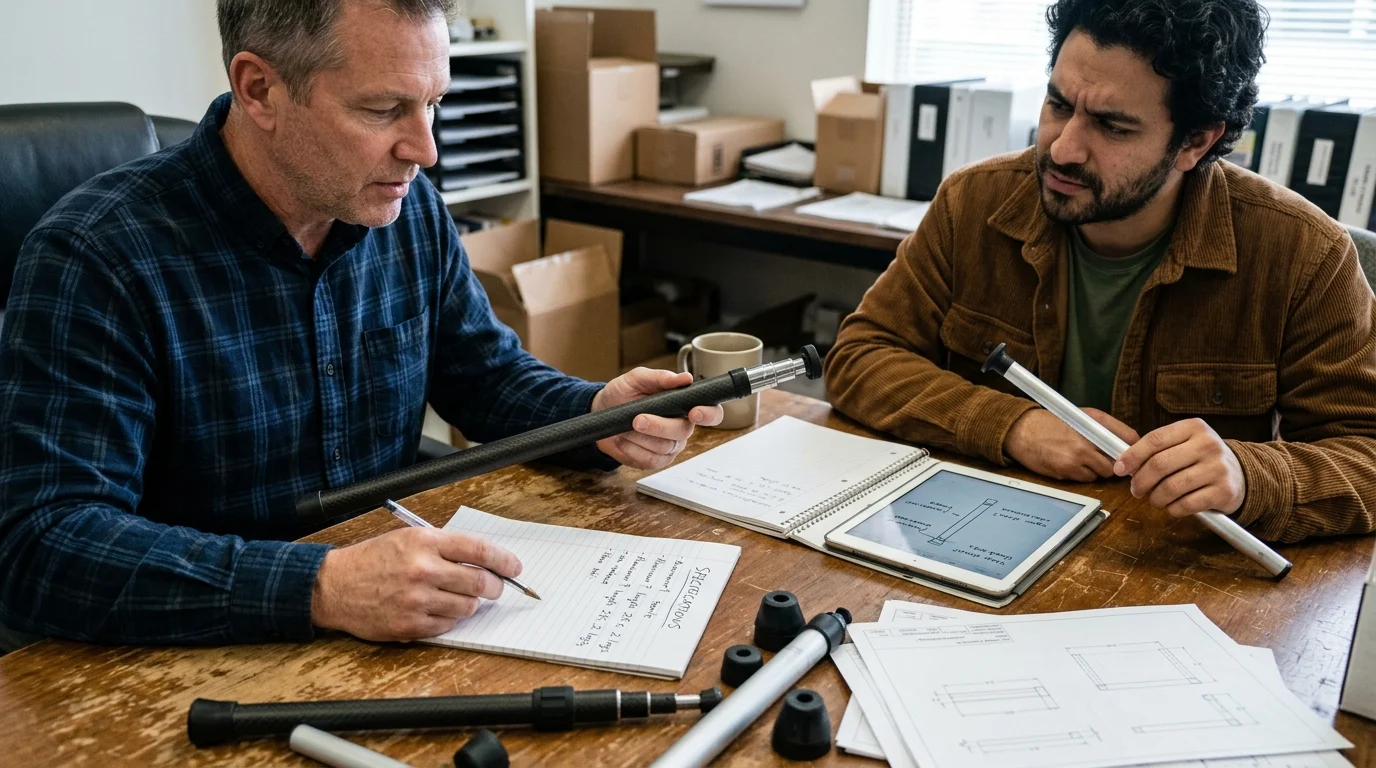
Opening a quotation sheet to find generic descriptions is a major warning sign. If a supplier simply lists “aluminum tube” or “plastic handle” without further detail, push back immediately. You cannot build a durable product on vague specifications.
Without exact specifications, the factory has a loophole to quietly swap in cheaper materials during mass production. You need concrete numbers on paper before moving forward.
Missing Details on Tube Material and Wall Thickness
When evaluating the legs of the stick, if the supplier specifies “aluminum,” you must know whether it is standard 6061 or aircraft-grade 7075 aluminum. The yield strength difference between the two is massive.
More importantly, demand the exact wall thickness. For a rugged hunting environment, the aluminum tube wall thickness should generally be at least 1.0mm to 1.2mm. Factories may try to sneak in 0.8mm tubes to save a few cents, but those will bend the second they take a hard knock against a tree or rock.
Unclear Tripod, Bipod, or Monopod Design Claims
Whether sourcing a monopod, bipod, or a complex tripod system, the design claims must be mathematically sound. How fast does it deploy? What is the exact maximum leg spread angle?
For a tripod, a maximum leg spread of around 40 to 50 degrees is usually required for seated or kneeling stability. If the supplier cannot provide the exact degree of the leg angles or the friction coefficient of the rubber feet, they likely bought an off-the-shelf design they do not fully understand.
Sample Tests to Request Before Approval
Never approve a golden sample based on looks alone; always mandate specific physical tests. First, ask for a salt spray test on all exposed metal parts. You want a minimum of 48 hours of resistance to ensure the screws and springs will not rust after a single rainy hunting trip.
Second, request a drop test. A fully assembled stick should survive a 1.5-meter drop onto concrete without the plastic yoke shattering or the locks jamming. If the factory pushes back on these standard testing requirements, take your business elsewhere.
Red Flags 2 and 3: Weak Factory Evaluation Results
Once the specifications are locked in, always insist on a proper factory evaluation. You can do this yourself if you are in the country, or you can hire a local auditor. A shiny showroom means nothing if the actual production floor is a disaster.
Look for a facility that operates with strict standard operating procedures. If they do not have at least an ISO 9001 certification or a verifiable quality management system in place, you are gambling with your inventory.
Poor Incoming Inspection and Assembly Control
The most critical part of the factory floor is the incoming materials quarantine area. Does the factory actually test raw components before assembly? For example, rubber grips must be checked for durometer (hardness)—usually around Shore A 60-70 for a comfortable but firm grip.
If there is no incoming quality control (IQC), defective plastic yokes or brittle locking levers will make it straight onto the assembly line. Always ask to see their IQC logs; if they are blank or non-existent, that is a massive red flag.
Inconsistent Samples, Cosmetic Defects, and Loose Locks
When reviewing samples or the first off-tool run, look for consistency. If you order three samples and one has a 2mm gap in the plastic housing while the others are flush, their injection molding process is out of control.
Cosmetic defects like flash on plastic parts are annoying, but loose locks are a fatal flaw. You may encounter quality issues where twist locks begin slipping after just 10 lbs of axial force is applied. If the factory dismisses these as “just sample issues,” do not believe them. Mass production will only amplify the flaws.
Trading Company Claims vs Direct Factory Evidence
You also need to verify who you are actually dealing with. Is this a direct manufacturer or a trading company posing as a factory? Trading companies are not inherently bad, but they add a margin and reduce your control over the production line.
Check their business license and registered capital. A legitimate, mid-sized manufacturing facility will typically have a registered capital of at least 3,000,000 to 5,000,000 RMB. If the registered capital is tiny and the business scope only lists “sales” rather than “manufacturing,” you are likely dealing with a middleman.
Red Flag 5: When to Walk Away
Knowing when to walk away is the hardest but most valuable skill in hunting gear sourcing. It is easy to fall into the sunk-cost fallacy after spending weeks negotiating and paying for samples.
However, a bad supplier relationship never improves after you pay the deposit. You must set hard boundaries.
Factory Evaluation Steps Before Placing an Order
Before placing that first mass order, mandate a pre-production audit. You can hire a reputable third-party inspection agency for about $250 to $300 per man-day.
Have the inspector verify the factory’s production capacity, machinery, and working conditions. If the supplier aggressively resists this audit or tries to charge a “deposit” just to allow the inspector inside, cut ties immediately. Transparency is non-negotiable.
Simple Supplier Red Flag Scorecard
Use a straightforward scorecard to evaluate potential partners. If a supplier fails in too many categories, do not waste time trying to fix them. Here is a reliable framework:
| Evaluation Metric | Passing Score (Proceed) | Failing Score (Walk Away) |
|---|---|---|
| Payment Terms | Standard 30% TT deposit, 70% before shipment. | Demands 100% upfront or refuses standard terms. |
| Sample Accuracy | Matches specs, passes 15kg load and 1.5m drop tests. | Fails load tests, uses thinner 0.8mm aluminum. |
| Audit Results | Documented IQC, clean assembly lines, ISO 9001. | No incoming QC, messy floors, missing safety gear. |
Final Decision Rule for Long-Term Quality Control
The final decision rule for long-term quality control is simple: two strikes and they are out. If a supplier misses a specification on a sample, give them one chance to fix it. If the second sample still has issues, or if they try to sneak in a hidden fee, the negotiation is over.
You need a manufacturing partner who acts as an extension of your own business. By keeping an eye out for these red flags, demanding hard data, and refusing to compromise on quality, you will build a supply chain that actively supports your brand’s growth.
Key Takeaways
- Do not proceed with a supplier that refuses third-party inspection, hides its factory address, or relies only on internal quality control.
- Require written specifications for alloy grade, tube wall thickness, lock design, handle material, coating, load capacity, and packaging before paying a deposit.
- Test shooting stick stability carefully because a quality model should hold at least 15 to 20 kg of downward pressure without slipping.
- Treat vague quotations, sudden bank account changes, and evasive technical answers as serious warning signs rather than normal supplier friction.
- Expect normal custom samples to take about 10 to 15 days and question suppliers that refuse sampling or demand unusually high prototype fees.
- Avoid choosing a factory based only on the cheapest quote, as poor materials and weak locks can push defect rates above 3% and damage margins.
Frequently Asked Questions
What is the biggest red flag when evaluating a shooting stick manufacturer?
A refusal to allow third-party inspection is one of the strongest warning signs. Reliable factories are usually comfortable with audits, product checks, and clear documentation before shipment.
How much load should a quality shooting stick support?
A dependable shooting stick should typically support at least 15 to 20 kg of downward pressure without leg slippage, lock failure, or structural instability.
Are low prices always a warning sign?
Not always, but unusually low quotes often indicate cheaper materials, weak locks, thin tubing, or poor quality control. Compare specifications carefully before choosing the lowest offer.
Should I accept vague product specifications from a supplier?
No. Terms like aluminum tube or plastic handle are not enough. Ask for alloy grade, wall thickness, lock type, coating details, weight, load capacity, and packaging standards.
Is a 10 to 15 day sample lead time normal?
Yes. For a custom shooting stick sample, 10 to 15 days is usually normal. Refusing to make a sample or demanding excessive upfront fees is more concerning.
Post time: Nov-03-2026