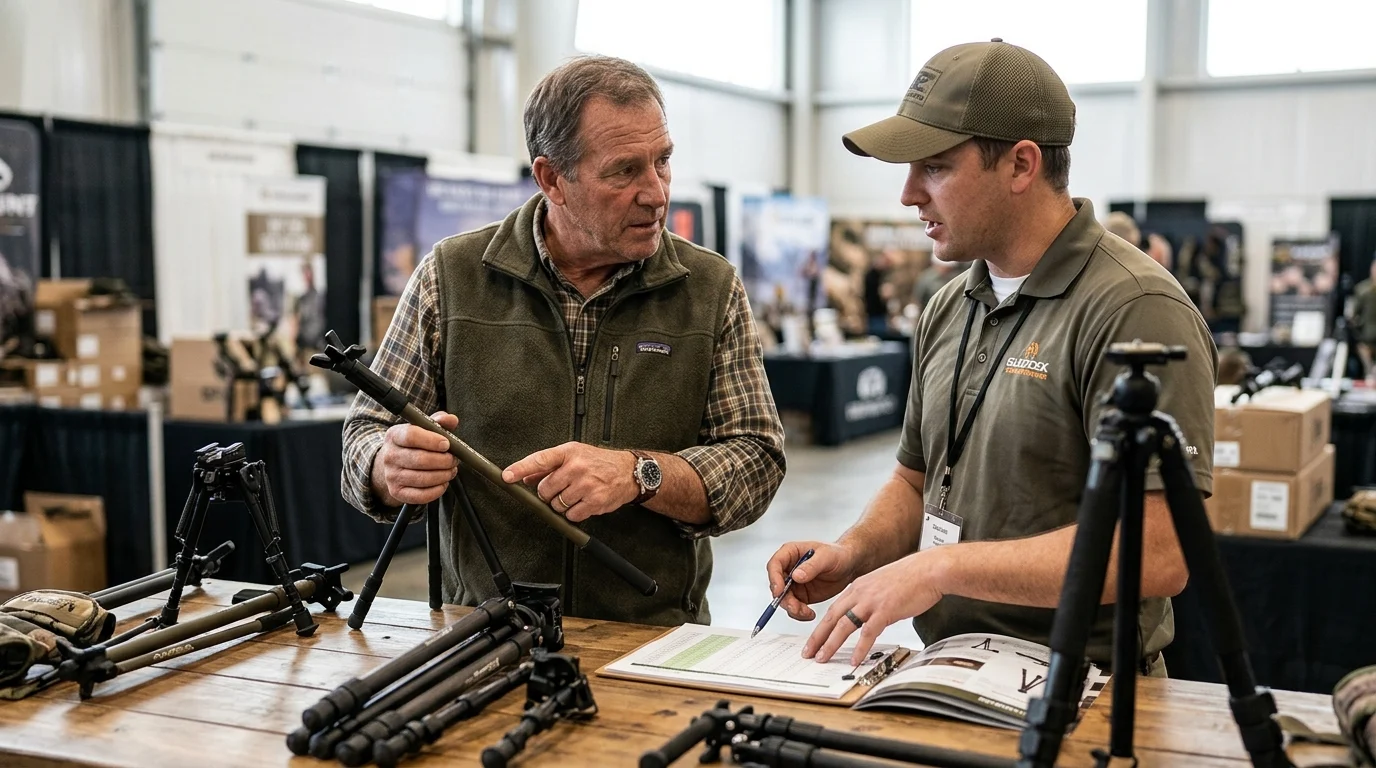
In B2B outdoor equipment sourcing, the best price rarely comes from simply asking for a discount. It comes from understanding what the supplier is actually charging for: materials, labor, tooling, production timing, packaging, and risk. For shooting sticks, small specification choices—aluminum versus carbon fiber, twist lock versus trigger adjustment, monopod versus tripod—can shift unit economics quickly. Buyers who know these cost drivers can negotiate with facts instead of pressure, improving margins while preserving product quality. This guide explains how to evaluate quotes, use volume and timing strategically, and structure supplier conversations around total landed cost, not just the number printed on the first proforma invoice.
Frame Shooting Stick Pricing Before Negotiation
When I first started sourcing outdoor equipment, I quickly realized that walking into a pricing discussion without doing my homework was a surefire way to leave money on the table. B2B purchasing isn't just about asking for a cheaper price; it's about understanding the underlying economics of the product. If you don't know what actually costs money to manufacture, you can't have a meaningful conversation with a supplier.
To get the best possible deal on your next order, you have to frame the conversation around facts, not just feelings. By breaking down the components and order variables, you position yourself as an educated buyer who understands how shooting stick pricing actually works on the factory floor.
Key Cost Drivers Behind Shooting Stick Pricing
The biggest chunk of your unit cost comes down to raw materials and machining time. For instance, standard 6061 aluminum tubing fluctuates with global commodity markets, but generally, a standard aluminum shooting stick carries a factory gate cost of roughly $8.00 to $12.00 per unit. If you upgrade to carbon fiber, the raw material and specialized curing processes push that base cost up to $18.00 to $28.00 per unit.
Labor is the second major driver. Assembling complex trigger-operated height adjustment mechanisms takes significantly more manual labor than standard twist-lock legs. When I talk to factory reps, I always ask them to break down the material versus labor split. If labor is driving the cost up on a complex model, I know where we might need to simplify the design to hit our margin targets.
Order Variables That Affect Bulk Discounts
Suppliers care about two things: predictability and machine uptime. If you are placing a spot order for 500 units right in the middle of their peak manufacturing season (usually late summer before hunting season), you are going to pay a premium. Conversely, offering to place an order during their slow season can easily shave 5% to 10% off the unit price.
Volume is obviously the biggest lever for bulk discount shooting sticks. Hitting a 5,000-unit threshold often triggers a 15% to 20% price drop compared to a 1,000-unit minimum order quantity (MOQ). Why? Because the supplier only has to set up their tooling once, run a massive batch of anodizing, and pack the whole lot efficiently without switching assembly lines.
Assess Product Specs That Influence Cost
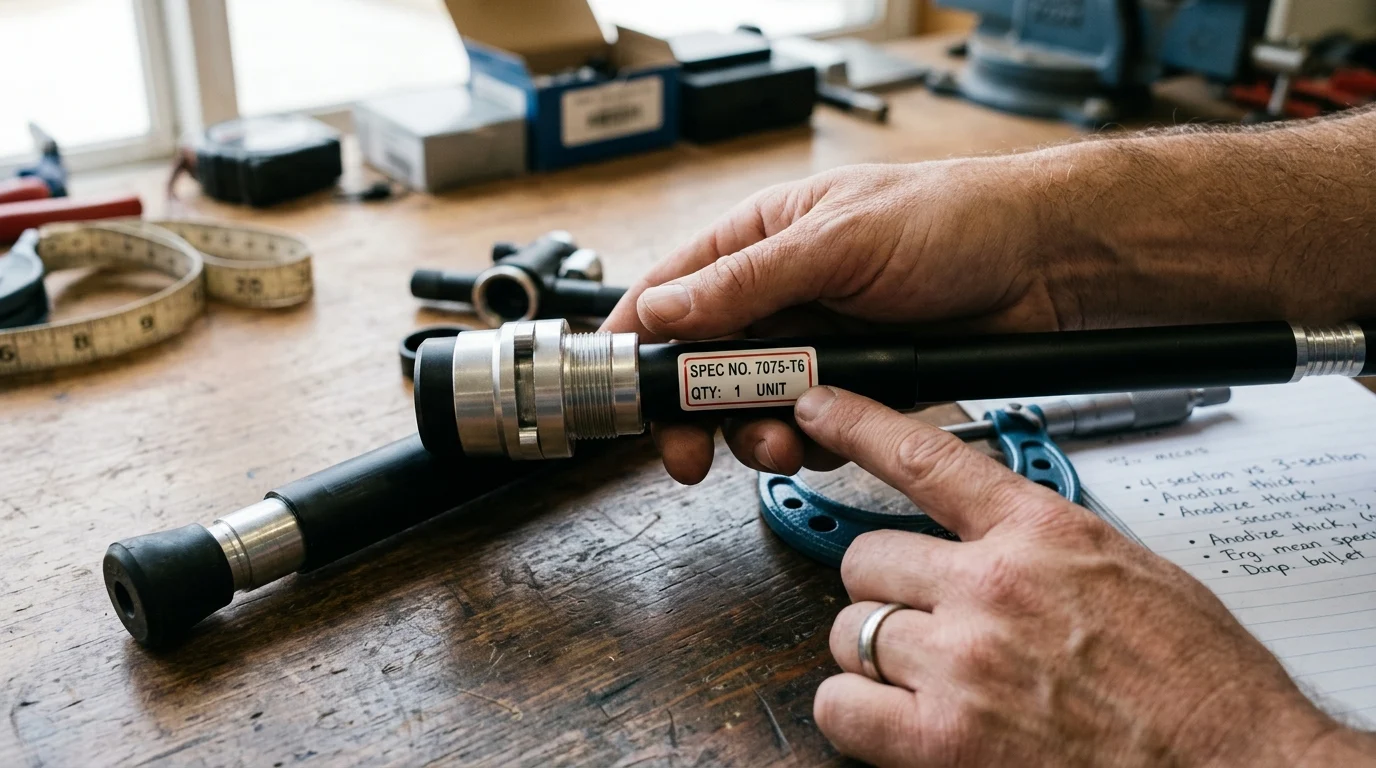
Specs dictate your baseline price. Before I ever ask a supplier for a discount, I break down the Bill of Materials (BOM) to see exactly what I'm paying for. Sometimes, the features driving up the cost aren't even the features my end-customers care about most.
Materials, Leg Designs, Heads, and Accessories
Every component on a shooting stick adds up. Are you ordering a monopod, bipod, or tripod? Tripods use 50% more leg material than bipods, instantly bumping the cost. Then look at the locks: simple twist locks are cheap to produce, while heavy-duty aluminum flip locks require more precision casting and assembly time.
The yoke or resting head is another major factor. A basic fixed V-yoke molded from TPR rubber might cost $0.50 to produce. A 360-degree rotating yoke with integrated fluid panning and quick-detach plates can add $3.00 to $5.00 to the factory cost.
| Material | Est. Unit Base Cost | Durability | Weight Profile |
|---|---|---|---|
| 6061 Aluminum | $8.00 – $12.00 | High | Moderate |
| 7075 Aluminum | $12.00 – $16.00 | Very High | Moderate-Light |
| Carbon Fiber | $18.00 – $28.00 | High | Ultra-Light |
Where to Trade Premium Specs for Better Margins
Value engineering is my favorite negotiation tool. It's about knowing where to swap premium specs for standard ones without ruining the product. For example, if I'm targeting an entry-level retail price point under $49.99, I absolutely cannot afford carbon fiber. I'll trade down to a high-grade 6061 aluminum to save $10 per unit, which keeps my retail margins healthy.
Another great trade-off is in the accessories. Do you really need a custom-branded, heavy-duty nylon carrying case? Swapping a padded tactical bag for a simple drawstring dust cover can save you $1.50 to $2.00 per unit. When you multiply that across a 3,000-unit order, you've just found $6,000 in pure margin simply by adjusting a spec your buyer might not even use.
Compare Suppliers Before Negotiating
Who you are negotiating with completely changes how you structure the deal. If you treat a trading company like a direct manufacturer, you're going to get frustrated by their pricing limitations. I always map out the supplier landscape before sending out my RFQs (Requests for Quotation) to ensure I'm comparing apples to apples.
Factory vs. Trading Company vs. Private Label Supplier
Direct factories own the machines and employ the assembly workers. They give you the absolute lowest unit cost, but they are rigid. If you want a custom mold for a new grip design, you go to a factory. Trading companies, on the other hand, act as middlemen. They aggregate orders from multiple factories. They will charge you a 10% to 15% markup, but they handle the sourcing headaches and often speak much better English.
Private label suppliers sit somewhere in the middle. They usually have a catalog of white-label shooting sticks ready to go. You just slap your logo on them. They offer a great balance of decent pricing and low friction, but you won't get exclusivity on the core design.
MOQ, Lead Time, Capacity, and Service Comparison
When comparing these partners, I look at four main pillars: Minimum Order Quantity (MOQ), lead time, production capacity, and customer service. Direct factories usually demand MOQs of 1,000 to 2,000 units per colorway. If you can only afford to buy 300 units to test the market, a trading company is your best bet, even with the higher unit cost.
| Supplier Type | Typical MOQ | Price Premium | Standard Lead Time |
|---|---|---|---|
| Direct Factory | 1,000+ units | Base Cost (0%) | 45 – 60 Days |
| Trading Company | 200 – 500 units | +10% to 15% | 15 – 30 Days |
| Private Label Partner | 500+ units | +5% to 10% | 30 – 45 Days |
Capacity also matters during peak seasons. A massive factory might deprioritize your 1,500-unit order if a major retail brand drops a 50,000-unit PO on their desk. Always ask about their monthly output capacity—if they can produce 100,000 sticks a month, your small order might get lost in the shuffle. If they produce 10,000 a month, you are a VIP client.
Negotiate Better Bulk Shooting Stick Terms
Once you've done the prep work, it's time to actually talk numbers. Good supplier negotiation isn't about beating the factory down until they lose money—if they lose money, they will secretly cut corners on your product quality. It's about structuring a win-win deal.
Use Target Costing, Volume Tiers, and Forecasts
I always use target costing. Instead of asking 'What is your best price?', I say, 'My target FOB price is $14.50 to make this viable for my retail channels. How can we adjust the order to hit that?' This makes it a collaborative puzzle rather than a confrontation.
Volume tiers and annual forecasts are incredibly persuasive. I might only want to order 1,500 units today, but I will share my 12-month forecast showing a total volume of 8,000 units. I'll ask for the 5,000-unit tier pricing on my initial order, promising to sign a Letter of Intent (LOI) for the rest of the year. Suppliers will often bite on this if they see long-term potential.
Negotiate Freight, Packaging, Payment, and Warranty Terms
The unit price is only half the battle. I spend just as much time negotiating the terms around the product. For instance, packaging costs sneak up on you. A full-color retail display box adds $0.50 to $1.20 per unit compared to a plain brown mailer box. If I'm selling D2C online, I don't need the fancy retail box—I negotiate it out to lower my cost.
Payment terms are critical for cash flow. The standard is 30% upfront (T/T) and 70% before shipment. However, once I have a relationship with a supplier, I push for 30% down and 70% against the Bill of Lading (B/L), or even Net 30 terms. Holding onto your cash for an extra 30 to 45 days is a massive win for your business's working capital.
Set Inspection Criteria and Compliance Requirements
Never negotiate a great price without locking in the quality standards; otherwise, you might receive a container full of wobbly tripods. I explicitly write my Acceptable Quality Limit (AQL) into the purchase order. For shooting sticks, I typically set an AQL of 1.5 for major defects (like a locking mechanism failing) and 4.0 for minor defects (like a small scratch on the paint).
I also stipulate that I will use a third-party inspection service before the final payment is released. A pre-shipment inspection usually costs me around $300 to $500 per man-day. If the factory knows an inspector is coming to test the load-bearing capacity and leg deployment speed, they won't try to swap in cheaper aluminum tubes at the last minute.
Evaluate and Finalize the Best Pricing Offer
Getting a fantastic FOB (Free on Board) price from a factory is exciting, but it's not the final number you should care about. You have to evaluate the offer based on what it actually costs to get the product into your warehouse, ready to sell.
Landed Cost and Risk-Adjusted Margin Model
To truly master B2B procurement, you have to build a landed cost model. I take the factory unit price and add ocean freight (which typically adds $1.50 to $3.00 per unit depending on container utilization), customs duties, and insurance. For example, depending on your country of origin and destination, import tariffs on aluminum sporting goods can range anywhere from 4.5% to over 25%.
Once I have the landed cost, I run a risk-adjusted margin model. If Supplier A is $0.50 cheaper per unit but has a history of shipping 2 weeks late, that delay could cost me thousands in stockouts during hunting season. Supplier B might be slightly more expensive, but if their reliability guarantees my inventory arrives on time, they actually offer the better risk-adjusted margin.
When to Accept, Split the Order, or Walk Away
Knowing when to say yes is easy; knowing when to walk away is the mark of a pro. If a supplier refuses to accept third-party quality inspections or demands 100% payment upfront on a first-time order, I walk away immediately. The risk is simply too high.
If I have a massive order—say, 10,000 units—and I'm dealing with new factories, I will often split the order to mitigate risk. I might give 7,000 units to a proven, slightly more expensive supplier, and 3,000 units to a new, cheaper factory to test their capabilities. It requires a bit more management to negotiate hunting gear across multiple vendors, but it ensures my supply chain never completely breaks down if one factory underperforms.
Key Takeaways
- Break down the bill of materials before negotiating so you know whether materials, labor, packaging, or accessories are driving the quoted price.
- Use order volume as a lever because reaching higher production thresholds, such as 5,000 units, can unlock 15% to 20% lower pricing than smaller MOQ orders.
- Place orders outside peak pre-hunting-season production windows when possible to improve supplier flexibility and potentially reduce unit costs by 5% to 10%.
- Compare aluminum and carbon fiber options carefully, since carbon fiber can more than double the base factory cost compared with standard aluminum models.
- Negotiate total value, not just unit price, by discussing tooling fees, payment terms, freight support, warranty parts, packaging, and delivery schedules.
Frequently Asked Questions
What drives shooting stick pricing the most?
The main drivers are material choice, machining time, labor, leg design, locking mechanism, accessories, packaging, and order volume. Aluminum models generally cost less than carbon fiber, while complex trigger locks and tripod designs increase labor and material costs.
How much can bulk discount shooting sticks reduce unit costs?
Large orders can often reduce unit pricing by 15% to 20% versus smaller MOQ orders, especially around 5,000-unit thresholds. Savings come from fewer tooling changes, larger anodizing batches, and more efficient assembly and packing.
When is the best time to negotiate hunting gear orders?
Negotiating during a supplier’s slow season can improve leverage. For shooting sticks, avoiding peak pre-hunting-season production may help buyers secure 5% to 10% savings or better delivery terms.
Should B2B buyers ask for a cost breakdown?
Yes. Asking suppliers to separate material, labor, packaging, tooling, and freight costs helps identify where concessions are realistic. It also shows the buyer understands factory economics, not just headline pricing.
Can changing product specs improve pricing?
Yes. Simplifying lock systems, reducing unnecessary accessories, choosing aluminum over carbon fiber, or standardizing heads and packaging can lower costs without sacrificing the features customers value most.
Post time: Oct-15-2026