Why Shooting Stick MOQ Matters for Importers
If you have spent time sourcing outdoor gear, you know that navigating shooting stick MOQ requirements can make or break your cash flow. Finding the sweet spot between ordering enough units to secure a competitive price and preserving your capital is the ultimate balancing act. Early on, it is also crucial to understand the difference between OEM (manufacturing a product to your exact custom specifications) and private labeling (applying your brand to an existing factory design), as this distinction dictates your minimums.
How Importers Should Define MOQ Requirements
Rather than simply accepting a factory’s initial quote, calculate minimum order quantities based on projected inventory turnover. A common benchmark is to aim for a three- to six-month supply. For instance, if a brand moves 300 sticks a month, a 1,000-unit MOQ aligns well with a healthy 90-day inventory cycle. Anything higher risks tying up capital in stagnant warehouse stock.
Market Pressures Affecting MOQ in 2026
Looking ahead to 2026, distinct shifts in the manufacturing landscape are evident. Raw aluminum costs and tighter supply chains are pushing factories to raise their baseline requirements. An OEM hunting stick that once required a 500-piece commitment is now frequently gated behind a 1,000- or even 1,500-piece minimum. Factories often implement these increases to offset rising setup costs for CNC-machined trigger mechanisms and yoke mounts, which have grown increasingly complex.
How Suppliers Set Shooting Stick MOQ
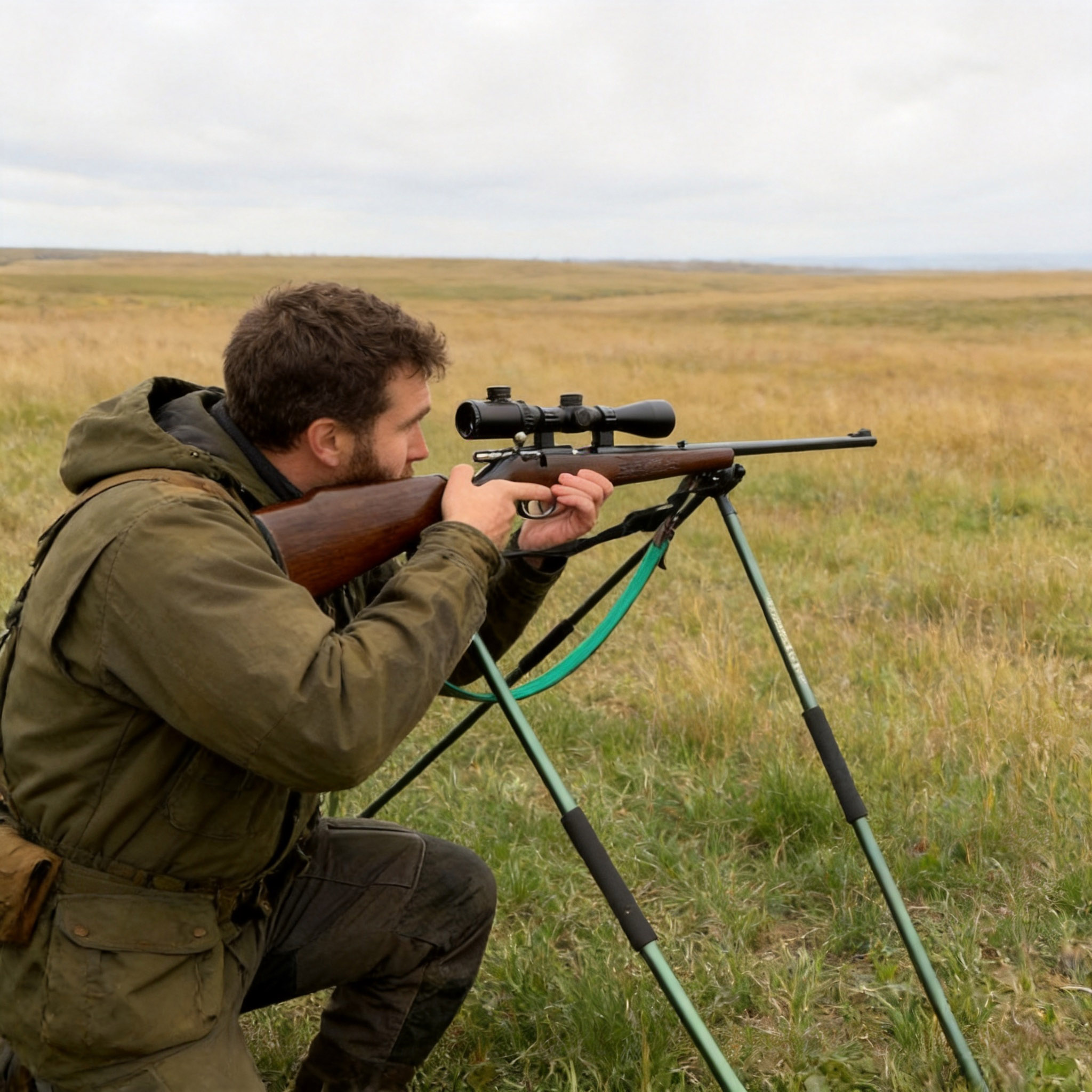
 A common misconception is assuming that the MOQ quoted on sourcing platforms or at trade shows is a single, inflexible number. In reality, suppliers break this down into several layered requirements that importers must decode.
Factory MOQ vs. Color MOQ vs. Packaging MOQ
Importers typically juggle three different figures. The standard Factory MOQ might be 1,000 pieces just to initiate a production run. However, requesting a custom anodized finish or a specific hydro-dipped camo pattern often pushes the Color MOQ to 2,000 pieces due to chemical bath setups. Furthermore, custom-printed retail boxes generally require a Packaging MOQ of 1,000 to 2,000 units from the factory’s printing subcontractor.
How Materials and Mechanisms Affect MOQ
Product complexity dramatically shifts these baseline numbers. Simple carbon fiber twist-lock monopods are relatively easy to produce, and negotiated runs can sometimes be as low as 300 pieces. Conversely, building a rapid-adjust trigger stick relies on die-cast zinc internal parts. Because those molds are expensive to set up, factories typically demand a 3,000-piece run to justify the tooling time and machine calibration.
When Low MOQ Is Useful
Absorbing a higher per-unit cost for a lower MOQ is occasionally the most strategic move. When testing a completely new set of custom shooting sticks, paying a typical 15% to 25% premium to secure a 250-unit trial run can be worthwhile. This limits financial exposure if design flaws emerge in the field, allowing for specification tweaks before committing to a massive container load.
Custom Shooting Stick Specifications to Define
Vague specification sheets are a major liability during large production runs. Before wiring a deposit, ensure that procurement contracts explicitly define every material, tolerance, and finish. This is also the stage to integrate regulatory and compliance considerations—such as country-of-origin labeling or EU General Product Safety Regulation (GPSR) requirements—directly into the manufacturing agreement.
Monopod, Bipod, and Tripod Design Choices
The foundational choice is the leg configuration, which dictates both the target demographic and the manufacturing cost. Monopods are highly portable and cost-effective, while tripods and quad-sticks offer the locked-in stability required for long-range precision.
| Design Type | Typical FOB Cost | Weight Range | Best Use Case |
|---|---|---|---|
| Monopod | $6 – $12 | 0.5 – 0.8 lbs | High mobility, quick setup |
| Bipod | $12 – $20 | 1.0 – 1.5 lbs | Kneeling/sitting, moderate stability |
| Tripod/Quad | $22 – $45+ | 2.0 – 3.5 lbs | Standing shots, maximum precision |
Customization Options That Affect Cost
Minor design adjustments can significantly impact the budget. Upgrading the leg material from standard 6061 aluminum to aerospace-grade 7075 aluminum generally adds between $2.50 and $3.50 per unit, though it noticeably reduces flex under a heavy rifle. Similarly, swapping a hard plastic Y-yoke for a silent, weather-resistant TPR rubber yoke might add $0.80. These are customizations that serious end-users often value, but they must be weighed against margin requirements.
How to Compare Sample Specifications
Once the factory provides a golden sample, rigorous field testing is essential. Verifying the load capacity is a standard benchmark; a high-quality tripod should typically hold at least 15 kg (33 lbs) without the leg locks slipping or collapsing. Measuring the collapsed length is equally important. If it exceeds 40 inches, it generally will not strap cleanly to a standard hunting daypack, presenting a significant red flag for retail buyers.
How to Compare OEM Hunting Stick Suppliers
A polished sourcing storefront does not guarantee that a supplier has the expertise to build reliable hunting gear. Importers need a systematic approach to separate capable manufacturers from mere middlemen.
Key Items in a Supplier Comparison Table
Utilizing a rigid scorecard helps evaluate potential partners prior to placing an order. It is vital to look past the unit price and weigh operational realities.
| Supplier Metric | Acceptable Standard | Red Flag |
|---|---|---|
| Lead Time | 45-60 days | >90 days |
| Defect Guarantee | <1.5% replacement | “As-is” or no clear policy |
| Payment Terms | 30% deposit / 70% FOB | 100% upfront required |
| Assembly | In-house | Fully outsourced |
How to Verify Production Capability
Verifying factory ownership claims is a critical due diligence step. Requesting a live video tour of their CNC machining centers and assembly lines provides transparency. When commissioning an order for import shooting sticks featuring complex trigger locks, confirm that they assemble and test those mechanisms in-house. Based on personal sourcing benchmarks, factories handling their own assembly can often maintain a defect rate around 1%, whereas those outsourcing assembly may see failure rates climb to 3% or 5%.
Trading Companies vs. Factories
Trading companies are not inherently problematic; they often offer much lower MOQs (sometimes as low as 100 units) by aggregating orders across multiple buyers. However, they usually incorporate a 10% to 20% markup. For deep customization or orders exceeding 2,000 units, partnering directly with factories is generally the better route. This approach provides unmediated control over engineering decisions and eliminates the middleman margin.
How to Make the Right MOQ and Customization Decision
Ultimately, sourcing is an exercise in risk management. The goal is to balance the capital outlay against the quality and timeline of the final delivery, ensuring the chosen MOQ aligns with your freight strategy.
RFQ to Order Decision Process
Establishing a rigid process prevents costly errors. A standard timeline involves sending a detailed RFQ and expecting quotes back within three to five days. Once a supplier is selected, producing a custom sample typically takes 14 to 20 days, depending on the region. Dedicating a full week to field-testing that sample before drafting the final purchase order is highly recommended. Rushing this timeline increases the risk of receiving a container full of defective gear.
Balancing MOQ, Landed Cost, and Inventory Risk
Evaluating the total landed cost, rather than just the FOB price, is essential. A factory might quote $15 per unit for 500 tripods and $13 for 2,000 tripods, but the most significant savings often come from freight optimization. A standard 20-foot container holds roughly 3,500 packaged tripods. Scaling an order to fill that container (FCL) drastically reduces the per-unit shipping cost compared to shipping a 500-unit LCL (Less than Container Load) pallet.
When to Choose Stock Shooting Sticks
For startup brands or those testing an unproven market, forcing a custom OEM order is rarely advisable. Instead, choose a private label shooting stick from a supplier’s existing catalog. Brands can often secure a minimal 100-unit run simply by applying their logo to a stock design. This strategy preserves cash flow and allows the business to build sales velocity before committing to the heavy MOQs required for a fully customized product.
Key Takeaways
- Calculate shooting stick MOQ around three to six months of projected sales to avoid tying up cash in slow-moving inventory.
- Expect many OEM hunting stick projects in 2026 to start around 1,000 to 1,500 units as raw material and setup costs rise.
- Separate factory MOQ, color MOQ, and packaging MOQ because each layer can change the true minimum order commitment.
- Use a 250-unit trial run when testing custom shooting sticks, even if the unit cost is 15% to 25% higher.
- Choose simpler monopod or twist-lock designs when MOQ flexibility matters, and plan larger volumes for rapid-adjust trigger mechanisms.
Frequently Asked Questions
What is a typical shooting stick MOQ in 2026?
For many OEM hunting stick projects, 1,000 to 1,500 units is becoming common. Simpler designs may be negotiable at lower quantities, while complex trigger sticks can require around 3,000 units due to tooling and setup costs.
How should importers calculate the right MOQ?
Base MOQ on expected inventory turnover, not just the supplier quote. A practical target is a three- to six-month supply. If you sell 300 sticks monthly, a 1,000-unit order supports roughly a 90-day stock cycle.
What is the difference between OEM and private label shooting sticks?
OEM means the factory builds shooting sticks to your custom specifications, which usually requires higher MOQs. Private labeling uses an existing factory design with your branding, making it faster, simpler, and often more MOQ-friendly.
Why do custom colors or camo patterns increase MOQ?
Custom anodizing, hydro-dipped camo, and special finishes require separate setup, chemical baths, or pattern runs. As a result, color MOQ may rise to around 2,000 pieces even if the base factory MOQ is lower.
Is a low MOQ always better for importers?
Not always. Low MOQ reduces upfront risk, but it can add a 15% to 25% per-unit premium. It is best for market testing, new designs, or first orders before scaling into larger production runs.
Post time: Oct-08-2026