
Successful hunting strategies depend on consistent game attraction. A reliable power source from the solar panel system ensures continuous feeder operation. Hunters prioritize durable construction for longevity in challenging outdoor conditions. They also seek customizable feeding options. These features provide effective game attraction, optimizing wildlife management. A high-quality hunting game feeder kit with solar panel offers these essential advantages.
Key Takeaways
- A solar panel system provides reliable power for your hunting feeder. It ensures the feeder works all the time. This helps attract game consistently.
- Choose durable materials for your feeder. This includes UV-resistant plastic or galvanized steel. These materials help the feeder last longer outdoors.
- Smart features like remote control and data tracking improve your hunting. You can manage the feeder from far away. You can also learn about animal behavior.
- Look for feeders with good warranties and customer support. This protects your investment. It also helps you if you have problems with the feeder.
Powering Your Hunt: The Solar Panel System for Your Feeder
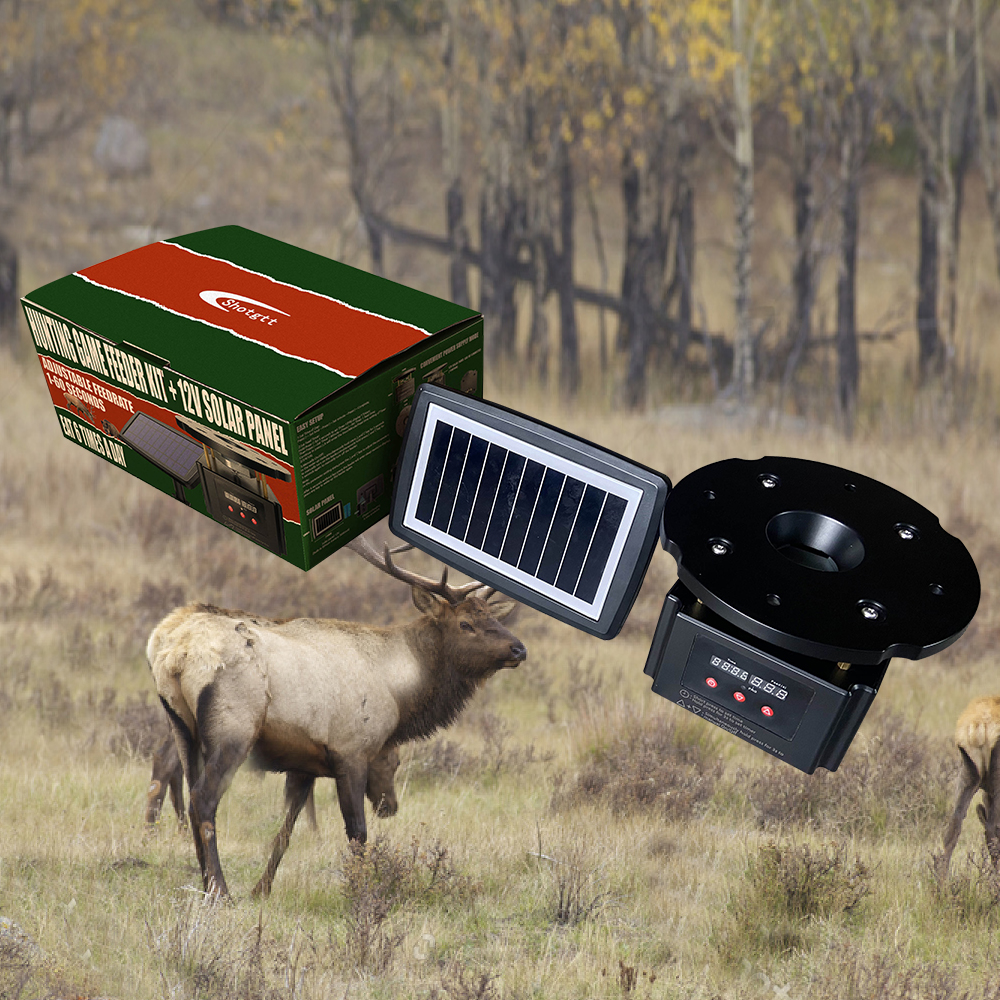
A reliable power source is essential for any effective hunting game feeder kit with solar panel. The solar panel system ensures continuous operation, attracting game consistently. Understanding the components of this system helps hunters make informed choices.
Solar Panel Efficiency and Voltage
Solar panel efficiency directly impacts power generation. Monocrystalline panels typically offer higher conversion rates, ranging from 17% to 20%. Polycrystalline panels provide 15% to 17% efficiency. Temperature also affects performance. Monocrystalline panels, for example, have an average temperature coefficient of -0.38%/°C, while polycrystalline panels are around -0.40%/°C. Optimal voltage is crucial for feeder operation. Many deer feeders utilize reliable 12V solar panels. These panels keep feeders operational and reduce the need for frequent battery replacements. A standard 6-volt solar panel, often a 70mA model, also maintains a 6V SLA battery effectively throughout the year. Hunters should ensure the panel withstands local weather conditions, including rain, snow, and extreme temperatures.
Battery Type and Capacity
The battery stores energy collected by the solar panel. A common capacity for feeder solar panel products is 5Ah, which equates to 30Wh. Some feeders use very small batteries, indicating a range of available capacities. Battery type significantly impacts performance and longevity.
| Feature | Lithium-Ion Batteries | Lead-Acid Batteries |
|---|---|---|
| Lifespan | Up to 6,000 charge/discharge cycles | Typically around 1,500 charge/discharge cycles |
| Weight & Size | Much lighter and more compact | Heavier and bulkier |
| Charging Time | 1-4 hours; supports opportunity charging | 8-10 hours or more for a full charge |
| Maintenance | Virtually maintenance-free; no water refilling | Requires regular maintenance (e.g., water refilling) |
| Energy Efficiency | More efficient; consistent voltage; less heat | Less efficient; voltage sag; more heat |
Lithium-ion batteries offer a longer lifespan and are lighter than lead-acid batteries. They also charge faster and require less maintenance.
Charge Controller Importance
A charge controller regulates the power flow from the solar panel to the battery. This component prevents overcharging and protects the battery. Maximum Power Point Tracking (MPPT) controllers offer significant advantages over Pulse Width Modulation (PWM) controllers. MPPT controllers increase energy harvest from solar arrays by 5% to 30%. They constantly adjust the current pulled from the solar panel, monitoring voltage to find the maximum power point. This process converts excess input voltage into amperage, maximizing power output. MPPT controllers also perform better in colder conditions, producing up to 20-25% more charging. They support a wider variety of solar modules and array configurations, making them a more efficient choice for a hunting game feeder kit with solar panel.
Wiring and Connection Durability
Durable wiring and robust connections are crucial for any outdoor hunting feeder system. These components ensure consistent power delivery and prevent system failures. Hunters must select materials that withstand harsh environmental conditions. Poorly protected wiring leads to frequent malfunctions and costly repairs.
For long-lasting outdoor feeder systems, specific materials offer superior protection:
- Conduits: PVC conduits resist moisture and corrosion, making them ideal for underground installations. Metal conduits provide durability against physical damage, though they may require coatings to prevent rust.
- Cables: UF (Underground Feeder) cable features a thick jacket that protects against moisture, dirt, and pests, suitable for direct burial. THWN (Thermoplastic Heat and Water-Resistant Nylon) wire offers a tough nylon coating for water, heat, and UV resistance when used inside conduits.
- Connections: Heat shrink tubing creates a tight, watertight seal when heated. Waterproof electrical tape or sealant provides extra protection, especially in areas prone to water exposure.
Insulation materials also play a vital role. PVC offers flexibility and resistance to sunlight and moisture. Polyethylene (PE) provides flexibility and moisture resistance, particularly in colder climates. Cross-linked Polyethylene (XLPE) resists extreme temperatures and chemical exposure. Wire types like THHN work well in conduits due to good heat resistance. UF-B cable is excellent for direct burial with its moisture resistance and rugged jacket. MC (Metal-Clad Cable) offers mechanical protection in exposed outdoor locations.
Several common issues can compromise wiring in outdoor solar feeder setups. Poor cable management and inadequate protection expose wires to harsh weather, UV radiation, and physical abrasion. This leads to insulation breakdown, short circuits, and potential fire hazards. Improper connector usage and poor crimping create high resistance points, causing power loss, reduced efficiency, and fire risks. Incorrect grounding and bonding are fundamental for safety. Errors here render safety devices ineffective, risking electrical shocks and equipment damage. Neglecting overcurrent protection by omitting or using incorrect fuses and circuit breakers leaves the system vulnerable to damage from power surges.
Effective Dispensing: Key to a Great Hunting Game Feeder Kit

An effective dispensing system ensures consistent game attraction. Hunters rely on precise feed distribution to manage wildlife populations. The quality of a feeder’s mechanical components directly impacts its performance and reliability.
Motor and Spreader Plate Quality
The motor drives the feeder’s dispensing mechanism. A robust motor ensures consistent feed distribution, even with varying feed types. High-quality motors resist environmental factors like moisture and dust, prolonging their operational life. The spreader plate determines the feed’s dispersal pattern and distance. Durable, corrosion-resistant materials, such as galvanized steel or high-impact plastic, prevent wear and tear. An efficient design minimizes clogging and ensures an even spread, attracting game over a wider area. Hunters often look for adjustable spreader plates to customize the feed pattern.
Timer and Programming Options
Advanced timer and programming options offer hunters precise control over feeding schedules. Modern game feeder timers provide multiple programmable feed times. They can feed up to six times a day, allowing for flexible scheduling. This precision helps establish consistent feeding patterns, which game animals quickly learn. Hunters can adjust feed duration and frequency to match specific game activity or hunting strategies. Digital timers offer greater accuracy and ease of use compared to analog models. These features enhance the effectiveness of a hunting game feeder kit with solar panel.
Hopper Capacity and Material
Hopper capacity dictates how often hunters must refill the feeder. Capacities range from 30 lbs to over 200 lbs. Larger capacities are ideal for inaccessible areas because they reduce the frequency of refills. For example, a 150-lb feeder can last 2–4 weeks with moderate deer activity. A mid-range digital spinner feeder with at least a 100-pound capacity offers a balance of control, durability, and value for most hunters. Hopper material also plays a crucial role in durability and feed protection. UV-resistant plastic or galvanized steel hoppers prevent degradation from sunlight and protect feed from moisture and pests. These materials ensure the feed remains fresh and accessible to game.
Feed Type Compatibility
Selecting the correct feed type is crucial for attracting specific game and ensuring the feeder operates efficiently. Different feeds have varying characteristics. These characteristics impact how a feeder dispenses them. Hunters must consider the feeder’s design and its ability to handle various feed consistencies.
Many hunters use specific feed types to attract deer. Whole corn is a popular choice. It is durable and creates less waste. Oats provide high energy, especially beneficial for deer during winter months. Alfalfa pellets offer a good source of protein and fiber. This supports antler growth and overall deer health. Soybeans, alfalfa, and cottonseed also attract deer. These are particularly useful for promoting antler growth, supporting pregnancy, and aiding nursing does. For additional attraction, hunters might use apples, acorns, or peanuts. Hogs are also attracted to corn.
Feeder mechanisms handle these feed types differently. Gravity feeders are simple and inexpensive. They dispense feed continuously until the hopper is empty. This method works well for feeds like whole corn or larger pellets. However, gravity feeders offer less control over the dispensed amount.
Automatic feeders provide more control. They are programmable for specific times and amounts. This allows hunters to establish consistent feeding patterns. Spinning feeders, a type of automatic feeder, use a motor and spreader plate. They can broadcast various feed types, including corn, soybeans, and pellets, at controlled times. This precision minimizes waste and optimizes game attraction.
The table below summarizes common feed types, their attractants, and dispensing considerations:
| Feed Type | Attracts | Dispensing Requirements |
|---|---|---|
| Bagged Feed | Deer | Difficult to control dispensed amount. |
| Whole Corn | Deer, Hogs | More durable, less waste. |
| Oats | Deer (winter months) | High energy. |
| Alfalfa Pellets | Deer | Good source of protein and fiber for antler growth and health. |
| Soybeans, Alfalfa, Cottonseed | Deer (antler growth, pregnancy, nursing) | Gravity feeders dispense until empty; Spinning/Automatic feeders allow controlled times/amounts. |
| Apples, Acorns, Peanuts | Deer (additional attraction) | Gravity feeders dispense until empty; Spinning/Automatic feeders allow controlled times/amounts. |
Choosing a feeder compatible with the desired feed type ensures optimal performance. It also maximizes the feeder’s effectiveness in attracting game. Consider the feed’s size, texture, and moisture content. These factors influence the feeder’s ability to dispense smoothly.
Built to Last: Durability of Your Hunting Game Feeder Kit
A durable hunting game feeder kit withstands harsh outdoor conditions. It ensures reliable operation and protects your investment. High-quality materials and thoughtful design contribute to its longevity.
Material Quality for Longevity
The materials used in a feeder significantly impact its lifespan. Protective coatings and treatments create a barrier against environmental exposures. These include moisture, UV rays, chemicals, and physical wear. This prevents corrosion and degradation. Stainless steel resists corrosion and rust. UV-resistant plastics fend off sunlight damage and degradation. Hardened metals and high-grade plastics offer resilience to corrosion, abrasion, and chemical degradation. Polyethylene is a lightweight plastic. It resists both corrosion and UV light extremely well. Polyethylene is non-reactive to many chemicals. It will not rust, corrode, or degrade under solar exposure. It also offers excellent impact resistance and withstands significant wear and tear. Polyethylene retains its properties in extreme temperatures.
Weather Resistance Features
Feeders must endure various weather conditions. Weather resistance features protect internal components and feed. IP ratings indicate a feeder’s protection level. An IP55 rating offers good protection against dust and low-pressure water jets. This suits most rainy conditions. An IP65 rating is the gold standard. It provides complete dust-tight protection. It handles water jets from a nozzle. This is ideal for permanent outdoor installation. It withstands heavy rain, snow, and wind-driven spray. An IP67 rating offers extra security against immersion. This is useful in coastal areas with driving sea spray or regions prone to torrential downpours.
Pest and Animal Deterrence
Pests and larger animals can damage feeders and consume feed. Effective design features deter these animals. Varmint guards and universal varmint deterrents prevent smaller animals like raccoons and squirrels from accessing the feed. Feeder feet secure feeders firmly in place or above the ground. This combats tipping by larger animals such as hogs. Installing a cage or mesh around the feeder keeps smaller animals away. Elevating the feeder using a hoisting system places it out of reach of raccoons, squirrels, and other ground-based pests. Increasing installation height positions feeders out of reach of larger wildlife. This includes hogs and bears. Building a protective enclosure, such as a simple wooden or metal cage, adds security around feeders. This is especially important in areas with bears. This ensures the hunting game feeder kit with solar panel operates without interference.
Ease of Assembly and Maintenance
A hunting game feeder kit’s design significantly impacts its usability. Easy assembly saves hunters time and effort. Manufacturers often provide clear instructions and minimal parts for quick setup. This allows hunters to deploy feeders rapidly in remote locations. Simple designs also reduce the likelihood of errors during installation.
Maintaining the feeder ensures its long-term performance and reliability. Regular maintenance prevents breakdowns and guarantees efficient operation. Hunters should perform routine inspections and cleaning. This fundamental practice prevents breakdowns and ensures efficiency. Inspections should be thorough and scheduled based on operational demand and environmental conditions. Hunters check for wear, corrosion, and unusual sounds. Regular cleaning removes dust, debris, and particulate matter. This reduces friction, wear, and contamination risks.
Proper lubrication is essential for minimizing friction and wear on moving components. These include bearings, gears, and conveyor belts. Lubrication creates a thin layer between surfaces, reducing metal-to-metal contact. Using the correct lubricant type and following manufacturer recommendations for intervals and quantities is crucial. Both under- and over-lubrication can be detrimental.
Hunters must also check electrical systems and controls regularly. These checks are vital for safety, reliability, efficiency, and longevity. This includes visual inspections for damage and performance testing. Calibration of controls and sensors is also important. Timely replacement of worn components is crucial to prevent failures. Parts like belts, bearings, seals, and gears should be replaced proactively. Routine checks, manufacturer recommendations, and historical records help identify parts nearing the end of their service life. Periodically replacing rollers, springs, feeding mechanisms, and guiding elements ensures long service life and precise feeding.
Calibration of feeders should occur at least once a year, or every six months for heavy use. This is critical for maintaining accuracy. Hunters should always adhere to the Original Equipment Manufacturer’s guidelines for maintenance schedules. Keeping maintenance logs helps track cleaning, replacement, and calibration activities. This prevents missed maintenance and optimizes scheduling. Neglecting maintenance can lead to misfeeds, component jams, sensor issues, and overall poor assembly quality. These practices save costs in the long run by avoiding major repairs or replacements. They also help maintain production quality and consistency.
Smart Features: Enhancing Your Hunting Game Feeder Kit Experience
Smart features transform a basic feeder into a powerful tool for wildlife management. These advanced capabilities offer hunters greater control and insight. They improve efficiency and success in the field.
Remote Monitoring and Control
Hunters can manage smart feeders from a distance. The Moultrie Feed Hub offers a cellular-connected, app-controlled setup. This system provides remote monitoring and smart feeding controls. It integrates seamlessly for convenience. Bluetooth connectivity allows hunters to manage feeders through a dedicated app. They can sync feed times, check battery levels, and estimate feed levels. Users can also set feed times remotely and activate feeding on demand. Cellular connectivity, when paired with a Moultrie Edge 3 Series camera, enables remote control of select feeders. Hunters can adjust feed times, check battery and feed levels, and activate feedings on demand from a smartphone. This is possible even from miles away.
Data Logging and Analytics
Smart feeders collect valuable data. This data helps hunters understand game activity and feeding patterns. They record bird visits, feeding patterns, and species diversity. They also track migration patterns, visit frequency, feeding times, and dietary preferences. For individual animals, feeders log feed intake, timing, and frequency of feeding. They monitor feed consumption, animal growth patterns, and overall herd health. This data can even show feed conversion rates and changes in feeding behavior. Such changes can indicate health issues early. Feeders also record the time, date, and duration of each visit. They identify peak activity times and which species feed together. Hunters learn which species are territorial. They also see the impact of weather and seasons on bird activity. This information helps assess nesting success and the health of the local bird population.
Security Features and Alerts
Security is important for any outdoor equipment. Smart feeders offer theft detection features. In high-theft areas, hunters should consider models with lockable lids, tamper alarms, or GPS trackers. Lockable lids help prevent theft. These security features deter theft and tampering. This is especially important in public-access areas. A robust hunting game feeder kit with solar panel protects the investment.
Making the Investment: Value and Warranty for Your Feeder Kit
Price vs. Feature Balance
Hunters evaluate the cost of a feeder kit against its capabilities. Higher-priced models often deliver superior performance and longevity. These feeders typically feature stronger motors, ensuring reliable operation. They offer greater durability, especially in harsh weather conditions like rain, snow, and extreme temperatures. Such robust construction suits larger, heavy-duty tripod, barrel, and high-capacity feeders. Advanced features also justify a higher price. These include digital timers, multiple feed settings, and high-speed motors for smooth operation. Longer battery life, potentially lasting up to eight months or more, reduces replacement frequency. Improved energy efficiency handles higher loads, leading to less frequent recharging. Lithium-ion batteries, though more expensive initially, provide lighter weight, longer life, consistent power output, and better performance in extreme temperatures.
Warranty and Customer Support
A strong warranty and reliable customer support protect a hunter’s investment. Manufacturers typically offer warranties covering defects in materials and workmanship. Hunters should review warranty terms carefully, understanding coverage duration and limitations. Good customer support ensures assistance when needed. Many companies provide comprehensive resources. These include:
- Tutorials
- Frequently Asked Questions (FAQs)
- Order Status tracking
- Detailed Instructions/Manuals
- Troubleshooting guides
- Product Warranty Registration services
These resources help users set up, operate, and maintain their feeders effectively. Responsive customer service can resolve issues quickly, minimizing downtime in the field. This support ensures hunters maximize the utility of their feeder kit.
A hunting game feeder kit with a solar panel ensures consistent power. This provides reliable operation. Hunters select durable materials for long-term outdoor performance. Smart features align with hunting strategies, enhancing the overall experience. Consider overall value and warranty. This makes a wise investment for successful wildlife management.
FAQ
How often should hunters clean the solar panel?
Hunters should clean solar panels regularly. Dust, dirt, and debris reduce efficiency. A clean panel ensures optimal energy collection. This maintains consistent feeder operation.
Can the solar feeder operate effectively in cloudy conditions?
Yes, solar feeders can operate in cloudy conditions. The solar panel charges the battery even with diffused light. The battery then powers the feeder. A good charge controller optimizes this process.
What battery type performs best in cold weather?
Lithium-ion batteries perform best in cold weather. They maintain efficiency at lower temperatures. They also offer a longer lifespan. This makes them a reliable choice for hunters in colder climates.
How do hunters deter pests from the feeder?
Hunters deter pests using varmint guards. They also elevate the feeder. Hoisting systems place feed out of reach. Protective enclosures prevent access by larger animals. These methods safeguard the feed supply.
Post time: Dec-25-2025