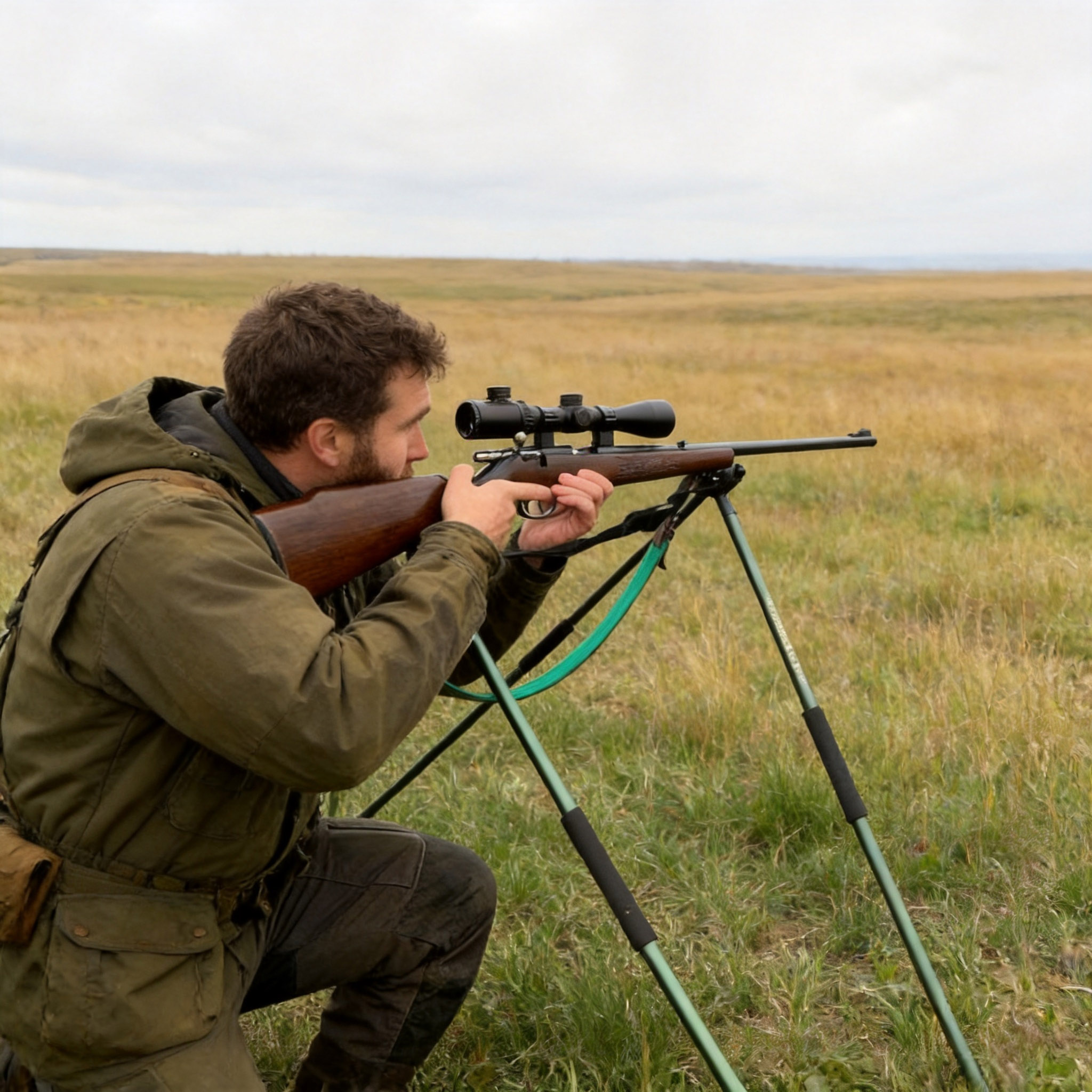
Why Choose a Super-Light Aluminum 4-Legged Shooting Stick
When I talk to distributors about upgrading their outdoor gear catalogs, the conversation inevitably turns to finding that sweet spot between field performance and profit margin. That is exactly where a super-light aluminum 4 legged hunting shooting stick changes the game for both the end-user and the wholesaler. Let’s break down why this specific design is capturing market share.
Where It Fits in Hunting and Shooting Use
If you’ve ever tried to line up a shot on a steep, rocky incline, you know standard bipods just don’t cut it. A 4 legged hunting shooting stick shines in dynamic environments like spot-and-stalk hunting, predator calling, or tall grass safaris. The dual-point rest system—supporting both the forestock and the buttstock—essentially mimics a stable bench rest out in the wild. I always recommend these to buyers catering to big game hunters who need rapid deployment and rock-solid stability across unpredictable terrain.
Why Stability and Low Weight Matter
Carrying heavy gear miles into the backcountry is a quick way to exhaust any hunter. By utilizing aerospace-grade aluminum (typically 6061 or 7075 series), manufacturers can slash the weight significantly compared to traditional steel, without sacrificing structural integrity.
- Fatigue Reduction: Less carry weight means hunters stay physically sharp and focused for the actual shot.
- Corrosion Resistance: Anodized aluminum easily survives wet, high-humidity hunting seasons.
- Rapid Adjustment: Lighter legs are easier to manipulate quietly when an animal is approaching.
Here is a quick look at how aluminum compares to other common materials in the field:
| Material | Weight Profile | Stability & Rigidity | Weather Resistance |
|---|---|---|---|
| Super-Light Aluminum | Low | High | Excellent (Anodized) |
| Carbon Fiber | Ultra-Low | Very High | Excellent |
| Steel | High | High | Moderate (Prone to rust) |
Why Patent Exclusivity Matters for Buyers
For importers and wholesalers, selling generic gear often means getting dragged into a race to the bottom on price. Securing an exclusive, patented design actively protects your margins. According to the World Intellectual Property Organization (WIPO), registered industrial designs give the owner the exclusive right to prevent third parties from making or selling unauthorized copies.
When I source a patented 4 legged hunting shooting stick, I know I’m handing my retail partners a unique SKU. It ensures you won’t be undercut by identical cheap knockoffs flooding major e-commerce platforms, allowing you to build genuine brand differentiation and long-term customer loyalty.
Where Does It Fit in Hunting and Shooting Use?
If you’ve ever tried to line up a shot on a steep, rocky incline, you know standard bipods just don’t cut it. A 4 legged hunting shooting stick shines in dynamic environments like spot-and-stalk hunting, predator calling, or tall grass safaris. The dual-point rest system—supporting both the forestock and the buttstock—essentially mimics a stable bench rest out in the wild. I always recommend these to buyers catering to big game hunters who need rapid deployment and rock-solid stability across unpredictable terrain.
Why Do Stability and Low Weight Matter?
Carrying heavy gear miles into the backcountry is a quick way to exhaust any hunter. By utilizing aerospace-grade aluminum (typically 6061 or 7075 series), manufacturers can slash the weight significantly compared to traditional steel, without sacrificing structural integrity.
- Fatigue Reduction: Less carry weight means hunters stay physically sharp and focused for the actual shot.
- Corrosion Resistance: Anodized aluminum easily survives wet, high-humidity hunting seasons.
- Rapid Adjustment: Lighter legs are easier to manipulate quietly when an animal is approaching.
Here is a quick look at how aluminum compares to other common materials in the field:
| Material | Weight Profile | Stability & Rigidity | Weather Resistance |
|---|---|---|---|
| Super-Light Aluminum | Low | High | Excellent (Anodized) |
| Carbon Fiber | Ultra-Low | Very High | Excellent |
| Steel | High | High | Moderate (Prone to rust) |
Why Does Patent Exclusivity Matter for Buyers?
For importers and wholesalers, selling generic gear often means getting dragged into a race to the bottom on price. Securing an exclusive, patented design actively protects your margins. According to the World Intellectual Property Organization (WIPO), registered industrial designs give the owner the exclusive right to prevent third parties from making or selling unauthorized copies.
When I source a patented 4 legged hunting shooting stick, I know I’m handing my retail partners a unique SKU. It ensures you won’t be undercut by identical cheap knockoffs flooding major e-commerce platforms, allowing you to build genuine brand differentiation and long-term customer loyalty.
Key Specifications to Compare
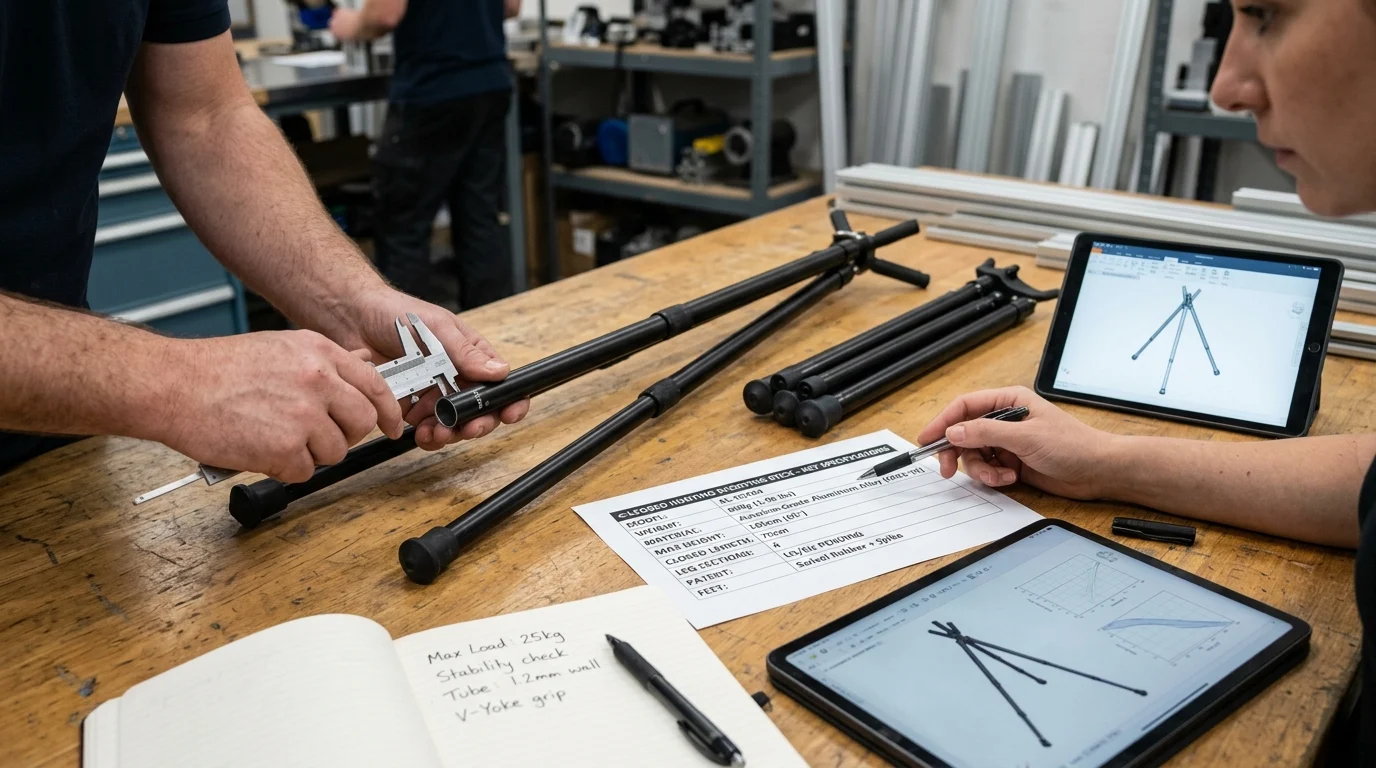
Not all shooting sticks are created equal. To source a product that will not fail customers in the field, buyers need to look under the hood. Let’s dive into the illustrative specifications that separate a professional-grade stick from a weekend toy.
Aluminum Grade, Tube Size, and Wall Thickness
The foundation of a Super light Aluminum stick is the alloy grade. Industry standards favor 7075-T6 aluminum over the cheaper 6061 grade due to its significantly higher tensile strength. Pairing that with a tube wall thickness of at least 1.2 mm—rather than the standard 0.8 mm found in budget models—yields a rigid frame that resists bowing under the weight of a heavy precision rifle.
Height Range, Folded Length, and Load Rating
Versatility in the field dictates the dimensions. A top-tier four-legged stick usually offers an adjustable height range from about 105 cm (41 inches) when collapsed, all the way up to 175 cm (69 inches) for standing shots.
| Specification | Premium 4-Legged Stick | Standard Budget Stick |
|---|---|---|
| Material | 7075-T6 Aluminum | 6061 Aluminum |
| Wall Thickness | 1.2 mm | 0.8 mm – 1.0 mm |
| Folded Length | 105 cm (41 in) | 115 cm (45 in) |
| Max Height | 175 cm (69 in) | 160 cm (63 in) |
| Load Rating | 15 kg (33 lbs) | 8 kg (17.6 lbs) |
Note: The specifications above are illustrative examples for comparison purposes.
Head Design, Grip, Feet, and Field Durability
The contact points are where the functionality shines. A premium head design features dual TPR (Thermoplastic Rubber) grips that hold the rifle securely without marring the finish. Down below, tungsten carbide tips bite into ice and rock, covered by removable rubber feet for hard, flat surfaces. This dual-foot design drastically improves field durability, ensuring the stick performs reliably across multiple hunting seasons.
How It Compares With Other Shooting Supports
How does a four-legged system actually stack up against the classics? While bipods, tripods, and monopods each have their place in the backcountry, the four-legged design fills a very specific, highly demanded niche for retailers.
Four-Legged Sticks vs Bipods and Tripods
Traditional bipods attach directly to the rifle, which is great for prone shooting but less effective in tall grass. Tripods give excellent standing height but only support the rifle at a single pivot point. A four-legged stick provides two distinct points of contact—cradling the front and rear of the stock. This effectively eliminates the horizontal wobble that plagues standard tripods, making it an optimal shooting stick for standing precision, though it can be more challenging to level on highly uneven ground.
Portability, Setup Speed, and Stability Trade-Offs
There is always a trade-off in field gear. A four-legged setup takes a bit more coordination to deploy than simpler supports. It generally requires a few extra seconds to fully extend and position compared to a trigger-style monopod. However, the stability gain is substantial. For hunters shooting past 200 yards from a standing position, that brief setup time is a worthwhile exchange for a highly stabilized platform.
Best Use Cases by Hunting Scenario
These sticks are highly marketable for specific scenarios: African plains game hunting, European driven hunts, and North American spot-and-stalk where brush obscures a prone shot. Retailers can position this gear as a solution for hunters looking to maximize their accuracy at 200+ yards standing. By locking the rifle in securely, it offers a distinct advantage over traditional single-point tripods, making it a compelling upsell for customers focused on precision.
What Importers and Wholesalers Should Verify
For importers and wholesalers, a great product concept is only half the battle. Ensuring the manufacturing and compliance side is airtight is critical. Following a strict vetting checklist helps mitigate risk and guarantee quality.
Patent Claims, Exclusivity, and Private Label Rights
First and foremost, buyers should demand to see the paperwork. A legitimate factory will readily provide their utility and design patent certificates. It is vital to cross-reference these and confirm their enforceability in target import markets, as patent protection is territorial. Furthermore, negotiating private label rights early is recommended. Securing an exclusive distribution agreement for a specific region with the Manufacturer and Suppliers ensures competitors cannot easily undercut the market with the exact same design.
Factory Audit Points for Machining and Anodizing
When auditing the factory, close attention should be paid to CNC machining tolerances and surface finish. For aluminum sticks, Type III hard coat anodizing with a thickness of 25 to 30 microns is ideal to prevent scratching in the field. Purchase orders should stipulate strict acceptable defect rates for locking mechanisms—ideally under 1.5%—because if the locks slip, the product fails its primary purpose.
Packaging, Manuals, Barcodes, and Carton Strength
The logistics of the packaging should not be overlooked. A premium stick needs premium packaging. Ensuring the factory uses 5-ply corrugated master cartons that can pass an ISTA 1A drop test is essential. Clear, scannable EAN/UPC barcodes and multi-language instruction manuals should also be required. Proper packaging reduces transit damage rates and keeps retail partners satisfied.
How to Make a Buying Decision
Bringing this premium gear into a catalog requires a solid financial strategy. Verifying that the numbers make sense before wiring a deposit is a crucial step. Here is how to approach structuring the purchase.
Landed Cost, MOQ, Tooling, and Margin Planning
Planning margins requires a clear view of landed costs and an understanding of end-user price sensitivity. For private label runs, initial tooling fees for custom grips might apply, usually ranging from $500 to $1,000.
| Order Volume (MOQ) | Est. FOB Cost (Per Unit) | Target Retail MSRP | Est. Gross Margin |
|---|---|---|---|
| 500 Units | $35.00 – $45.00 | $129.99 | ~60% |
| 1,000 Units | $32.00 – $40.00 | $129.99 | ~65% |
| 3,000+ Units | $28.00 – $35.00 | $119.99 | ~70% |
Note: The costs and margins above are strictly illustrative examples based on premium 7075-T6 aluminum specs and do not guarantee financial performance.
Sample Testing and Supplier Qualification Steps
The sampling phase should never be skipped. Before committing to a high MOQ, ordering pre-production samples is highly recommended. These should be put through rigorous testing, such as a 48-hour salt spray test to check for corrosion resistance on the hardware, and a cycle test to actuate the leg locks repeatedly. If the supplier’s sample survives standard stress testing, it indicates a reliable manufacturing partner.
When a Patented Lightweight Model Is Worth Buying
Ultimately, a patented, ultra-lightweight four-legged stick is worth the investment if a brand caters to serious outdoorsmen. While it commands a higher retail price and faces some price sensitivity, it builds immense brand loyalty among precision shooters. By performing due diligence on specifications, patent territoriality, and factory quality, importers can add a highly profitable, flagship product to their hunting accessories lineup.
Key Takeaways
- Choose a 4-legged shooting stick when end-users need bench-like field stability for standing shots, predator calling, or spot-and-stalk hunting.
- Prioritize models weighing under 900 grams while still supporting about 15 kg of downward load to balance portability and strength.
- Specify 7075-T6 aluminum and at least 1.2 mm tube wall thickness to reduce flex and improve durability versus budget 0.8 mm tubes.
- Verify patent type and geographic coverage before marketing exclusivity, because a China patent does not automatically protect sales in North America or Europe.
- Look for an adjustable height range of approximately 105 cm to 175 cm so the product can serve a wider range of hunters and shooting conditions.
Frequently Asked Questions
What makes a 4 legged hunting shooting stick more stable than a bipod or tripod?
A 4-legged design supports both the rifle forend and buttstock, creating a steadier platform for standing shots. This helps hunters maintain a clearer sight picture in field conditions where a bench rest is not available.
How much should a premium aluminum shooting stick weigh?
A high-quality super-light aluminum model can weigh just under 900 grams, or about 1.98 lbs. This makes it practical for spot-and-stalk hunters who need stability without carrying unnecessary weight.
What load rating should importers look for?
A professional-grade 4 legged shooting stick should support around 15 kg, or 33 lbs, of downward load. This gives end-users confidence when using heavier hunting rifles or precision-style setups.
Why does patent exclusivity matter for wholesalers?
Patent exclusivity can help wholesalers differentiate from low-cost copycat products and protect margins. Buyers should still verify whether the patent is a utility or design patent and confirm the territories where protection applies.
Is 7075-T6 aluminum better than 6061 aluminum for shooting sticks?
Yes, 7075-T6 aluminum generally offers higher tensile strength than 6061, making it better suited for rigid, lightweight shooting sticks. It helps reduce flex and improves durability under field use.
Post time: Sep-14-2026