 Introduction
Why Aluminum Hunting Shooting Sticks Matter
I’ve spent years analyzing outdoor gear supply chains, and if there is one category that consistently surprises me with its steady growth, it is tactical and hunting support equipment. When you are out in the field fighting freezing rain and uneven terrain, the gear you carry can literally make or break your trip. That is exactly why I want to discuss the surging wholesale opportunity in the market for specialized shooting supports.
Today’s hunters and precision shooters demand more from their equipment than ever before. They are moving away from heavy, cumbersome gear and shifting toward lightweight, high-yield materials. Understanding this shift is crucial for any importer, distributor, or retailer looking to capture high-margin sales in the sporting goods sector.
How to frame commercial demand for aluminum shooting sticks
When evaluating the commercial demand for outdoor accessories, the numbers tell a compelling story. The global hunting equipment market has been expanding at a steady compound annual growth rate (CAGR) of around 6.5%, but the niche for specialized stabilization gear is growing even faster. Retailers are seeing a massive spike in consumer interest for high-quality aluminum hunting shooting 4 legged sticks because they hit the perfect sweet spot between affordability and professional-grade performance.
From a wholesale perspective, framing this demand requires looking at the modern hunter’s budget. Buyers are increasingly willing to spend $100 to $200 on a stabilization system if it guarantees a clean, ethical shot. For importers, this means the days of racing to the bottom with cheap, flimsy plastic rests are over. Sourcing premium aluminum models allows you to target a demographic that values durability, creating a highly profitable wholesale avenue where order volumes regularly exceed 1,000 units per quarter for regional distributors.
Which use cases make reliability and portability essential
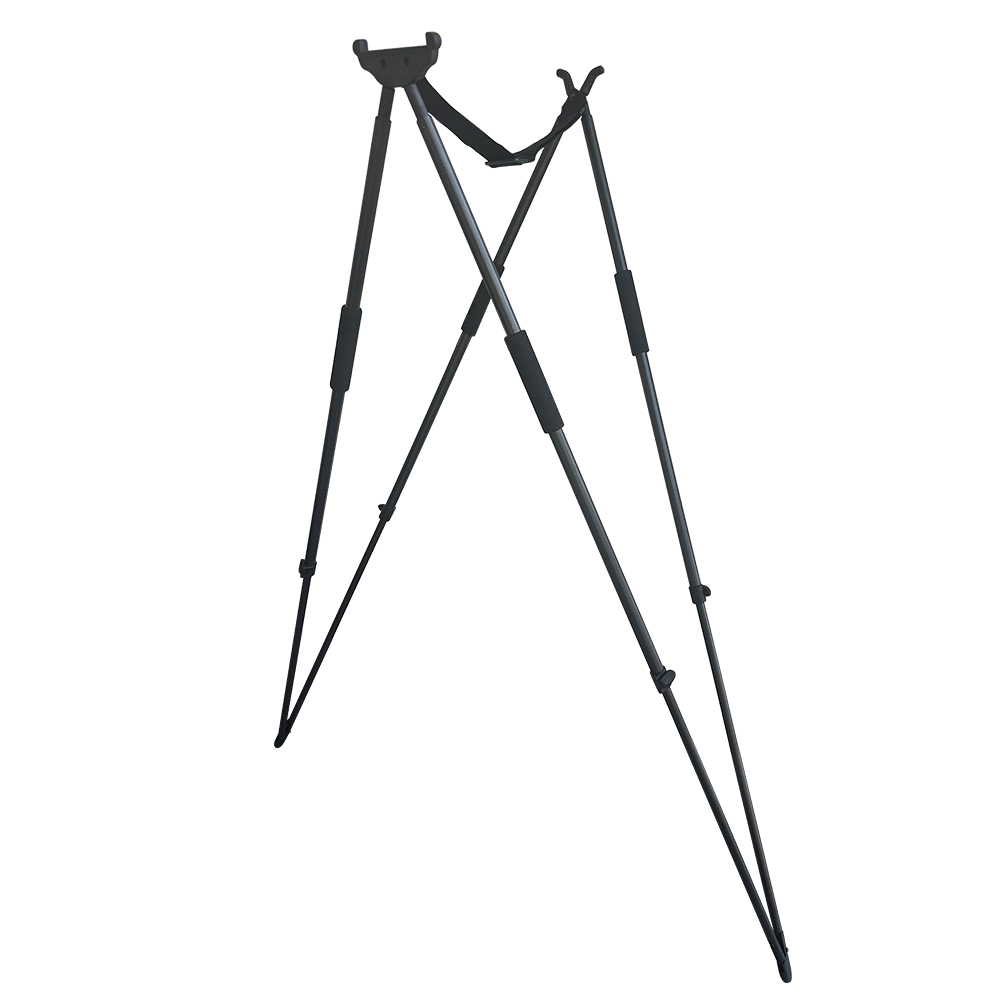
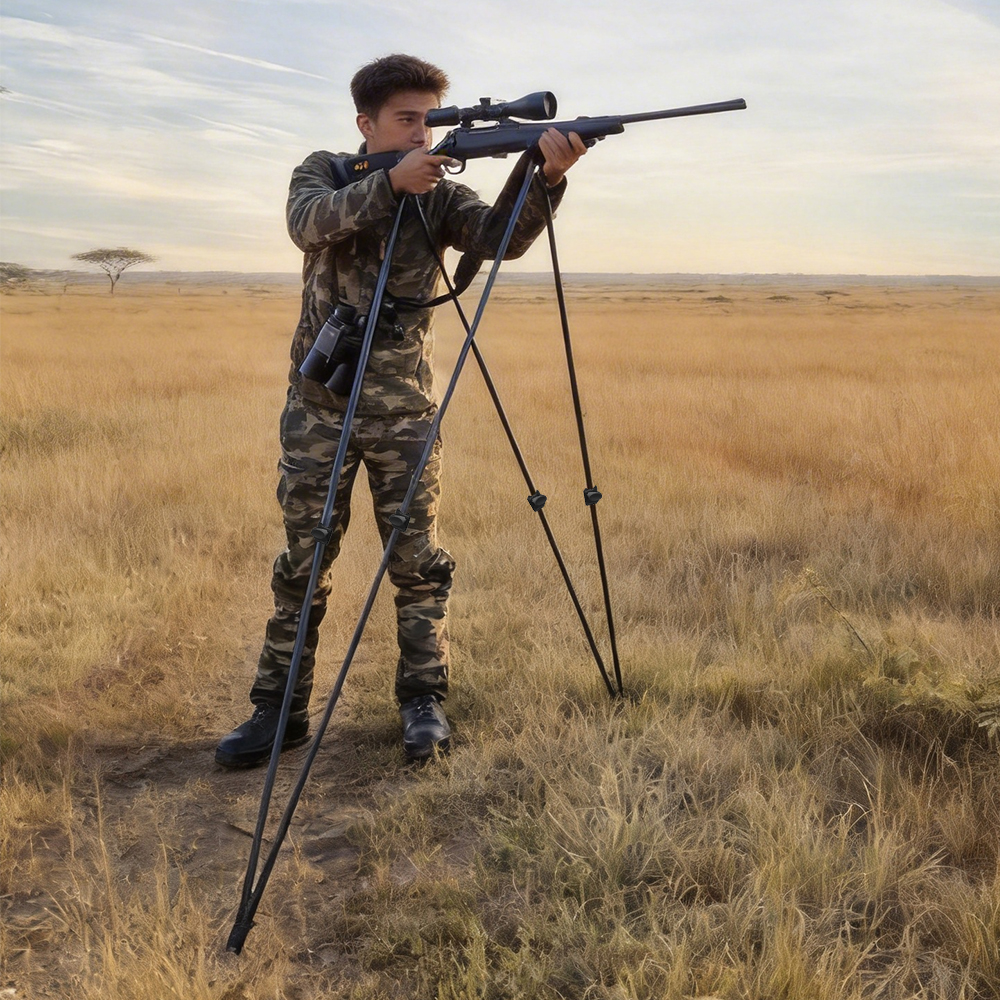
You might wonder why a four-legged design is necessary when single- or double-legged options have been around for decades. When stalking game in extreme environments like the steep, rocky inclines of the Rockies or the muddy, unpredictable bogs of the deep South, standard gear simply does not cut it. A four-legged system provides a dual-point rest—supporting both the forearm and the buttstock of the rifle—which essentially turns a field position into a portable bench rest.
Reliability and portability become essential when factoring in the physical toll of a multi-day hunt. A hunter might trek 10 to 15 miles a day carrying a 10-pound rifle and a 40-pound pack. If their support gear fails, bends, or seizes up in the cold, the entire trip is compromised. A well-engineered set of aluminum sticks can support up to 50 lbs of downward force while weighing less than 3.5 lbs on the hunter’s back. That incredible strength-to-weight ratio makes these specific models indispensable for extreme use cases.
What Defines a Reliable Product
What actually separates a dependable piece of field equipment from a cheap imitation? It is easy for a manufacturer to make a product that looks good in a catalog, but field performance is dictated entirely by raw materials and mechanical tolerances. Let’s break down the exact specifications you need to look for.
In my time auditing outdoor gear, I have learned that the devil is always in the details. To avoid costly returns and angry customer reviews, you must understand the engineering behind the product.
Which material, load, and locking specs separate dependable sticks
The backbone of any reliable support system is the alloy used in its construction. Most high-quality shooting sticks are forged from either 6061-T6 or 7075-T6 aerospace-grade aluminum. The 6061 variant offers a solid yield strength of around 40,000 psi, making it highly dependable for general use. However, if you are targeting the premium extreme-weather market, you will want to look at 7075-T6, which boasts a massive yield strength of roughly 73,000 psi.
Beyond the metal, load capacity and locking mechanisms are the next biggest failure points. A dependable four-legged stick should comfortably handle a dynamic load of 15 to 20 kg (33 to 44 lbs) without the legs bowing. Buyers should always scrutinize the locks. Flip-cam locks made from reinforced nylon or metal are generally superior to cheap plastic twist-locks, which have a notorious habit of freezing up or slipping when the temperature drops below freezing.
How do 4-leg shooting sticks compare with 1-leg and 2-leg models
To truly appreciate the four-leg design, it helps to compare it directly to its simpler cousins. Monopods (1-leg) are incredibly fast to deploy and ultra-light, but they are inherently wobbly. They only control vertical movement, leaving the shooter to manage side-to-side sway. Bipods (2-leg) offer a significant upgrade in lateral stability, but they still pivot forward and backward, which can throw off a shot at 300 yards.
This is where 4 legged sticks completely change the game. By supporting the weapon at two distinct points, they eliminate nearly all human-induced sway. The trade-off, of course, is a slight increase in deployment time and carrying weight. However, for hunters taking long-range shots where precision is non-negotiable, the bench-rest-like stability of a quad pod far outweighs the extra 1.5 lbs in their pack.
Which comparison table should I include for aluminum alloy options
When finalizing your product assortment, choosing the right aluminum alloy will dictate your price point and target audience. The following comparison table is useful when evaluating factory offerings.
| Feature | 6061-T6 Aluminum | 7075-T6 Aluminum |
|---|---|---|
| Yield Strength | ~40,000 psi | ~73,000 psi |
| Weight Profile | Lightweight | Ultra-lightweight for its strength |
| Corrosion Resistance | Excellent | Good (Requires thicker anodizing) |
| Cost Bracket | Standard / Mid-range | Premium / High-end |
| Best Use Case | General hunting, beginner gear | Extreme alpine, heavy magnum rifles |
Using this data, you can clearly segment your catalog. Offering a 6061-T6 model for the weekend warrior and a 7075-T6 model for the professional guide is a fantastic way to capture both ends of the market.
How to Source and Evaluate Suppliers
Finding a supplier online is easy; finding a manufacturing partner who won’t leave you stranded with a container full of defective goods is much harder. Navigating the overseas sourcing landscape and vetting factories requires a rigid, systematic approach.
You cannot just look at a shiny supplier listing and wire a deposit. You need to dig into their operational capabilities, their quality control frameworks, and their willingness to stand behind their product when things go wrong.
What supplier audit points matter most for aluminum shooting sticks
When auditing a potential supplier for hunting sticks, start by looking at their CNC machining and tube-extrusion capabilities. Do they outsource the aluminum tubing, or do they draw it in-house? In-house extrusion typically means tighter control over the wall thickness, which is critical—a wall thickness variance of just 0.2mm can severely compromise the leg’s load-bearing capacity.
Next, request to see their ISO 9001 certification and their historical defect rate. For a mechanical outdoor product, anything above a 1.5% defect rate is a massive red flag. Also, check their assembly lines to ensure they have dedicated stations for testing the tension of the leg locks, as inconsistent lock tension is the number one complaint from end-users.
How do MOQ, tooling, branding, accessories, and warranty terms work
Negotiating the commercial terms is where your profit margins are truly forged. For custom anodized aluminum products, expect a Minimum Order Quantity (MOQ) of around 500 to 1,000 units per colorway. To stand out, custom tooling for a proprietary rubber V-yoke or ergonomic grip will usually cost between $1,500 and $3,000 in upfront mold fees.
Branding is another critical negotiation point. Laser engraving your logo onto the aluminum shafts is relatively cheap—often costing just $0.10 to $0.20 per unit. Finally, never finalize an order without hammering out the warranty terms. A reputable factory should offer a 12- to 24-month warranty against manufacturing defects, promising to replace broken parts or issue credits on your next container shipment.
What sample-evaluation process helps verify quality before order
It cannot be stressed enough: never place a bulk order without putting a physical sample through rigorous testing. When the sample arrives, do not just inspect it on a desk. Take it outside and subject it to aggressive field testing.
Time the leg deployment—a good system should fully deploy and lock in under 3 seconds. Apply excessive lateral pressure to see if the yokes crack. Perform drop tests from 2 meters onto solid concrete to check if the plastic lock housings shatter. Only after the sample survives this abuse, and you verify the anodizing doesn’t easily scratch off with a steel brush, should you sign the final purchase order.
What Compliance, Testing, and Logistics Issues Matter
Once you have a reliable product and a trustworthy supplier, the battle is only half won. The next major hurdles are proving that the product meets international standards and actually getting it from the factory floor to your warehouse without damage.
Logistics and compliance might seem like dry topics, but this is where inexperienced importers lose the most money. A delayed container or a failed customs inspection can wipe out your profit margin in a matter of days.
Which testing methods best prove corrosion resistance and load stability
Outdoor gear has to withstand brutal weather, making corrosion resistance testing non-negotiable. Always require suppliers to provide ASTM B117 salt spray test reports for their aluminum components. For a premium product, the anodized finish should survive 72 to 96 hours of continuous salt spray without showing any signs of white rust or pitting.
Load stability testing is equally important. The factory should place the fully extended sticks under a static load of at least 25 kg for a full 24-hour cycle. If the leg locks creep or the aluminum shafts permanently bow by even a fraction of an inch, the design needs to be reworked. These testing certificates aren’t just for peace of mind; they are vital marketing tools that prove your gear is professional-grade.
How do import documentation, labeling, packaging, and carton design affect shipping
Shipping long, awkwardly shaped items requires meticulous attention to packaging. The standard HS Code for this type of sporting equipment is generally 9507.90 (fishing rods, hunting accessories, etc.), but you must verify this with your customs broker to ensure you are paying the correct tariffs.
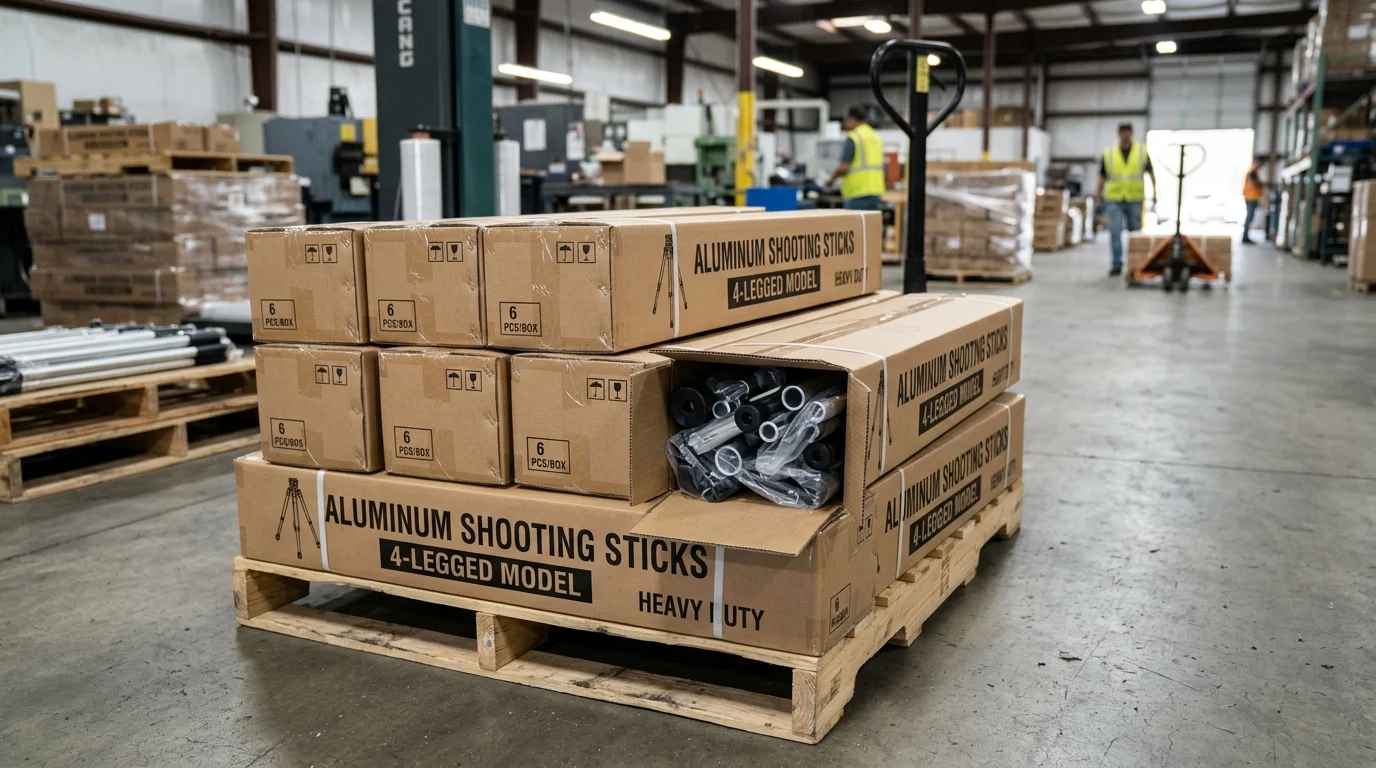
To optimize shipping costs, carton design is everything. Work closely with factories to ensure the retail packaging is as compact as possible, often requiring the sticks to be broken down into their shortest collapsed length. Master cartons must be double-corrugated and pass the ISTA 1A drop test standard. If engineered correctly, you can typically fit around 2,500 to 3,000 units into a standard 20ft shipping container, which drastically reduces your landed cost per unit and keeps your retail pricing highly competitive.
How to Decide Whether to Import
Having covered the market demand, technical specs, supplier vetting, and logistics, the moment of truth arrives. You must look at your business model and decide if executing an import order makes financial sense.
Importing isn’t for everyone. It requires capital, patience, and an appetite for managed risk. Here are the criteria to determine if a wholesale import play is the right move.
Which buyer profiles, margin thresholds, and assortment gaps justify import
Direct importing is ideal for medium-to-large distributors, established outdoor retail chains, or e-commerce brands with an existing customer base. If your current product assortment is heavy on firearms, optics, or apparel, adding a high-margin accessory like these stabilization systems fills a natural gap in your catalog.
The financial justification comes down to margin thresholds. If you can land a premium four-legged stick at your warehouse for a total cost (FOB price + freight + tariffs) of $25 to $35, and the going retail rate for comparable quality is $89 to $129, you are looking at gross margins well north of 60%. That kind of margin provides plenty of room to offer attractive wholesale pricing to smaller dealers while keeping your direct-to-consumer profits incredibly healthy.
What final criteria help balance reliability, price, and risk
Balancing reliability, price, and risk requires a clear-headed assessment of your business capabilities. If you demand the highest reliability, you will pay a higher FOB price, but you will suffer fewer returns and build a stronger brand reputation. To help visualize this, consider the following decision matrix.
| Sourcing Strategy | Target Gross Margin | MOQ Tolerance | Risk Level | Best Fit For |
|---|---|---|---|---|
| Direct Import (Overseas) | 60% – 75% | High (500+ units) | Medium-High | Large retailers, national e-com brands |
| Domestic Wholesale Sourcing | 30% – 45% | Low (50-100 units) | Low | Independent gun shops, startups |
| Dropshipping | 10% – 20% | Zero | Low | Market testers, micro-influencers |
Ultimately, if you have the cash flow to handle the MOQs and the patience to survive a 45-day ocean transit, importing these products directly is one of the most lucrative moves you can make in the outdoor accessory space. The demand is there, the materials are proven, and the margins are waiting to be claimed.
Key Takeaways
- The most important conclusions and rationale for aluminum hunting shooting 4 legged sticks
- Specs, compliance, and risk checks worth validating before you commit
- Practical next steps and caveats readers can apply immediately
Frequently Asked Questions
Why are aluminum 4 legged hunting shooting sticks preferred in extreme environments?
They combine low weight with high strength, giving a steadier rest on rocky, muddy, or uneven ground while resisting bending and fatigue better than cheaper plastic options.
What aluminum grade is better for premium hunting shooting sticks?
7075-T6 is better for premium models because it offers higher strength for harsh weather and heavy use. 6061-T6 is still a solid, dependable choice for general hunting applications.
How much load should reliable 4 legged shooting sticks support?
A dependable model should handle about 50 lbs of downward force. This helps ensure stable support for the rifle and better durability during demanding field use.
What should wholesale buyers check besides the aluminum material?
Check the locking mechanism, joint tolerances, leg stability, and corrosion resistance. These are common failure points that affect returns, customer satisfaction, and long-term field reliability.
Are 4 legged shooting sticks practical for long hunts?
Yes. Good aluminum models can weigh under 3.5 lbs while providing bench-like stability, making them practical for multi-day hunts where portability and steady shooting support both matter.
Post time: May-15-2026