Introduction
Across wholesale hunting and shooting accessories, buyers are replacing older wooden and steel shooting sticks with aluminum hunting sticks and 4-legged models because the numbers now favor lighter, more stable, and easier-to-merchandise inventory. This shift is not just about material preference; it reflects changes in end-user demand, shipping efficiency, durability expectations, and margin planning. For importers, distributors, and retail purchasing teams, understanding why these models are gaining share helps explain which product features are driving repeat orders and which legacy SKUs are becoming harder to justify. The discussion that follows breaks down the commercial, operational, and product-level reasons behind this inventory transition.
Introduction
I’ve spent the better part of a decade analyzing inventory trends in the outdoor sporting goods sector, and if there’s one shift that’s impossible to ignore right now, it’s the rapid transition in stabilization gear. We’re seeing a massive pivot away from legacy materials. If your warehouse is still stacked with heavy, traditional wooden or steel bipods, you might already be feeling the squeeze. Retailers and B2B distributors are quietly phasing out those older models, and for good reason.
Over the last two fiscal quarters, my conversations with purchasing managers have revealed a consistent 15% to 20% drop in reorder rates for classic single-pole or heavy steel bipod rests. Instead, buyers are aggressively sourcing lightweight, multi-point stabilization systems. Modern hunters and sport shooters are demanding gear that won’t weigh them down on a long trek but will absolutely lock in a shot when their heart rate spikes. This isn’t just a fleeting consumer trend; it’s a fundamental evolution in how we need to stock our shelves.
Background
Let’s look at where we started and how we got here. Historically, the standard Shooting stick was a relatively simple tool. You had a piece of carved wood or a basic tubular steel bipod. They worked, sure, but they were heavy and clumsy. A typical hardwood bipod can easily weigh upwards of 2.5 to 3 pounds. When an end-user is hauling gear up a ridge, every ounce matters.
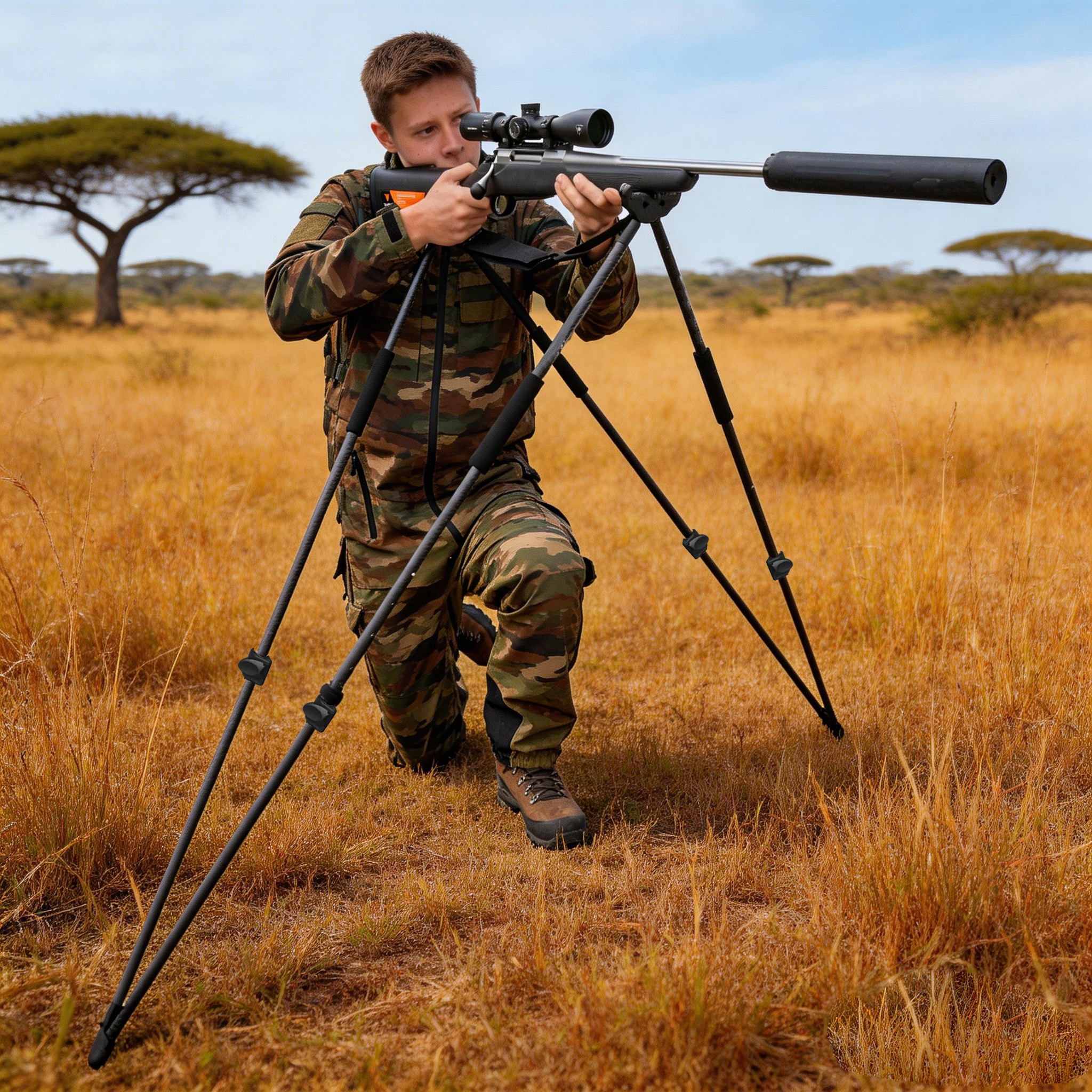
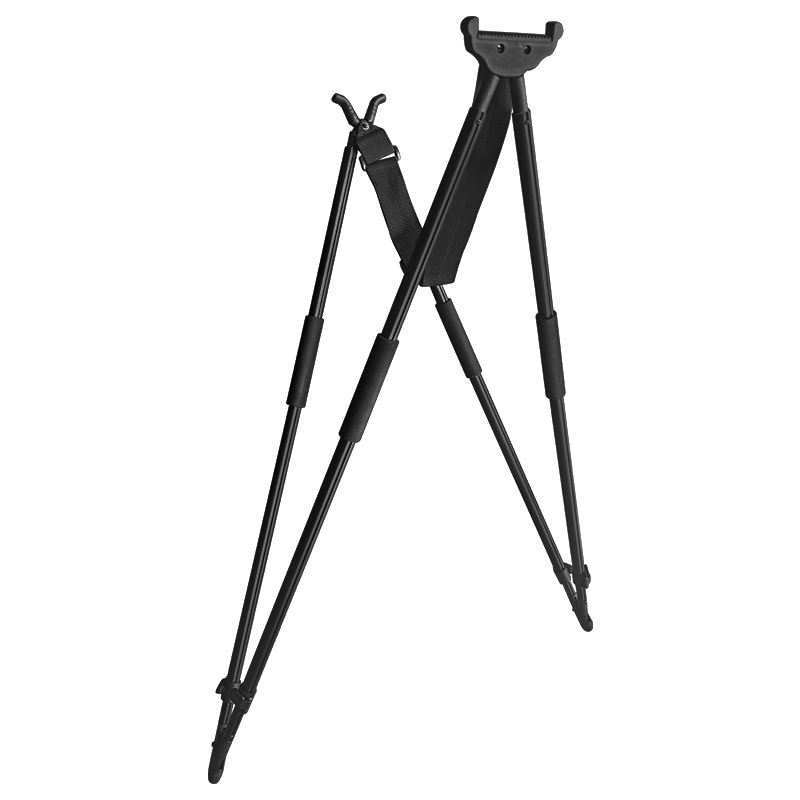
Then came the transition to modern alloys. By utilizing aircraft-grade materials, manufacturers started producing the Aluminum hunting stick, which changed the game entirely. We’re talking about dropping the overall weight to roughly 1.2 to 1.5 pounds without sacrificing an ounce of rigidity. But the material shift was only phase one. Phase two was the design evolution. The bipod is great, but it still requires the shooter to manage front-to-back sway. That limitation birthed the quad-pod design, providing a dual-point resting system for the firearm that effectively eliminates micro-movements.
Purpose
My goal in breaking this down is to give you a clear, actionable roadmap for updating your catalog. Transitioning your purchasing strategy isn’t just about buying what looks cool; it’s about aligning your inventory with measurable performance upgrades that your customers are actively searching for.
By importing a modern 4-legged shooting stick, you are directly addressing the primary pain points of your end-users: weight, deployment speed, and ultimate stability. In this breakdown, I’ll walk you through the market drivers pushing this demand, what to look for when negotiating with overseas suppliers, and the exact compliance and quality assurance metrics you need to hit to ensure your new inventory is a profitable success rather than a warranty nightmare.
Market and sourcing context
If we want to understand why this inventory swap makes financial sense, we have to look at the broader market context and the realities of global sourcing. The outdoor accessory market is highly competitive, and margins are won or lost in the sourcing phase. Right now, the cost delta between manufacturing a high-quality aluminum quad-stick and a legacy wooden model is shrinking, making the upgrade a no-brainer from a procurement standpoint.
However, navigating the supplier landscape requires a bit of finesse. You aren’t just buying a metal tube; you are buying a precision mechanical device with hinges, locking mechanisms, and specific load-bearing tolerances. Let’s dive into exactly what is driving the end-user demand and what you should expect when you start soliciting quotes from overseas manufacturers.
Demand drivers
The primary driver pushing consumers toward these new models is pure, measurable performance. When you put a traditional bipod up against modern Hunting 4-legged sticks, the difference in stability is staggering. Field tests consistently show that a four-point contact system reduces reticle wobble by up to 80% at distances over 200 yards. For a hunter, that is the difference between a clean, ethical harvest and a missed opportunity.
Beyond stability, versatility is driving sales. Consumers want gear that adapts to their environment instantly. Quick-deploy cam locks or twist locks allow a user to adjust their height from a 30-inch sitting position to a 65-inch standing position in under three seconds. This kind of rapid adaptability is something legacy gear simply cannot offer.
To put this into perspective, I’ve put together a breakdown of how the old guard stacks up against the new standard in the eyes of the consumer:
| Metric/Feature | Traditional Wood/Steel Bipod | Aluminum 4-Legged Stick |
|---|---|---|
| Average Weight | 2.5 – 3.5 lbs | 1.2 – 1.8 lbs |
| Deployment Time | 5 – 8 seconds | < 3 seconds |
| Stability (Wobble Reduction) | Baseline (2 points of contact) | Up to 80% better (4 points) |
| Retail Price Band | $40 – $70 | $89 – $149 |
| Target Demographic | Casual/Budget Shooters | Serious Hunters/Precision Shooters |
As you can see, while the retail price point is higher for the aluminum quad models, the performance metrics justify the premium, allowing you to capture a higher dollar value per sale.
Supplier landscape
When you look at the supplier landscape for these products, the vast majority of high-quality, cost-effective manufacturing is concentrated in specialized hubs, particularly around Ningbo and Shenzhen in China. These regions have the established extrusion and anodizing infrastructure required to produce high-grade aluminum components at scale.
From my experience, when you approach these factories, you need to be prepared for their standard operational metrics. Most reputable suppliers will require a Minimum Order Quantity (MOQ) of around 500 to 1,000 units, especially if you are asking for custom anodized colors like OD Green, Flat Dark Earth, or proprietary camouflage dipping. Lead times are currently hovering between 45 and 60 days from the approval of the golden sample to the time the container is loaded.
It’s also crucial to realize that not all factories are created equal. You want to partner with a supplier that actually understands sporting goods, not just a generic metal tube manufacturer. A factory that produces camera tripods, for instance, might not understand the shock-absorption requirements of a firearm rest. Always ask for their testing protocols regarding recoil stress before signing a purchase order.
Implementation and compliance
Getting the product conceptually is one thing; getting it onto your warehouse floor without a massive headache is another. Implementation and compliance are where I see a lot of first-time importers stumble. They get excited about the margins, rush the prototype phase, and end up with a container full of sticks with failing leg locks.
When you are dealing with an item that supports the weight of a heavy, often expensive piece of equipment, your defect rate needs to be virtually non-existent. I typically advise my clients to target a hard defect ceiling of less than 1.5%. Achieving that requires a rigorous approach to material specifications and a bulletproof operational checklist before mass production begins.
Key requirements
The first key requirement is the material grade. Do not let a supplier talk you into generic or recycled aluminum alloys to shave a few cents off the unit cost. You absolutely need to specify 6061-T6 or 7075-T6 aluminum. The T6 temper is non-negotiable because it provides the necessary yield strength. A properly manufactured Adjustable shooting stick needs to safely support at least 40 to 50 pounds of downward static pressure without the locking mechanisms slipping or the legs bowing.
Next is environmental resistance. These products are going to live in the dirt, rain, and snow. Your specifications must include a salt spray test requirement—typically 48 to 72 hours—to ensure the anodizing and any exposed steel hardware (like screws or pivot pins) won’t rust out after one season. Furthermore, the rubber or polymer used for the yoke (the V-shaped rest) must be UV-resistant and rated for extreme temperature fluctuations, ideally remaining pliable from -20°F up to 120°F.
Operational checklist
To keep your suppliers honest and your inventory pristine, you need a strict operational checklist. I never authorize a final balance payment until a third-party inspection team has run through a specific set of tests on a randomized statistical sample (usually following AQL 2.5 standards).
Here is the exact QA framework I use when auditing a production run of aluminum quad sticks:
| Component | QA Test / Specification | Tolerance / Action on Fail |
|---|---|---|
| Leg Locks (Twist/Cam) | Apply 45 lbs static downward pressure when fully extended. | Zero slippage allowed. Reject batch if >1% fail. |
| Aluminum Tubing | Caliper check wall thickness against approved CAD drawing. | Must be within +/- 0.1mm. Halt production if out of spec. |
| Finish/Anodizing | 48-hour continuous salt spray exposure test. | No visible oxidation or flaking. Review coating process. |
| Yoke Material | Shore hardness test and 24-hour freezer test (-20°F). | Must not crack or become brittle. Replace polymer supplier. |
| Pivot Hinges | Cycle test: Open and close 1,000 times. | Must retain smooth friction without loosening. |
By embedding this checklist directly into your supplier contract, you set clear expectations from day one. If the factory knows they will be held to these exact numbers, the quality of your initial samples—and the final mass production—will improve dramatically.
Conclusion
We’ve covered the why, the where, and the how. Transitioning your inventory from outdated, heavy rests to modern, multi-point aluminum systems isn’t just a defensive move to keep up with the competition; it’s an offensive strategy to improve your bottom line and elevate your brand’s reputation for quality.
The market has spoken, and the days of the heavy wooden bipod dominating the retail space are over. End-users are voting with their wallets, prioritizing mobility, rapid deployment, and rock-solid stability. As a buyer or product manager, your job is to stay ahead of that curve.
Decision takeaway
The ultimate takeaway here comes down to your return on investment. Yes, importing complex aluminum quad-pod systems requires more upfront capital and stricter quality control than buying simple legacy sticks. The unit cost from a premium overseas factory might sit between $25 and $35 depending on your MOQ and custom features.
However, when you look at the retail landscape, these premium setups easily command price points ranging from $89 to $149, and sometimes higher for specialized camouflage patterns. That leaves you with a very healthy gross margin sitting comfortably in the 45% to 55% band, even after factoring in freight, duties, and third-party QA inspections.
If you ask me, the decision is clear. By rigorously qualifying your suppliers, demanding strict 6061-T6 material standards, and enforcing a hard 1.5% defect ceiling, you can confidently phase out your stagnant legacy inventory. Replacing it with high-margin, high-performance aluminum stabilization gear is one of the smartest merchandising moves you can make this year.
Key Takeaways
- The most important conclusions and rationale for Why B2B Buyers are Importing Aluminum hunting stick and 4-legged shooting stick Models to Replace Traditional Shooting stick Inventory
- Specs, compliance, and risk checks worth validating before you commit
- Practical next steps and caveats readers can apply immediately
Frequently Asked Questions
Why are B2B buyers replacing traditional shooting stick inventory?
Aluminum and 4-legged models are lighter, faster to deploy, and more stable than wood or steel options, helping distributors match current buyer demand and reduce slow-moving legacy stock.
What makes aluminum hunting sticks a better wholesale option?
Aluminum cuts carry weight while maintaining rigidity, so retailers can offer easier field use without sacrificing durability or adding excessive shipping weight.
Why are 4-legged shooting sticks gaining more demand than bipods?
A 4-legged design gives better front-to-back control and noticeably reduces wobble, which appeals to hunters and shooting retailers focused on stability and shot consistency.
What should importers check before ordering from suppliers?
Confirm lock strength, hinge quality, weight specs, load capacity, finish consistency, and sample performance before placing bulk orders to avoid warranty issues.
Where can buyers review aluminum hunting stick and 4-legged shooting stick product details?
Buyers can check specifications, product features, and sourcing context on the product page at i384.goodao.net for faster model comparison and inquiry preparation.
Post time: Jun-12-2026