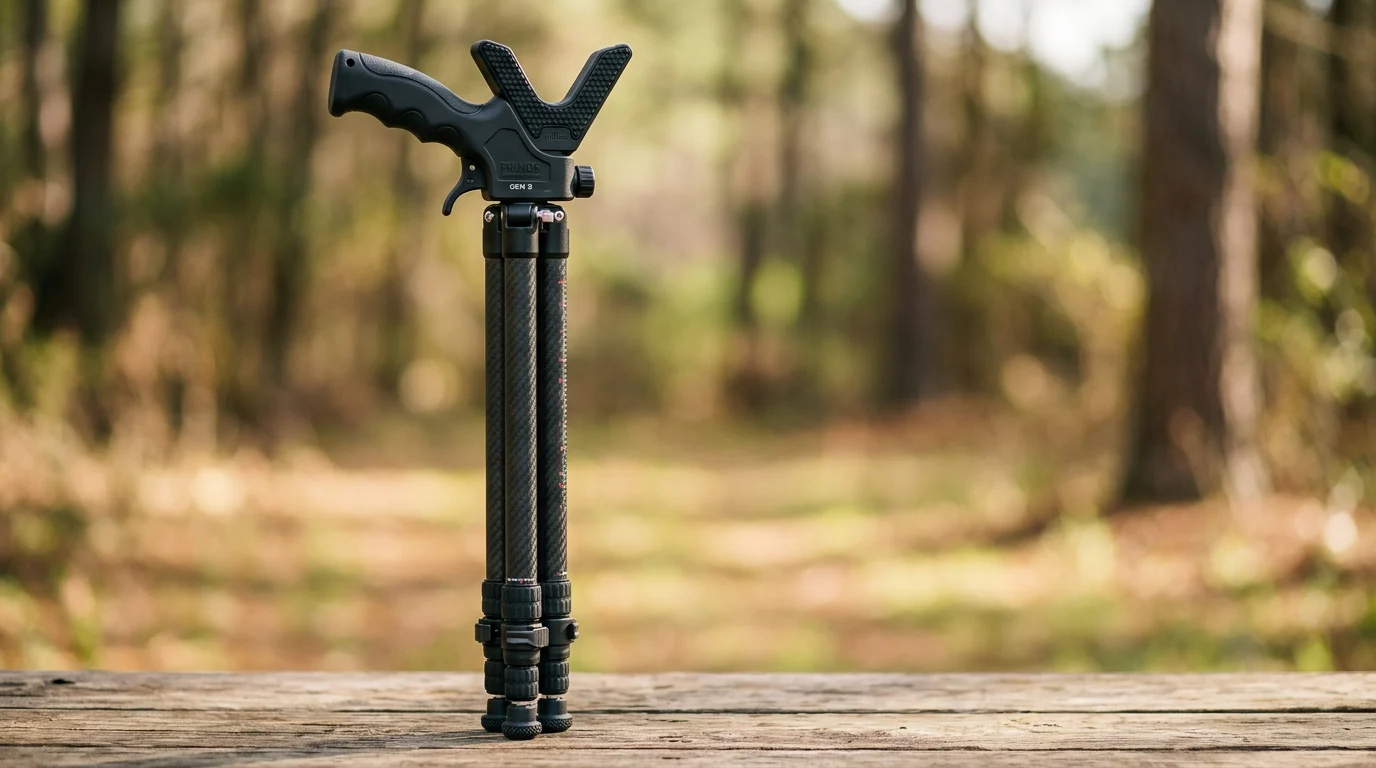
Market Demand for Carbon Fiber Shooting Sticks
I’ve spent years tracking hunting gear trends, and lately, the B2B conversation has shifted heavily toward carbon fiber. Outfitters, retailers, and distributors are all noticing a distinct change in what end-users are willing to carry into the backcountry. The days of hauling heavy, cumbersome gear are fading, replaced by a demand for high-strength, low-weight alternatives that also offer superior vibration damping.
Why buyers are shifting toward lightweight shooting supports
When you’re trekking miles through steep terrain, every ounce matters. Buyers are pivoting to carbon fiber because it offers a massive weight advantage without sacrificing rigidity. We’re talking about shaving off 30% to 40% of the weight compared to traditional aluminum models. A standard aluminum tripod often tips the scales around 4.5 to 5 pounds, whereas a quality carbon fiber shooting stick can easily hit the 2.8-pound mark. Beyond just saving weight, carbon fiber provides excellent vibration damping characteristics, absorbing the micro-tremors that can throw off a long-range shot. This combination of reduced fatigue and enhanced stability makes it a highly attractive up-sell for retailers.
Key demand signals from hunters, outfitters, and distributors
The demand signals are not just anecdotal. Industry reports and illustrative estimates suggest up to a 25% year-over-year increase in wholesale orders for carbon fiber supports. Outfitters who supply gear for guided elk and sheep hunts are specifically requesting carbon models to keep their clients moving faster and shooting more accurately when out of breath. Retailers are also noting that customers are willing to pay a premium for that packed volume efficiency and weight savings at the register, proving that the market for advanced composite gear is expanding well beyond niche backcountry enthusiasts.
Quality Standards for Carbon Fiber Shooting Sticks
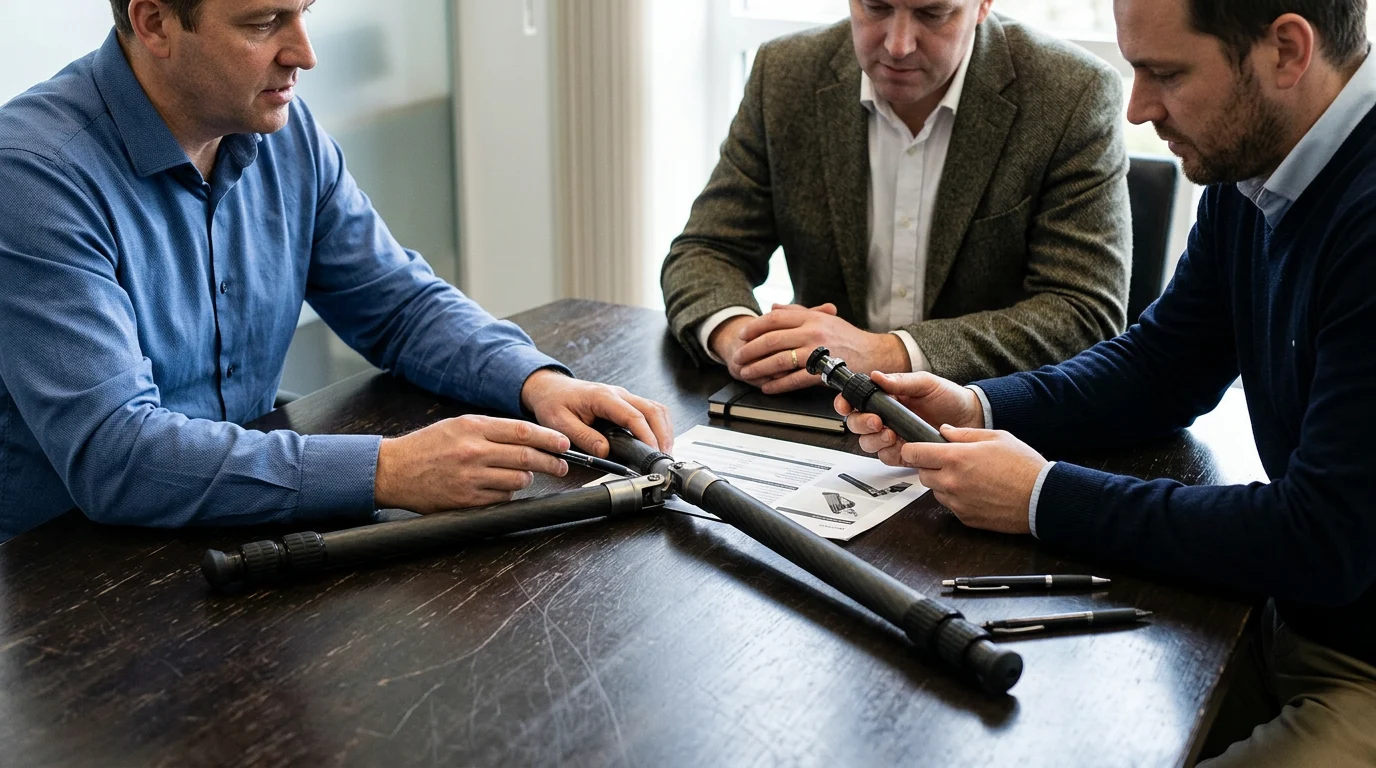
Not all carbon fiber is created equal, and when evaluating products for a B2B catalog, the spec sheet tells the real story. We need to look closely at how these sticks are built to ensure they survive brutal field conditions, rather than just looking good on a showroom floor.
Core specifications: tube layup, leg count, locks, and weight
The foundation of any solid stick is the tube layup. An 8-layer or 10-layer cross-weave carbon construction provides the necessary stiffness to handle heavy precision rifles. You’ll typically see maximum tube diameters ranging from 28mm to 32mm for heavy-duty models. Leg count is another crucial spec: 3-section legs offer faster deployment and better overall stability, while 4-section legs pack down smaller for travel. Finally, the locks—whether twist locks or flip levers—need to hold a minimum of 35 lbs of downward pressure without slipping. However, procurement managers must note a critical caveat: while carbon fiber boasts high tensile strength, it suffers from impact fragility. Unlike aluminum, which will merely dent when dropped against a jagged rock, carbon fiber is susceptible to catastrophic failure and splintering from sharp, direct blows. This durability limitation must be factored into field use expectations.
Differences between tripods, bipods, and monopods
Understanding the operational differences between platforms is key to stocking the right inventory. Here is how the core carbon fiber support types break down for retail partners:
| Support Type | Typical Carbon Weight (lbs) | Deployment Speed | Best Field Application |
|---|---|---|---|
| Monopod | 0.8 – 1.2 | Very Fast | Spot-and-stalk, tight brush, quick stabilization |
| Bipod | 1.5 – 2.2 | Fast | Kneeling/sitting, moderate ranges, open plains |
| Tripod | 2.5 – 3.5 | Slower | Precision shooting, long-range, standing shots |
Tripods are currently dominating the high-margin space, but keeping a mix of bipods and monopods ensures you capture the entire market, from casual whitetail hunters to serious western guides.
Durability factors that affect field performance
Durability in the field goes beyond just the carbon tubes. It is essential to check how a lightweight hunting stick handles extreme temperatures. The resin used in the carbon matrix, as well as the aluminum joints, needs to function flawlessly down to -20°C (-4°F) without becoming brittle or seizing up. Load capacity is another major factor; a premium stick should comfortably support at least 40 lbs of static weight to accommodate heavy precision rifles and the aggressive downward pressure a hunter applies when leaning into a shot.
Product Comparison and Cost Evaluation
When sitting at the negotiating table or deciding which product lines to carry, buyers must know how to weigh the specs against the price tag. The differences between a budget stick and a flagship model are stark once you know what to look for.
How to compare weight, rigidity, stability, and packed size
To effectively compare models, focus on the intersection of packed volume efficiency and deployed stability. A great carbon tripod should collapse to under 24 inches for easy strapping to a daypack, yet extend to over 60 inches to allow for comfortable standing shots. Rigidity is harder to put on a spec sheet, but testing it involves fully extending the legs and checking for lateral flex. If a stick wobbles at full extension, it will not hold a reticle steady at 400 yards. Also, compare the ball head or saddle mechanism—smooth panning and a secure lock-up are non-negotiable for serious shooters.
When premium carbon fiber models justify higher costs
You might wonder when it makes sense to stock a premium shooting stick that costs $250 to $350 wholesale, compared to a mid-tier option at $100. The justification lies in the failure rate and the target demographic. High-end buyers—those spending $3,000 on a rifle setup—will not tolerate a budget tripod failing on a once-in-a-lifetime hunt. Premium models justify their cost through tighter machining tolerances, zero-slip leg locks, and target defect rates estimated at less than 1% by top-tier manufacturers. If B2B clients cater to serious western hunters or precision shooters, the higher margins and lower return rates of premium sticks easily offset the initial inventory cost.
Sourcing and Quality Control
Finding a reliable manufacturing partner is half the battle. A slick supplier website doesn’t always translate to consistent quality on the factory floor. Procurement requires a rigorous approach to vetting suppliers and managing quality control before a single container ships.
How to evaluate an OEM carbon fiber shooting stick
supplier
When evaluating an OEM supplier, start by looking at their production capacity and history with carbon composites. Do they roll their own tubes, or are they just assembling sourced parts? Suppliers who can handle a Minimum Order Quantity (MOQ) of 300 to 500 units for custom branding often show they have scale but remain accessible. Lead times are also a critical metric; a reliable factory should deliver a production run in 45 to 60 days. Extremely short lead times, such as 20 days, should prompt a nuanced discussion about resin curing cycles. Rushing the curing process can severely compromise the structural integrity of the carbon fiber. Sourcing managers should insist on reviewing factory audit protocols and third-party certifications, such as ISO 9001, to ensure production standards are strictly maintained.
Inspection steps for clamps, joints, tubes, and accessories
Quality control has to be ruthless. Before approving a shipment, use a specific checklist to inspect the critical failure points.
| Inspection Area | Testing Method | Acceptable Standard |
|---|---|---|
| Tube Joints | Apply 40 lbs lateral force | Zero cracking or delamination |
| Leg Locks | 1,000 open/close cycles | Consistent tension, no slipping |
| Ball Head | 360-degree rotation under load | Smooth panning, no binding or grit |
| Hardware | Salt spray test (48 hours) | No visible rust or corrosion on bolts |
By standardizing these inspection steps, sourcing managers can catch faulty clamps or weak joints before they end up in customers’ hands and damage brand reputation.
Packaging, labeling, warranty, and compliance requirements
Finally, do not overlook the logistics of packaging and compliance. Drop-tested packaging—usually heavy-duty corrugated boxes with custom foam inserts—is necessary to ensure the sticks survive global transit. Compliance is equally critical: buyers must account for import tariff classifications (such as HS codes specific to sporting goods or photographic tripods), product liability standards, and regional labeling requirements in key markets like the USA and EU. Securing a robust warranty agreement with the OEM is also vital. When dealing in high-end hunting gear, expect the factory to back their product with at least a 2-year defect warranty, providing the confidence needed to offer a lifetime guarantee to retail buyers.
B2B Buying Decision Framework
Making the final call on a bulk purchase can be nerve-wracking, especially when committing significant capital to a new product line. A straightforward framework helps buyers transition from testing to stocking with total confidence.
How to move from samples to bulk orders
Never jump straight into a massive bulk order based on a spec sheet. Always start by ordering 3 to 5 pre-production samples. Once those arrive, send them out for 30 days of hard field testing. Drag them through the mud, leave them in freezing truck beds overnight, and mount heavy rifles on them. If the samples survive this abuse without the leg locks jamming or the carbon cracking, it provides the necessary validation to sign off on a 500-unit bulk order. This phased approach minimizes financial risk and sets clear expectations with the supplier.
How to balance performance claims, margins, and customer fit
At the end of the day, it’s all about balancing technical specs with business goals. Buyers must weigh the manufacturer’s performance claims against required profit margins, which industry benchmarks suggest typically need to sit between illustrative targets of 40% and 50% for retail viability. If a supplier offers an incredibly light stick but the wholesale price destroys that margin, it is not a good fit. By carefully curating a lineup of carbon hunting accessories, procurement teams can ensure they provide genuine field value to the end-user while maintaining a healthy, profitable B2B operation.
Key Takeaways
- Position carbon fiber shooting sticks as a premium upsell because they can cut weight by roughly 30% to 40% compared with traditional aluminum supports.
- Prioritize models around 2.8 pounds for backcountry hunters and outfitters who value reduced fatigue during long hikes in steep terrain.
- Check for 8-layer or 10-layer cross-weave carbon construction and 28mm to 32mm tube diameters when sourcing heavy-duty shooting sticks.
- Require leg locks to hold at least 35 pounds of downward pressure to reduce slippage during real field use.
- Educate buyers that carbon fiber improves stiffness and vibration damping but can suffer sharp-impact damage more severely than aluminum.
- Stock a mix of tripods, bipods, and monopods so retailers and distributors can serve stability-focused, lightweight, and fast-deployment hunting needs.
Frequently Asked Questions
Why are carbon fiber shooting sticks becoming popular in B2B hunting markets?
Retailers, outfitters, and distributors are seeing stronger demand because carbon fiber shooting sticks reduce carry weight, improve stability, and support premium pricing for serious hunters.
How much lighter are carbon fiber shooting sticks than aluminum models?
A quality carbon fiber shooting stick can be about 30% to 40% lighter than comparable aluminum models, with some tripods weighing around 2.8 pounds instead of 4.5 to 5 pounds.
What specifications should B2B buyers check before sourcing carbon fiber shooting sticks?
Buyers should review tube layup, tube diameter, leg sections, lock strength, total weight, packed length, and field durability before adding carbon fiber shooting sticks to a catalog.
Are carbon fiber shooting sticks more stable than aluminum shooting sticks?
Carbon fiber offers excellent stiffness and vibration damping, which can help reduce micro-movement during aiming. Stability still depends on leg design, lock quality, and shooting position.
What is the main durability concern with carbon fiber shooting sticks?
Carbon fiber handles load well but can be vulnerable to sharp impacts. Unlike aluminum, which may dent, carbon fiber can crack or splinter if struck hard against rocks or other edges.
Post time: Nov-18-2026