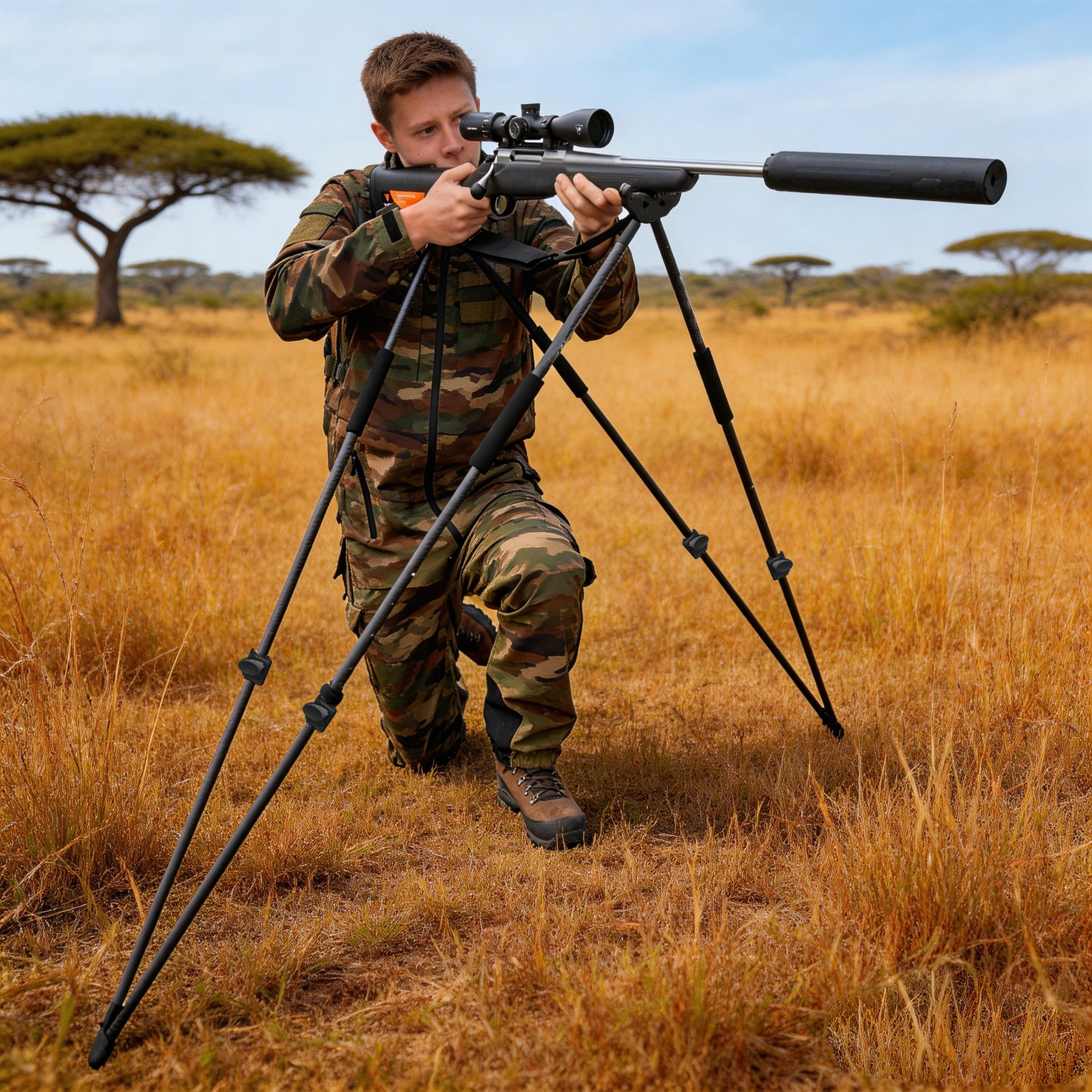
 Hunters are carrying less weight, expecting more stability, and pushing retailers to rethink what qualifies as a high-value shooting accessory. Across global wholesale channels, premium carbon fiber shooting supports are moving from niche upgrades to core inventory, driven by lighter pack requirements, stronger margin potential, and fewer field-performance complaints. This article examines why demand is rising, what specifications separate true premium models from basic carbon-labeled products, and how height adjustable mechanisms influence buyer confidence. For wholesalers, distributors, and outdoor retailers, the opportunity is not simply to stock more hunting sticks—it is to stock the right models with measurable performance advantages.
Product Specifications That Define Premium Quality
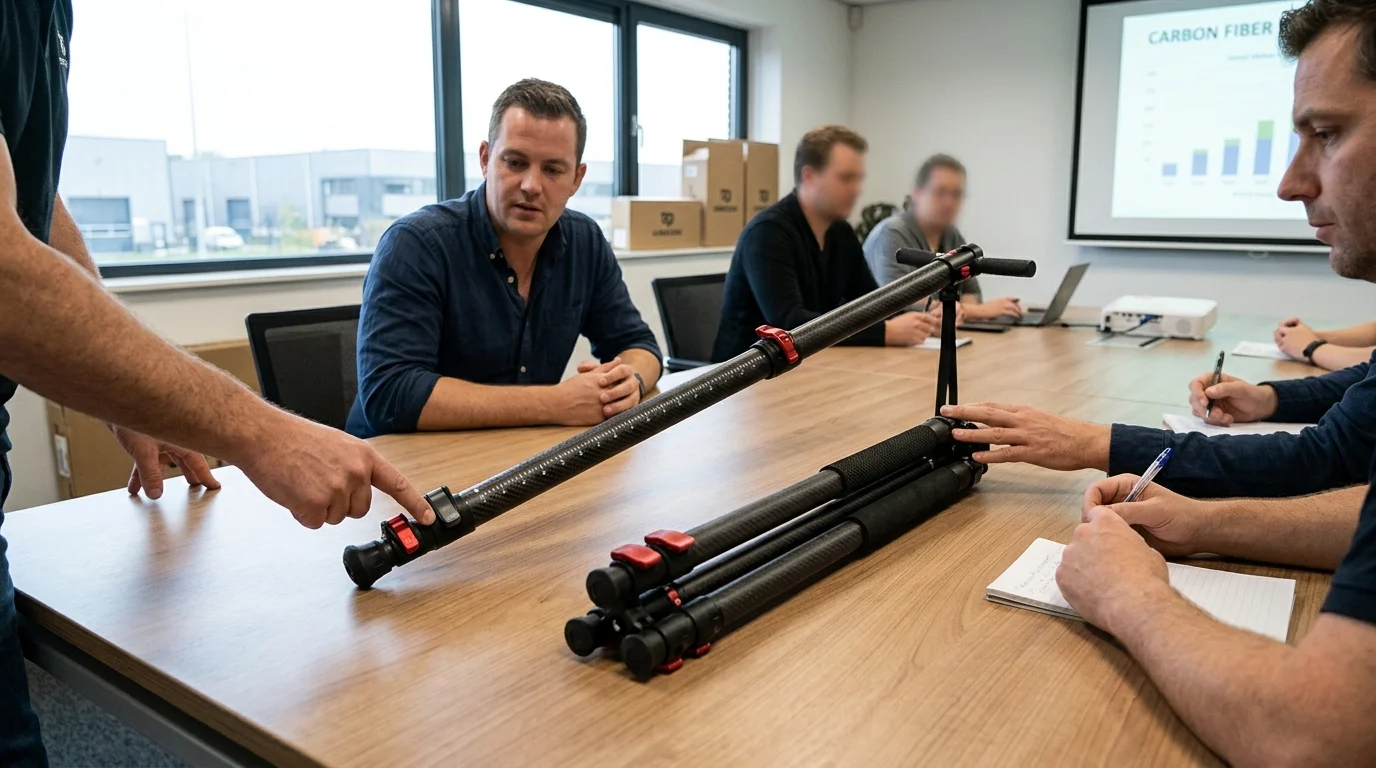
Getting into the weeds of product specifications is where profitable inventory is separated from dead stock. When evaluating a new line of shooting supports, it is best to look past the marketing gloss and go straight to the engineering spec sheet. To dominate the premium segment, buyers must know exactly what makes the product tick.
It’s all about the balance of materials, geometry, and construction methods. Let’s dig into the specific technical parameters that should be demanded from manufacturing partners to ensure the importation of genuinely premium quality.
Carbon fiber grades, tube construction, and wall thickness
The foundation of any top-tier stick is the carbon fiber grade. Most factories will default to standard modulus carbon, but for premium applications, buyers should specify Toray T300 or even T700 carbon fiber as a recommended benchmark. T700 offers significantly higher tensile strength, allowing the factory to use less material while maintaining rigidity.
Tube construction and wall thickness are equally critical. For a product that must withstand both lateral torque and vertical load, a roll-wrapped manufacturing process is highly recommended. It is important to note that benchmarks like a 1.2mm wall thickness or Toray T700 carbon are not universal; optimal specifications depend heavily on the stick’s overall design, the intended rifle caliber, and the specific field application. Buyers must confirm these engineering choices directly with the manufacturer. That said, dropping down to a 1.0mm wall thickness might save a few cents and grams, but it drastically increases the risk of the tube shattering under the recoil of a heavy magnum rifle.
Carbon fiber vs aluminum hunting sticks
To truly understand the value proposition, we have to look at the hard data comparing carbon fiber to traditional aluminum. Aluminum remains popular because it is cost-effective, highly tolerant to blunt impact, and often easier to repair or bend back into shape if damaged in the field. However, it suffers from a high thermal conductivity rate and a tendency to permanently deform past its yield strength.
Carbon fiber, on the other hand, offers excellent elastic recovery, flexing under pressure and returning to its original shape without permanent deformation. The trade-off is that carbon fiber can be brittle under sharp impact and is nearly impossible to fix if the tube cracks or splinters. Here’s a quick reference table useful for evaluating the core differences when sourcing new carbon fiber shooting supports:
| Specification | Premium Carbon Fiber (Toray T700) | Standard Aluminum (6061-T6) |
|---|---|---|
| Average Weight (3-section) | 450g – 550g | 750g – 900g |
| Yield Strength | High (Will flex/snap, won’t bend) | Moderate (Prone to permanent bending) |
| Thermal Conductivity | Very Low (Warm to the touch) | High (Freezes hands in winter) |
| Wholesale Cost Band | $35 – $60 / unit (Illustrative) | $12 – $25 / unit (Illustrative) |
Trade-offs between ultralight design, durability, and price
Designing the perfect stick is a constant battle between weight, durability, and cost. Pushing for an ultralight design—say, aiming for a total weight under 400 grams—requires ultra-high modulus carbon and titanium hardware. This pushes the wholesale cost up significantly, potentially placing the retail price out of reach for the average consumer.
Conversely, overbuilding the stick for maximum durability by increasing the wall thickness to 1.5mm sacrifices the lightweight advantage that made carbon fiber appealing in the first place. A common sweet spot for the wholesale market is a 1.2mm wall thickness with aluminum-alloy locking mechanisms. It keeps the FOB price competitive while delivering a product that survives the vast majority of field conditions.
Quality Control for Adjustable Shooting Stick Mechanisms
A premium carbon tube is useless if the locking mechanism fails when it matters most. Historically, the height-adjustable system is the number one source of warranty claims and negative reviews. If a stick collapses under the weight of a rifle, the hunter’s shot is ruined, and the brand’s reputation takes a massive hit.
Beyond mere functionality, safety and liability are paramount. A catastrophic locking-mechanism or tube failure in the field can cause serious injury to the user, creating significant legal liability and irreparable damage to a brand’s reputation. Quality control for these mechanisms requires rigorous testing protocols. Visual inspections of a batch are insufficient; mechanical stress tests that simulate years of harsh field use are mandatory.
Common failure points in twist-lock and clamp-lock systems
The industry primarily uses two systems: twist-locks and clamp-locks (or flip-locks). Twist-locks are sleek and snag-free, but their internal expansion collets are notorious for seizing up when exposed to fine dust or freezing rain. Clamp-locks are easier to operate with gloves, but if the factory uses cheap ABS plastic for the levers, they will inevitably crack in sub-zero temperatures.
To avoid these failures on height-adjustable models, many importers mandate that factories use nylon reinforced with 30% fiberglass for all plastic clamp components. Furthermore, any locking mechanism should be certified to hold a minimum vertical static load—often benchmarked at an illustrative 30 kg (66 lbs), though this varies by design and intended caliber—without slipping.
Practical inspection steps before bulk purchasing
Before authorizing the final balance payment for a bulk order, a third-party inspector should be on the factory floor. Standard practice often involves implementing an AQL (Acceptable Quality Limit) of 1.5 for major defects and 4.0 for minor defects. But beyond standard visual checks, functional testing is essential.
The inspector should perform a “temperature shock” test on a random sample of units. This involves chilling the sticks to -20°C for two hours, then immediately testing the locks. Next, load-test them to the recommended 30-35 kg benchmark. If the locks slip, crack, or fail to engage smoothly, the batch should be rejected. Compromising here is dangerous; fixing a locked-up stick in the field is nearly impossible.
How to compare OEM and ODM manufacturing options
When sourcing, buyers face a choice between OEM (Original Equipment Manufacturer) and ODM (Original Design Manufacturer). Using an ODM means buying the factory’s existing locking mechanism design. This can save thousands of dollars in custom tooling costs and usually allows for a lower Minimum Order Quantity (MOQ), often around 500 units.
However, for a truly proprietary, rapid-deploy locking cam that sets a brand apart, the OEM route is required. OEM requires paying for custom molds and usually demands a higher MOQ. It is often recommended that new importers start with a proven ODM lock design that passes load testing, and then transition to OEM once they have established consistent sales velocity.
Compliance, Packaging, and Landed Cost Factors
Designing the best product in the world means little if it gets held up in customs or crushed in transit. Logistics, packaging, and regulatory compliance are sometimes treated as afterthoughts in the wholesale trade, which can be a costly mistake.
Buyers can lose significant capital if they fail to factor in duties or specify adequate carton strength. Let’s walk through the essential steps to ensure inventory arrives legally, safely, and at the projected cost.
Regional requirements and product labeling rules
Depending on the specific country, region, and product classification, hunting accessories can trigger various regulatory tripwires. For instance, in the European Union, rubberized grips or plastic components often must comply with REACH regulations, meaning they cannot contain restricted phthalates or heavy metals. Failing a random customs lab test can result in the entire shipment being rejected or destroyed.
In the United States, particularly for the California market, adherence to Proposition 65 labeling requirements may be necessary if foam grips contain specific chemicals. Beyond chemical restrictions, buyers should also verify compliance with relevant mechanical safety standards and hunting-equipment regulations. Requesting certified load-test documentation ensures the product meets regional liability thresholds for field gear. Readers should always consult licensed legal advisors and require suppliers to provide up-to-date SGS or TUV test reports before shipping.
Packaging methods that protect carbon fiber hunting sticks
Carbon fiber is incredibly strong under tension but highly susceptible to crushing forces. Shipping these items in cheap, thin cardboard is a recipe for disaster. Best practices dictate using custom EVA foam inserts that cradle the stick, ensuring no two carbon tubes knock against each other during ocean transit.
For the outer master cartons, demand 5-ply corrugated cardboard with an Edge Crush Test (ECT) rating of at least 44 lbs/in. When dealing with premium compact shooting sticks, it is also wise to require the factory to drop-test the master carton from a height of 1.2 meters onto concrete on all corners and faces to ensure zero internal damage.
Key landed-cost variables for importers and wholesalers
Calculating the true landed cost is the only way to set accurate wholesale pricing. Buyers must account for the FOB price, ocean freight, insurance, drayage, and import duties. For example, shooting sticks often fall under HTS code 3926.90 (other articles of plastics/carbon) or 9507.90 (fishing/hunting gear).
It is critical to consult with a licensed customs broker to verify exact HTS codes, duty rates, and regional requirements, as these figures are purely illustrative and subject to change based on country of origin, destination, and exact product classification.
Here is an illustrative landed cost breakdown for a hypothetical 1,000-unit order of premium sticks:
| Cost Variable | Estimated Cost per Unit (USD) | Total for 1,000 Units |
|---|---|---|
| Factory FOB Price | $42.00 | $42,000 |
| Ocean Freight (LCL) | $2.50 | $2,500 |
| Import Duties (est. 5%) | $2.10 | $2,100 |
| Customs Broker & Fees | $0.45 | $450 |
| Domestic Freight to Warehouse | $0.85 | $850 |
| Total Landed Cost | $47.90 | $47,900 |
Inventory and Supplier Selection Strategy
With a solid product and logistics plan in place, the final puzzle piece is managing inventory and selecting the right long-term supply partners. Tying up all working capital in a single SKU is a high-risk game that is generally advised against.
Instead, a smart wholesale strategy requires a balanced assortment, precise seasonal timing, and a supplier that acts as a strategic partner rather than just a transaction point. Here is a framework for building a resilient, profitable supply chain.
Assortment planning across entry, mid-tier, and premium models
When planning inventory, a common illustrative framework is the 60/30/10 assortment rule. Allocate 60% of the open-to-buy budget to reliable, mid-tier carbon fiber models that hit the volume price points. Dedicate 30% to entry-level aluminum or hybrid models to capture price-sensitive buyers.
The final 10% should be reserved for ultra-premium, highly specialized gear. For example, stocking a complex 5-legged shooting stick made of T700 carbon fiber acts as a halo product. Even if it doesn’t sell in massive volumes, it elevates the brand’s perception and shows retailers that the distributor carries top-tier tactical inventory.
Demand forecasting for seasonal hunting products
Hunting is a highly seasonal industry, and buying calendars must reflect that. The peak retail selling season in North America and Europe runs from late August through November. Working backward, if sea freight takes 35 days and factory lead times are typically 45 to 60 days, purchase orders need to be placed no later than early May.
Missing this window and relying on air freight to meet retailer deadlines will cause shipping costs to skyrocket significantly, instantly wiping out profit margins. Accurate demand forecasting using previous years’ Q3/Q4 sell-through data is essential to timing these POs perfectly.
Decision framework for choosing the right supplier
Finally, choosing the right supplier is about more than just finding the lowest FOB price. Suppliers should be evaluated on three main criteria: quality management systems, communication speed, and scalable capacity. A factory should ideally hold a valid ISO 9001 certification to even make it onto a shortlist.
Furthermore, it is crucial to look closely at their defect replacement policy. A reliable partner will agree in writing to a reasonable defect allowance and will credit the buyer for any un-sellable units on the next PO. If a supplier balks at signing a clear QC agreement or hesitates to accept third-party inspections, it’s a massive red flag. It is better to walk away and find a partner who stands behind their manufacturing quality.
Summary and Next Steps
Successfully navigating the wholesale market for premium carbon fiber shooting sticks requires balancing technical specifications with rigorous quality control and compliance. Optimal specs will always depend on your target audience, price point, and factory capabilities, but demanding transparency from manufacturing partners is universal. As a concrete next step, wholesale buyers should align their Q3/Q4 demand forecasts with these premium inventory trends. Begin by requesting sample test reports for load capacities and material grades, and ensure a comprehensive QC agreement—detailing defect allowances and third-party inspection rights—is negotiated before issuing any bulk purchase orders.
Key Takeaways
- Wholesale buyers should prioritize carbon fiber hunting sticks under 600 grams when targeting backcountry hunters who value low pack weight and stable rifle support.
- Retailers can improve accessory margins by stocking premium carbon fiber shooting sticks instead of relying only on entry-level aluminum models.
- A true premium product should specify multi-layered cross-directional carbon construction, a 3K or 12K finish, and strict batch weight tolerances.
- Reliable height adjustment is essential because jammed mechanisms and unstable locks increase returns and weaken retailer confidence.
- The reported 8% to 12% year-over-year rise in advanced shooting support orders signals a strong inventory opportunity for global wholesalers.
Frequently Asked Questions
Why are carbon fiber hunting sticks gaining wholesale demand?
Wholesale demand is rising because hunters want lighter, stronger shooting supports, and retailers can earn higher margins on premium gear. Reports cited in the article show an illustrative 8% to 12% year-over-year increase in orders for advanced shooting supports.
What weight target should buyers look for in premium hunting sticks?
Many retailers are asking for models under 600 grams, or about 1.3 lbs, while still supporting heavy, large-caliber rifles. This balance of low carry weight and field stability is a key purchase driver.
What makes a carbon fiber shooting stick truly premium?
Premium models should use multi-layered, cross-directional carbon construction, tight weight tolerances, and a durable 3K or 12K surface finish. Buyers should avoid products that only use a basic carbon label without clear material specifications.
How does a height adjustable mechanism improve hunting performance?
A height adjustable mechanism helps hunters adapt quickly to standing, kneeling, or uneven-terrain shots. For wholesale buyers, reliable adjustment also reduces complaints linked to jammed locks, unstable rests, or poor field usability.
Why do retailers prefer premium carbon fiber over entry-level aluminum sticks?
Premium carbon fiber models are lighter, resist corrosion, absorb vibration, and often reduce product returns. They also support higher accessory margins per square foot compared with lower-priced aluminum alternatives.
Post time: Jul-07-2026