Define Your Wild Transport Bag Sourcing Needs
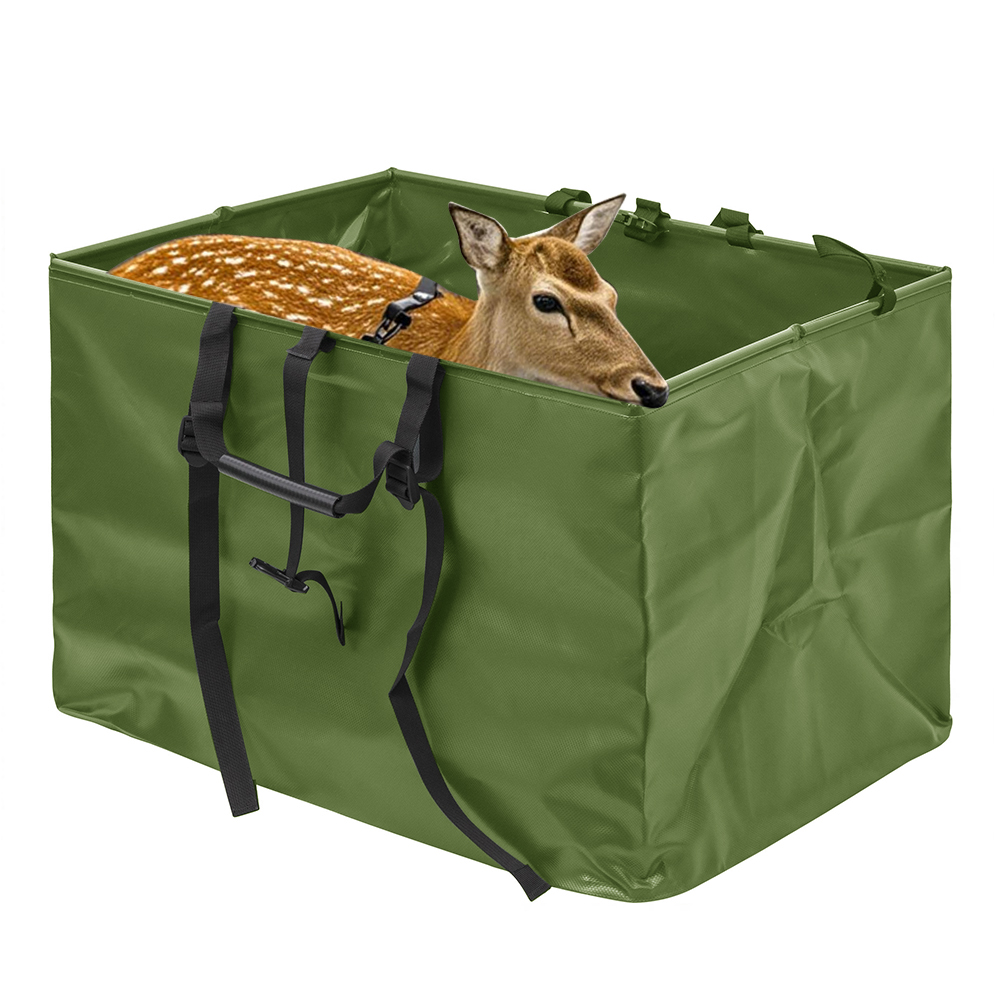
I’ve been in the outdoor gear sourcing game for a long time, and if there’s one thing I’ve learned, it’s that sourcing heavy-duty gear isn’t like buying generic promotional tote bags. When you’re looking for a reliable partner to manufacture what I often refer to as “wild transport bags“—an umbrella term for rugged expedition duffels, tactical game haulers, and specialized meat carriers—the stakes are high. Your end-user is going to drag this bag through mud, strap it to ATVs, and load it with jagged, heavy, and sometimes messy cargo.
Before you even start firing off messages on Alibaba or emailing factory reps, you have to get your own house in order. If you approach a supplier with vague ideas, you’ll get vague pricing and inconsistent quality. Defining exactly what you need up front is the only way to separate the high-end technical sewing factories from the shops that just churn out cheap school backpacks.
Target Use Cases and Buyer Channels
The first thing I always nail down is who is actually buying this bag and how they plan to use it. Are you selling direct-to-consumer to backcountry hunters who need to haul elk quarters? Are you supplying a tactical distributor where the bags will be used for heavy ammo and plate carriers? Or are you aiming for the general camping market where the bag just needs to survive a weekend in the back of a pickup truck?
Your buyer channel dictates your price point, which in turn dictates the factory you should choose. If you’re selling a premium backcountry hauler for $250 retail, you need a factory that understands tight tolerances and high-end materials. If you’re supplying big-box retailers where the bag retails for $49.99, you’ll need a high-volume factory optimized for cost engineering. Knowing your target landed cost right out of the gate saves weeks of wasted negotiation.
Bag Types and Required Order Volumes
Next, you need to define the exact form factor and how many units you plan to order. Wild transport bags come in several core variations: heavy-duty duffels with backpack straps, structured frame packs, and specialized folding game bags. If you are specifically looking for a specialized game carrier manufacturer, you have to realize that factories specialize. A factory great at sewing unstructured 1000D Cordura duffels might not have the RF welding machines needed for a fully waterproof, blood-proof game bag.
Then there’s the reality check of order volumes. In my experience, most reputable technical bag factories have a Minimum Order Quantity (MOQ) of 500 to 1,000 units per colorway, though it is important to note that these numbers are benchmarks that vary by country, season, and factory size. If you want a custom Pantone color for the fabric, that MOQ often jumps to 3,000 yards of fabric (which translates to roughly 1,500 to 2,000 bags). If you only want 200 units to test the market, you’ll likely have to use stock fabric colors (like standard black, coyote brown, or olive drab) and accept a 15% to 20% surcharge on the unit price.
| Bag Style / Type | Typical Factory MOQ | Estimated FOB Cost Band | Best Use Case |
|---|---|---|---|
| Rugged Expedition Duffel | 500 units / color | $18.00 – $35.00 | General wilderness, truck bed transport |
| RF-Welded Waterproof Hauler | 800 units / color | $25.00 – $45.00 | Marine, extreme weather, ATV transport |
| Folding Game/Meat Carrier | 500 – 1,000 units | $12.00 – $28.00 | Backcountry hunting, quarter hauling |
Verify Product Specifications and Quality
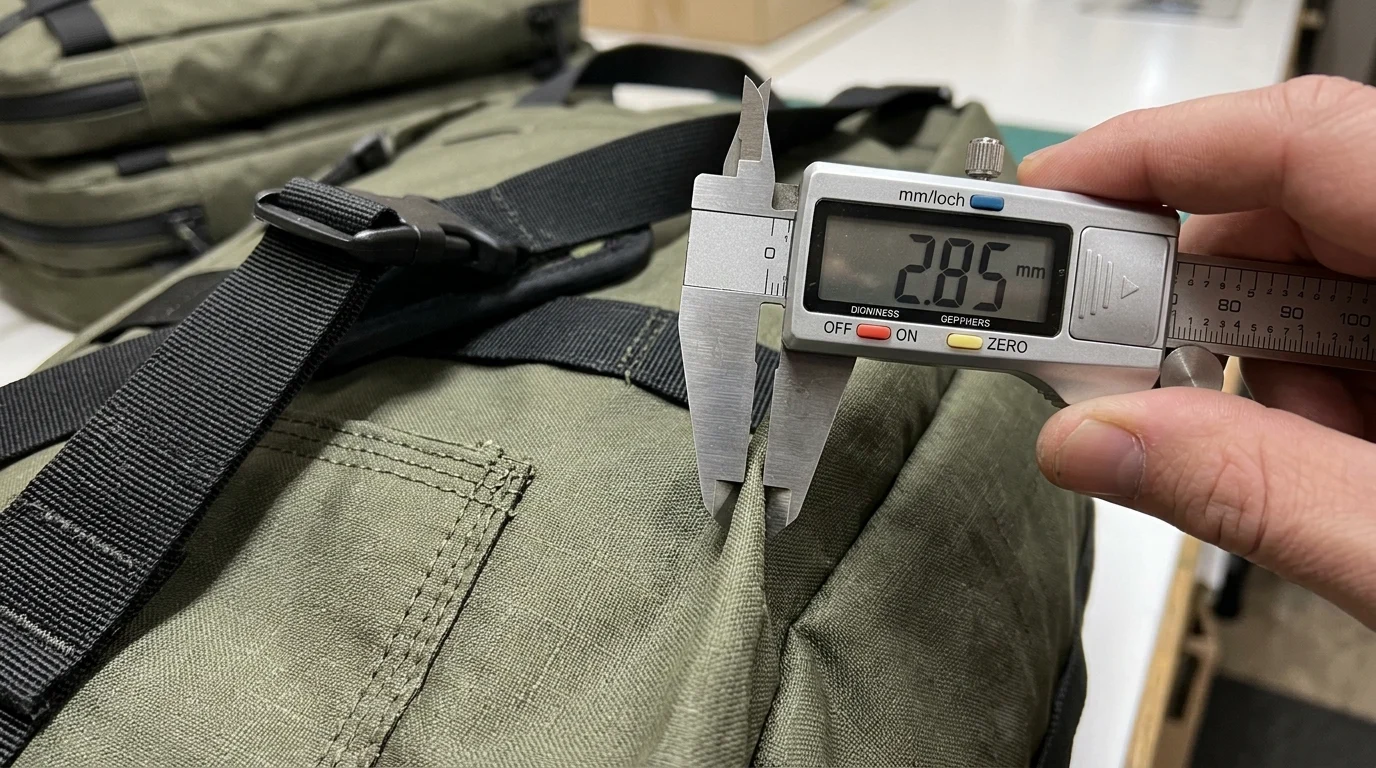
You can’t leave quality up to interpretation. If your tech pack just says “durable nylon” and “strong zipper,” the factory will source the cheapest materials that loosely fit that description, and I guarantee it won’t survive a single season in the wild. You have to specify every single component on your Bill of Materials (BOM).
Materials, Coatings, Zippers, and Buckles
Let’s talk fabrics. For wild transport, you’re generally looking at 500D to 1000D Nylon or Polyester. Nylon is inherently stronger and has better abrasion resistance than polyester, but it costs about 30% more. If you’re designing a folding game bag, you might also need an internal coating. I always push for TPU (Thermoplastic Polyurethane) coatings rather than standard PU (Polyurethane) or PVC. TPU doesn’t crack in freezing temperatures and is far more environmentally friendly and durable.
Hardware is just as critical. I never compromise on zippers for outdoor gear. Specify YKK or SBS (a solid, more cost-effective alternative if you’re watching margins), and mandate a #8 or #10 coil or vislon zipper for main compartments. For buckles and D-rings, demand POM (polyoxymethylene) plastic from brands like Duraflex or Woojin. Standard cheap ABS plastic buckles will shatter the first time they are stepped on in sub-zero weather.
Waterproofing, Abrasion Resistance, and Weight
When hauling game or gear through the wilderness, weather resistance and load-bearing capacity are everything. If you claim a bag is waterproof, you need to back it up. I specify a hydrostatic head rating of at least 10,000mm for waterproof materials. Furthermore, the construction matters: stitched seams will leak unless they are taped, and for true waterproofing, you need a factory capable of RF (Radio Frequency) welding the seams.
Abrasion resistance and weight capacity go hand in hand. If you’re designing a heavy-duty game carrier, it might need to comfortably hold 100 to 150 lbs of dead weight without the handle webbing tearing out. This means specifying bar-tack stitching at all stress points and ensuring the webbing wraps entirely under the bag rather than just being sewn into the top seam.
Samples, Testing, and Specification Sheets
Never move to mass production without a golden sample. Once I send my tech pack, I expect a prototype within 15 to 20 days. When that sample arrives, I test it mercilessly. I load it with 50kg (about 110 lbs) of sandbags, hang it by the straps for 48 hours, and then drop it from a truck tailgate. Keep in mind that these are examples of extreme stress testing, not mandatory industry standards. You should advise your team to set pass/fail thresholds aligned with your specific product warranty and intended use case.
Make sure the factory provides a detailed specification sheet with the sample, confirming the exact fabric denier, zipper models, and thread type (e.g., bonded nylon thread). If the sample fails your drop or water tests, revise the spec sheet, demand a second sample, and do not sign off on the PO until the physical product matches your expectations perfectly.
Evaluate Manufacturer Capabilities
Finding a factory on a sourcing directory is easy; verifying that they can actually build your product to scale is the hard part. I’ve walked dozens of factory floors, and the difference between a high-end technical manufacturer and a messy, disorganized sweatshop is immediately apparent in their equipment and workflow.
Factory Capacity and Production Equipment
You need to ask specific questions about their machinery. Do they use computerized CNC fabric cutters, or are they cutting 1000D nylon by hand with rotary saws? CNC cutting ensures that every single panel is identical, which is crucial for complex bag geometries. If your bag requires waterproofing, ask how many RF welding machines they have on the floor.
Capacity is another major factor. A factory might make great samples, but if their maximum monthly output is 5,000 bags and you need 10,000 bags delivered in 45 days, you’re setting yourself up for delays. I usually look for mid-sized factories with a benchmark monthly capacity of 30,000 to 50,000 units. While these numbers vary, facilities of this size are generally large enough to have professional QC processes but small enough that an order of 1,000 units actually matters to them.
OEM, ODM, and Private Label Options
Understand how you want to work with the manufacturer. OEM (Original Equipment Manufacturer) means you provide the complete tech pack and they build your exact design. This requires more upfront work from you but gives you total IP control. ODM (Original Design Manufacturer) means you select an existing design the factory already makes and slap your logo on it. This is faster and avoids tooling costs.
For example, if you find a great existing hunting game transport design that the factory already produces, going the ODM or Private Label route can often save you $1,500 to $3,000 in pattern-making and custom mold fees, depending on the factory. Just be aware that if you go ODM, your competitors can easily buy the exact same bag from the same factory.
| Manufacturing Model | Your IP Control | Upfront Tooling / R&D Cost | Speed to Market |
|---|---|---|---|
| OEM (Custom) | High – You own the design | High ($1k – $3k+) | Slow (3-5 months) |
| ODM (White Label) | Low – Factory owns design | Low to Zero | Fast (1-2 months) |
| Private Label | Low – Existing product | Zero (just logo setup) | Very Fast (Weeks) |
Communication and Documentation Standards
Good communication will save a project; bad communication will sink it. I evaluate communication from the very first email. Does the sales rep answer all my questions, or just the easy ones? Do they push back when my design is flawed? A good factory will tell you if a seam placement is weak; a bad factory will just sew it, let it fail, and say “we followed your drawing.”
Look for standard documentation practices. Ask for their ISO 9001 certification and verify its authenticity. Since buyers cannot always visit the factory floor themselves, detailed virtual tours or third-party audits are often necessary to confirm a supplier’s capabilities. Request to see a blank Quality Control (QC) checklist. They should be familiar with standard defect rate tolerances, specifically AQL (Acceptable Quality Limit). For premium outdoor gear, I mandate an AQL of 1.5 for major defects and 4.0 for minor defects.
Review Compliance, Logistics, and Costs
A great product is useless if it gets seized at customs or if the shipping costs wipe out your profit margins. The logistics and compliance phase is where many newer brands lose their shirts. You have to calculate the true landed cost, not just the factory gate price.
Safety, Labeling, and Packaging Requirements
Depending on where you are selling, your bags must meet specific chemical and safety regulations. Wholesale buyers should organize these requirements by their target market:
- United States: If you’re importing into the US, particularly California, you need to ensure the materials (especially PVC or PU coatings) are Prop 65 compliant, meaning they carry appropriate warning labels if they contain restricted chemicals like phthalates and lead above safe harbor levels.
- European Union: For the EU market, your products must strictly comply with REACH standards regarding chemical usage.
- Canada: Products entering Canada should meet national safety guidelines and often require bilingual (English and French) labeling for retail compliance.
Regardless of the market, packaging is strictly regulated. Your factory should pack the bags in polybags that are at least 1.5 mil thick, complete with printed suffocation warnings in the language of your distribution channel. Furthermore, require the factory to include silica gel packets in every bag to prevent mold during the humid ocean transit. A container sitting on a ship for 30 days can experience massive temperature swings, leading to “container rain” that will ruin unprotected textiles.
Tooling, Unit Price, and Landed Cost
When you get a quote, make sure you know exactly what is included. A factory might quote you $22.00 per unit, but you need to ask if that is EXW (Ex Works) or FOB (Free on Board). I always negotiate FOB terms, meaning the factory pays to transport the goods to the nearest port and clears them for export.
You must also account for tooling and setup costs. Custom zipper pulls might cost $300 for the mold, and a custom woven logo label might require a $100 setup fee. When calculating your true landed cost, take the FOB unit price, add your ocean freight (which can run $3,000 to $6,000 for a 40HQ container as of 2024, though this is merely an illustrative benchmark that fluctuates with market volatility and shipping routes), customs duties, and local drayage.
Duty rates depend heavily on the HTS classification and country of origin. While base rates for synthetic bags in the US are often 17% to 20%, imports from China currently face additional Section 301 tariffs (often an extra 25% on top of the base rate). Since these percentages act as illustrative benchmarks rather than universal rules, always verify current rates with a licensed customs broker. That $22.00 FOB bag can quickly become a $35.00 landed bag.
Lead Times, Shipping Terms, and Delivery Risks
Lead times in the bag manufacturing industry fluctuate wildly based on the season. Generally, expect 45 to 60 days for production once the deposit is paid and materials are ordered. However, if you order right before Lunar New Year, your lead time could easily stretch to 90 days.
Shipping terms dictate your risk. While some buyers prefer DDP (Delivered Duty Paid) where the factory handles everything straight to your warehouse door, I prefer to control the freight. By hiring my own freight forwarder and buying under FOB terms, I get better visibility into where my inventory actually is, and I can insure the cargo myself against loss or damage at sea.
Choose the Best Supplier
After gathering quotes, samples, and compliance documents from a shortlist of factories, it’s time to make a decision. I never just pick the factory with the lowest unit price. That’s a rookie mistake that almost always results in poor quality or delayed shipments.
Supplier Scorecard for Quality, Cost, and Service
I use a weighted supplier scorecard to make objective decisions. I typically weigh Quality (based on the physical sample and factory machinery) at 40%, Total Landed Cost at 30%, and Communication/Service (response times, English proficiency, willingness to problem-solve) at 30%.
If Factory A quotes $25 a bag but took three weeks to make a sloppy sample, and Factory B quotes $27 a bag but delivered a flawless sample in 10 days with great communication, Factory B wins every time. That $2 per bag difference will easily be eaten up by the cost of customer returns and ruined reputation if you go with the cheaper, less reliable option.
Pilot Orders, Revisions, and Final Approval
Finally, even when you’ve chosen your champion, never jump straight into a massive purchase order. The golden rule of overseas sourcing is to start with a pilot order. If your ultimate goal is to buy 5,000 units, negotiate a pilot run of 300 to 500 units first.
Before placing this pilot order, negotiate a written remediation clause in your purchase agreement that clearly outlines terms for rework, replacement, or discounts if defects are found. This pilot run tests the factory’s mass-production capabilities, which are very different from their sample room capabilities. Before paying the final 70% balance on that pilot order, hire a third-party inspection company (which costs about $250 to $300 per man-day, depending on the region) to go to the factory and inspect the goods against your golden sample. Only when the inspection report comes back clean do you wire the final payment and authorize the shipment.
Key Takeaways
- Define your target user, buyer channel, price point, and landed cost before requesting quotes from wild transport bag suppliers.
- Choose a manufacturer with experience in your exact bag format, whether it is a heavy-duty duffel, frame pack, or folding game carrier.
- Expect many technical bag factories to require 500 to 1,000 units per colorway for custom production.
- Plan for higher MOQs when requesting custom Pantone fabrics, often around 3,000 yards or 1,500 to 2,000 finished bags.
- Verify that the factory has the right equipment, such as RF welding machines, if you need waterproof or blood-resistant construction.
Frequently Asked Questions
What should I define before contacting a wild transport bag manufacturer?
Clarify the bag type, target buyer, use case, expected retail price, landed cost, materials, colorways, and order volume. Specific requirements help factories quote accurately and prevent quality mismatches.
What MOQ should I expect for custom wild transport bags?
Many reputable technical bag factories require 500 to 1,000 units per colorway. Custom fabric colors may require about 3,000 yards of fabric, often equal to roughly 1,500 to 2,000 bags.
Why does the end-use matter when choosing a manufacturer?
A bag for elk quarters, tactical gear, or weekend camping needs different materials, stitching, structure, and testing. Matching the factory to the real use case improves durability and cost control.
Can one factory make every type of outdoor transport bag?
Not always. A factory skilled in 1000D Cordura duffels may not have RF welding equipment for waterproof or blood-resistant folding game bags, so specialization matters.
How does my sales channel affect sourcing decisions?
Premium direct-to-consumer gear can support higher-end materials and tighter tolerances, while big-box retail often requires cost engineering and higher production efficiency to hit lower price points.
Post time: Aug-27-2026