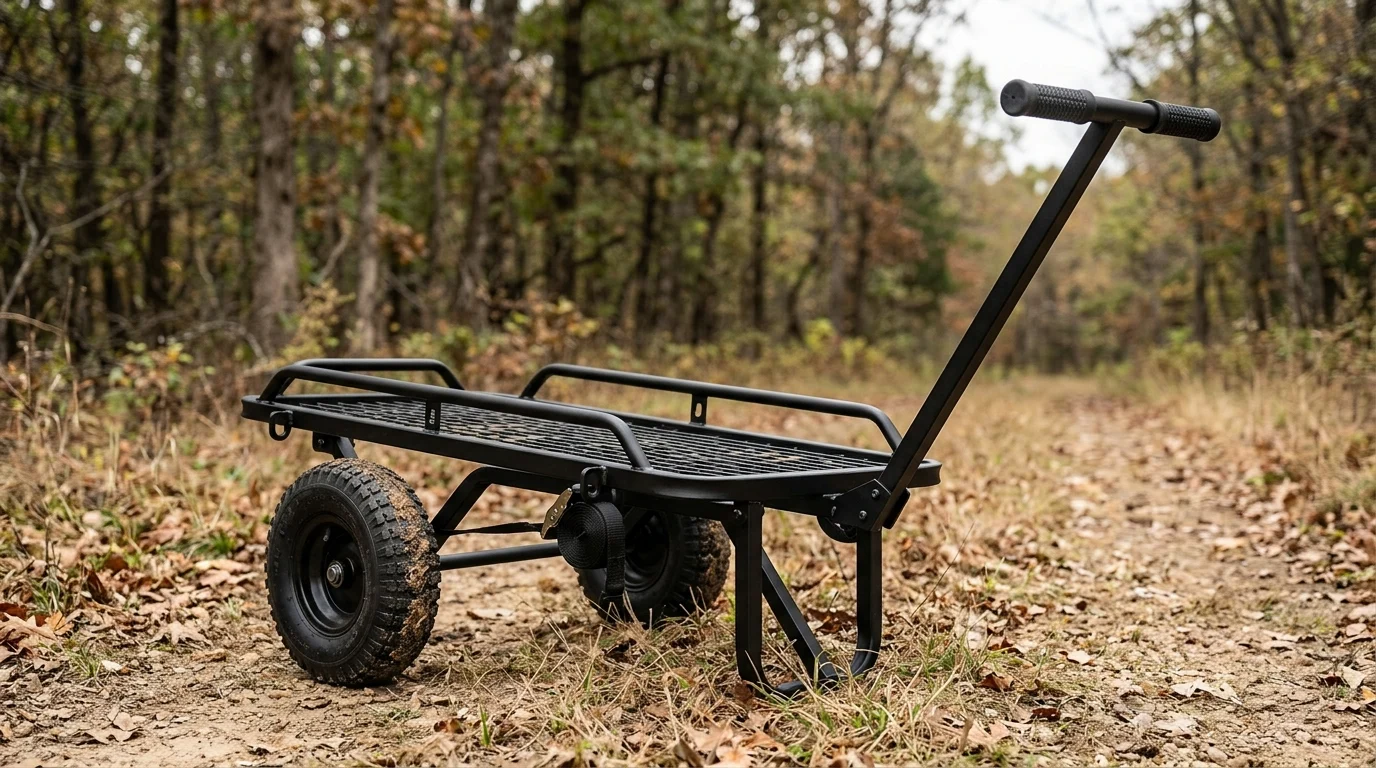
Key Features B2B Buyers Need in Deer Folding Game Carriers
When discussing inventory with retail buyers or outfitters about stocking up for hunting season, the conversation always turns to gear transport. Hauling a 200-pound buck out of the deep woods isn’t a job for the faint of heart, which is why a reliable [deer folding game carrier](https://Wild Transport Bag Manufacturer) has become an absolute staple in any serious hunter’s arsenal. From a sourcing perspective, the market for these carts is growing, but so are the expectations of the end-users.
B2B buyers can’t just throw any metal frame with wheels onto their shelves anymore. Consumers are demanding lighter, stronger, and more compact designs that can handle rough terrain without breaking down. Let’s dive into the core features to look out for to ensure you’re stocking a product that sells itself and minimizes return rates.
Common Use Cases for Retailers, Distributors, and Outfitters
When evaluating the market, it is important to recognize that different B2B buyers have vastly different needs. For a big-box retailer, the primary concern is often shelf space and retail packaging. These buyers need a cart that folds down to a compact footprint—ideally something around 40 x 20 x 5 inches—so more units can be stacked per square foot of retail space.
On the other hand, suppliers catering to professional outfitters or specialized hunting lodges are dealing with clients who drag these carts through mud, over rocks, and across creeks every single day. They care less about a pretty retail box and more about whether the cart can reliably haul heavy game week in and week out without the axle bending. Understanding whether the end-user is a weekend warrior or a professional guide will dictate whether the focus should be on a lightweight, budget-friendly model or a premium, heavy-duty workhorse.
Buyer Requirements to Define Before Comparing Products
Before asking for quotes or comparing factory catalogs, specific buyer requirements must be nailed down. It is highly recommended to establish a baseline for load capacity, target unit cost, and Minimum Order Quantities (MOQs). For example, a standard entry-level cart usually supports around 300 pounds. MOQs will vary widely by factory and region; an illustrative baseline might be 500 units for entry-level models. Conversely, premium heavy-duty models often carry higher minimum order requirements due to the lower production volume, though some suppliers may negotiate unit counts based on total order value.
Logistics should also be considered early on. Are you looking for a fully assembled unit, or one that requires some assembly by the consumer to save on shipping volume? Working with an [overseas hunting gear supplier](https://Wild Transport Bag Manufacturer) can provide a lot of flexibility here, but it is crucial to know your non-negotiables before negotiations begin.
Performance Specs That Matter Most
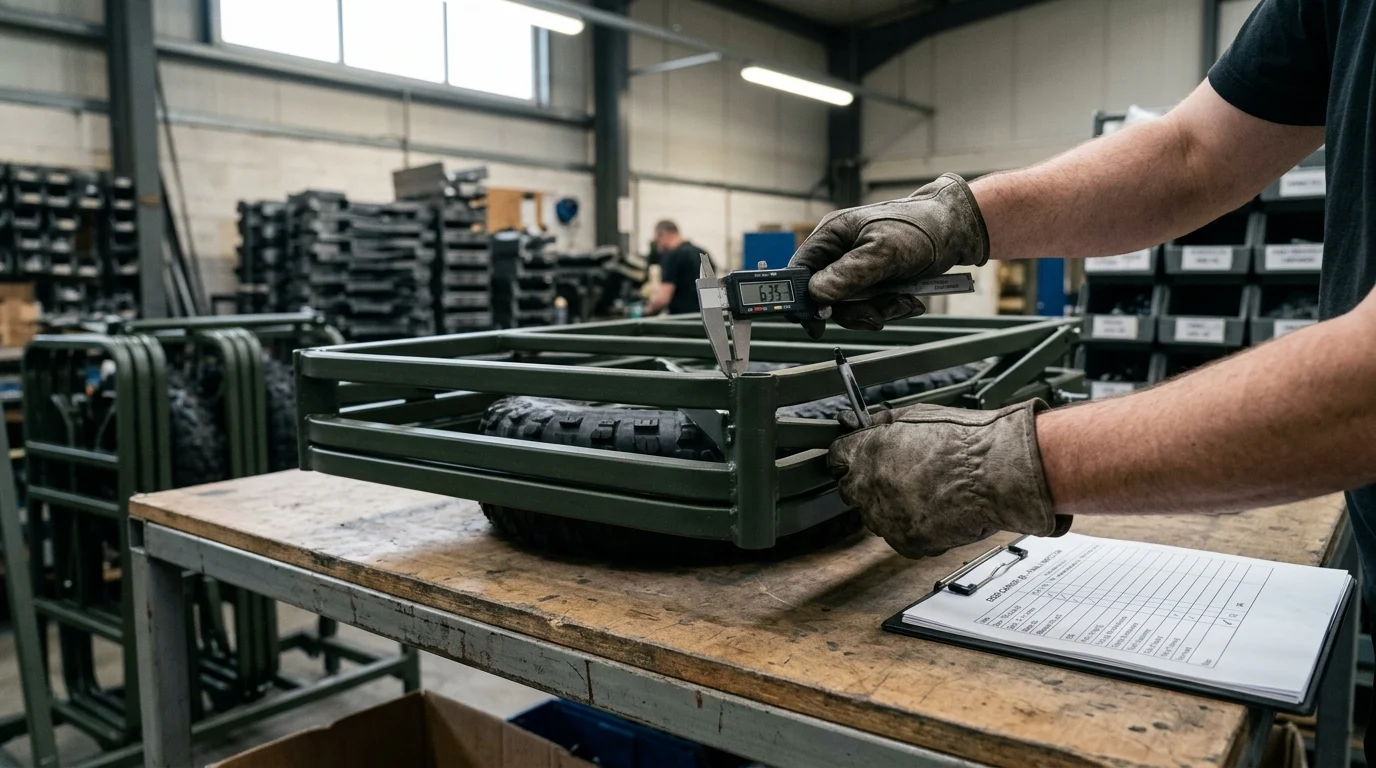
Once baseline requirements are set, it’s time to get into the nitty-gritty of performance specs. These details are critical. A game cart might look great on a spec sheet, but if it fails in the field, the brand takes the hit.
The performance of these carriers comes down to how well they handle weight, how easily they stow away, and how comfortable they are for the hunter to pull over miles of uneven ground. Let’s break down the specs that separate the top-tier carriers from the bargain-bin specials.
Load Capacity, Frame Strength, and Wheel Performance
The holy trinity of a game carrier’s performance is load capacity, frame strength, and wheel design. While standard carriers often claim a 300-pound capacity, a minimum of 500 pounds is generally preferred for heavy-duty applications to avoid bent axles under dynamic loads. To support this, the axle itself should be made of solid steel, typically at least 3/4-inch in diameter.
Then there are the wheels. Buyers generally have three choices: solid polyurethane, pneumatic (air-filled), or flat-free rubber. Pneumatic wheels (usually 16 to 20 inches) offer the best shock absorption over rocks, but they run the risk of punctures. However, buyers can often negotiate factory-installed tire sealants or heavy-duty liners as a middle-ground option to mitigate this risk. Flat-free solid rubber wheels are slightly heavier but completely eliminate the risk of a flat tire in the middle of nowhere, which is a massive selling point for consumers.
Folding Design, Storage Size, and Transport Convenience
Nobody wants a game cart taking up the entire bed of their truck. The folding design is a critical spec for transport convenience. Top-performing carriers typically utilize a tool-less, quick-release pin system. Hunters are often wearing thick gloves, so tiny spring-loaded buttons won’t cut it. Large, heavy-duty wire lock pins that can be pulled easily are ideal.
When folded, the wheels should either tuck neatly inside the frame or be easily removable. A well-designed carrier should fold down to a thickness of no more than 6 to 8 inches, making it easy for the end-user to slide under a truck tonneau cover or strap to an ATV rack.
Comfort and Safety Features That Reduce Complaints
Comfort is often overlooked because hauling a deer is hard work no matter what. However, comfort and safety features drastically reduce post-purchase complaints. The handle is a major touchpoint. Bare metal handles get freezing cold and are brutal on the hands, so it is best to specify carriers with high-density EVA foam or thick neoprene grips. Furthermore, buyers should evaluate handle height adjustability and terrain-specific ergonomics. A cart with an adjustable handle accommodates users of different body sizes and allows for better leverage when pulling uphill or over uneven ground.
Safety-wise, anti-pinch hinges are a must. On cheaper carts, the folding joint can act like a pair of bolt cutters if the user isn’t careful. Ensuring the factory incorporates safety stops or guarded hinges will save customers from nasty injuries.
| Wheel Type | Shock Absorption | Puncture Risk | Typical Size | Best Use Case |
|---|---|---|---|---|
| Pneumatic (Air) | Excellent | High (unless fitted with sealants/liners) | 16″ – 20″ | Soft, muddy terrain where bounce matters. |
| Solid Polyurethane | Poor | None | 14″ – 16″ | Budget models, smooth dirt paths. |
| Flat-Free Rubber | Good | None | 16″ – 20″ | Rocky, thorny brush (Premium choice). |
Materials, Construction, and Product Design
Moving past the spec sheet, the actual materials and construction techniques used by the factory will dictate the lifespan of the product. Thorough evaluations should focus on the welds, the coatings, and the quality of the hardware.
The woods are an unforgiving environment—rain, snow, mud, and blood will quickly destroy a poorly built carrier. Here is what you need to know about specifying the right materials for a product line.
Frame Materials, Coatings, Fabrics, and Hardware
The frame material is only as good as its coating. If steel is chosen, a high-quality powder coat is non-negotiable to prevent rust. As a sample buyer requirement, it is common to ask factories for a standard ASTM or ISO salt spray test report (such as an illustrative 48-hour baseline) on their powder coating. For the hardware—like the locking pins, bolts, and axle nuts—specify zinc-plated or stainless steel.
Standard steel hardware will rust after one season in the damp woods. If the carrier design includes any fabric elements, perhaps integrated with a [fabric game bag](https://Wild Transport Bag Manufacturer), buyers should insist on at least 600D (denier) polyester or nylon with a PVC or PU water-resistant backing to ensure it won’t rip when snagged on a branch.
Steel vs. Aluminum Deer Carriers
The classic debate in this category is steel versus aluminum. Steel is the traditional choice; it’s incredibly strong, easy to weld, and highly cost-effective. A standard steel carrier might weigh around 35 to 40 pounds and handle a 500-pound load with ease. However, it’s heavy and prone to rust if the coating gets scratched.
Aluminum, on the other hand, is positioned as a lightweight niche tier rather than a direct heavy-duty upgrade. A premium aluminum frame—using illustrative benchmarks like 6061-grade alloy—can drop the cart’s weight down to 20 or 25 pounds while still supporting a respectable 350 to 400 pounds. It naturally resists rust, which is a huge plus for hunters in wet climates. The trade-off? Aluminum carriers can typically cost 30% to 50% more to manufacture, depending on the region, but they appeal strongly to hunters who prioritize mobility and ease of lifting over maximum payload capacity.
| Material | Avg. Cart Weight | Max Load Capacity | Rust Resistance | Mfg. Cost Tier |
|---|---|---|---|---|
| Powder-Coated Steel | 35 – 45 lbs | 500 – 750 lbs | Moderate (chips can rust) | Low / Budget |
| 6061 Aluminum | 20 – 28 lbs | 350 – 400 lbs | Excellent | High / Premium |
Accessories, Modular Parts, and Packaging Options
To really stand out in a crowded market, accessories and modularity should be considered. Carriers that offer optional ATV tow-bar attachments stand out, allowing a hunter to pull the cart behind a four-wheeler. Other great add-ons include heavy-duty lashing straps (look for 1.5-inch wide nylon webbing with metal cam buckles, not cheap plastic clips) and reflective safety tape for low-light visibility.
From a packaging standpoint, B2B buyers should consider their retail presentation options, such as custom-printed boxes or point-of-purchase display features. However, the physical durability of these boxes is a logistical necessity that must be addressed during compliance and shipping checks to ensure the product survives transit.
Sourcing, Compliance, and Logistics Checks
Navigating the business end of things—sourcing, compliance, and getting bulky items across the ocean—requires a sharp eye and proactive communication with suppliers. A great design means little if the factory can’t deliver on time or if shipping costs consume the entire margin.
Factory Capabilities, OEM Options, and Testing Reports
When vetting a factory, it is important to look beyond glossy catalog photos and verify actual capabilities. Do they have in-house tube bending and welding? Do they outsource the powder coating? Factories that handle welding and coating in-house often maintain better quality control.
Ask for their OEM options—can they easily stamp a logo into the metal gussets or custom-mold the handle grips? Furthermore, demand testing reports. While factory capabilities and regional standards vary significantly, an illustrative benchmark for load testing is applying 1.5 times the rated capacity (e.g., 750 lbs for a 500 lb rated cart) for 24 hours to check for frame deformation.
Labeling, Packaging, and Safety Requirements
Compliance might seem straightforward for a non-motorized cart, but it shouldn’t be ignored. Labeling is crucial. Every cart should have clear, permanent warning labels detailing the maximum weight limit and pinch-point warnings. If selling into certain US states like California, rubber handles and tires must comply with Prop 65 regulations regarding phthalates and lead.
For packaging, B2B buyers should request reinforced 5-ply corrugated cardboard cartons. These carts are heavy, and if the factory uses thin 3-ply boxes, the axles will punch right through the cardboard during transit, leaving damaged goods before they even hit the warehouse. While ISTA 1A is a basic starting point for standard parcels, heavy and rigid game carriers with axle puncture risks often require more rigorous protocols such as ISTA 3B or ASTM D4169. This helps guarantee that the packaging can survive the brutal journey from an overseas factory to a fulfillment center or retail floor.
Carton Size, Folding Dimensions, MOQ, and Shipping Costs
Logistics will make or break margins on game carts because they are notoriously bulky. This is where the previously mentioned folded dimensions become critical for shipping efficiency. A standard 40-foot High Cube (40HQ) container holds about 68 cubic meters (CBM) of usable space.
If a factory’s carton size is 42″ x 22″ x 7″ (approx 0.10 CBM), roughly 600 to 650 units fit in a container. Working with engineers to shave just one inch off the folded thickness can squeeze in an extra 100 units, drastically lowering the per-unit freight cost. Standard MOQs for these items usually sit around a 20-foot container load (about 250-300 units), so partnering with a [specialized manufacturer](https://Wild Transport Bag Manufacturer) who understands container optimization is highly beneficial.
Final Buying Decision Framework
Having covered the specs, materials, and logistics, how is the final buying decision made? Sourcing a new product line involves some risk, but having a strict evaluation framework takes most of the guesswork out of the process.
Here is how to wrap up the sourcing journey and confidently pull the trigger on a purchase order.
Sample Review and Supplier Evaluation Steps
Never place a bulk order without putting a physical sample through rigorous testing. A standard practice is to order at least two samples from the top short-listed suppliers. These should be tested outside, loaded with 300 to 400 pounds of sandbags, and dragged over curbs, through mud, and up hills.
This helps verify if the wheels wobble, if the frame flexes uncomfortably, and if the locking pins hold tight under lateral stress. The supplier should also be evaluated during this phase. Did they ship the sample on time? Was their communication clear? If a supplier is difficult to work with during the sample phase, they will likely be challenging during mass production.
Red Flags When Choosing a Deer Folding Game Carrier
During the sample review and supplier communications, keep an eye out for major red flags. While standards vary, a common benchmark is steel wall thickness; if it falls under 1.2mm on a heavy-duty model, it may buckle under a heavy load. Another red flag is poor weld quality—look for ‘porosity’ (tiny holes in the weld) or welds that don’t fully wrap around the joint.
Also, be wary of suppliers who hesitate to share their packaging specs or refuse to guarantee a maximum defect rate (which should ideally be targeted at an acceptable range like 1.5% to 2%). If a factory claims they make a [premium game carrier](https://Wild Transport Bag Manufacturer) but their sample arrives with chipped paint and a wobbly axle, believe what you see, not what they say.
Balancing Price, Durability, Warranty, and Support
Ultimately, the final decision is a balancing act between price, durability, and supplier support. A factory might offer a cart for $5 less per unit, but if they only offer a 90-day warranty and use cheap plastic wheel bearings, that saving will quickly be wiped out by customer returns and bad reviews.
It is advisable to look for suppliers willing to stand behind a 1-year to 3-year warranty on the frame. Paying a slight premium for upgraded flat-free tires, thicker cardboard packaging, and a responsive sales rep is often worth the investment. In the B2B world, reliability—both of the product and the supplier—is always the best investment a buyer can make.
To synthesize this decision framework into actionable final steps: start by clearly defining your end-user’s terrain and load requirements, negotiate specific material and testing benchmarks with your supplier, and rigorously field-test samples before committing to a container load. By prioritizing these steps, buyers can secure a reliable product that drives sales, minimizes returns, and builds long-term brand trust.
Key Takeaways
- Segment buyers by use case, because weekend hunters may accept lighter budget models while outfitters need premium carriers built for repeated rough-terrain hauling.
- Use a folded footprint near 40 x 20 x 5 inches as a practical retail benchmark to improve stacking, storage, and shelf-space efficiency.
- Set a minimum load-capacity target before requesting quotes, with 300 pounds serving as a common entry-level baseline for standard deer carriers.
- Clarify MOQ expectations early, since entry-level orders may start around 500 units while premium heavy-duty models can require higher commitments.
- Compare fully assembled and consumer-assembled formats before ordering, because assembly strategy directly affects shipping volume, packaging design, and customer experience.
Frequently Asked Questions
What load capacity should B2B buyers require for deer game carriers?
A practical entry-level benchmark is around 300 pounds, while outfitters and heavy-use buyers should prioritize reinforced frames, stronger axles, and higher rated capacity to reduce failures and returns.
Why does folded size matter for retail buyers?
A compact folded footprint, such as about 40 x 20 x 5 inches, helps retailers stack more units, reduce storage pressure, and improve shelf efficiency during peak hunting season.
Should buyers choose fully assembled or partially assembled carriers?
Fully assembled units improve customer convenience, while partial assembly can reduce shipping volume and landed cost. B2B buyers should decide based on channel needs, packaging limits, and customer expectations.
What is a typical MOQ for entry-level deer folding game carriers?
An illustrative baseline is about 500 units for entry-level models, though MOQs vary by supplier, factory region, customization level, and total order value.
Which customers need heavy-duty game carriers most?
Professional outfitters, hunting lodges, and guides need heavy-duty carriers because they use them repeatedly across mud, rocks, creeks, and uneven terrain where weak axles or frames fail quickly.
Post time: Aug-24-2026