B2B Demand for Shooting Sticks
Within the outdoor sporting goods supply chain, few categories demonstrate as steady and surprising a B2B demand as shooting sticks. Gone are the days when a simple wooden staff cut from a sapling would satisfy the modern hunter. Today’s consumers demand precision, adaptability, and rugged durability, which has completely transformed how we view the versatile shooting support market.
For wholesale buyers, distributors, and retail category managers, understanding the nuances of this market is critical. You aren’t just selling a metal tube; you are selling confidence in the field. When a hunter faces a high-pressure situation and seconds to spare, the gear cannot fail. It is helpful to clarify these product categories early: “height-adjustable shooting sticks” is a broad term encompassing monopods, bipods, and tripods. Conversely, multi-leg systems—such as 4-legged (quad) and 5-legged sticks—represent a specific, specialized subset designed for dual-point stability rather than pure mobility. Let’s dig into who is actually driving the volume in this space and why the demand for highly engineered support systems is stronger than ever.
Key Buyer Segments
The primary B2B buyer segments generally fall into three distinct buckets: big-box sporting goods retailers, specialized hunting and tactical outfitters, and guided hunting lodges. Big-box retailers are moving massive volumes, often looking for reliable mid-tier products that appeal to the weekend warrior. They need SKUs that look great on the shelf, feature intuitive packaging, and offer clear, understandable features.
Specialized outfitters, on the other hand, cater to the hardcore enthusiast—the buyer who will spend thousands on a rifle and optic setup and won’t flinch at paying top dollar for a premium carbon fiber support system. Finally, guided lodges buy these in sets of 10 to 20 to rent or loan out to clients, meaning their primary concern is foolproof, low-maintenance durability. While precise figures vary, illustrative industry estimates suggest the global hunting accessories market is expanding at a roughly 5% to 6% compound annual growth rate (CAGR), and shooting supports have proven to be a major, reliable driver of that retail growth.
Common Use Cases
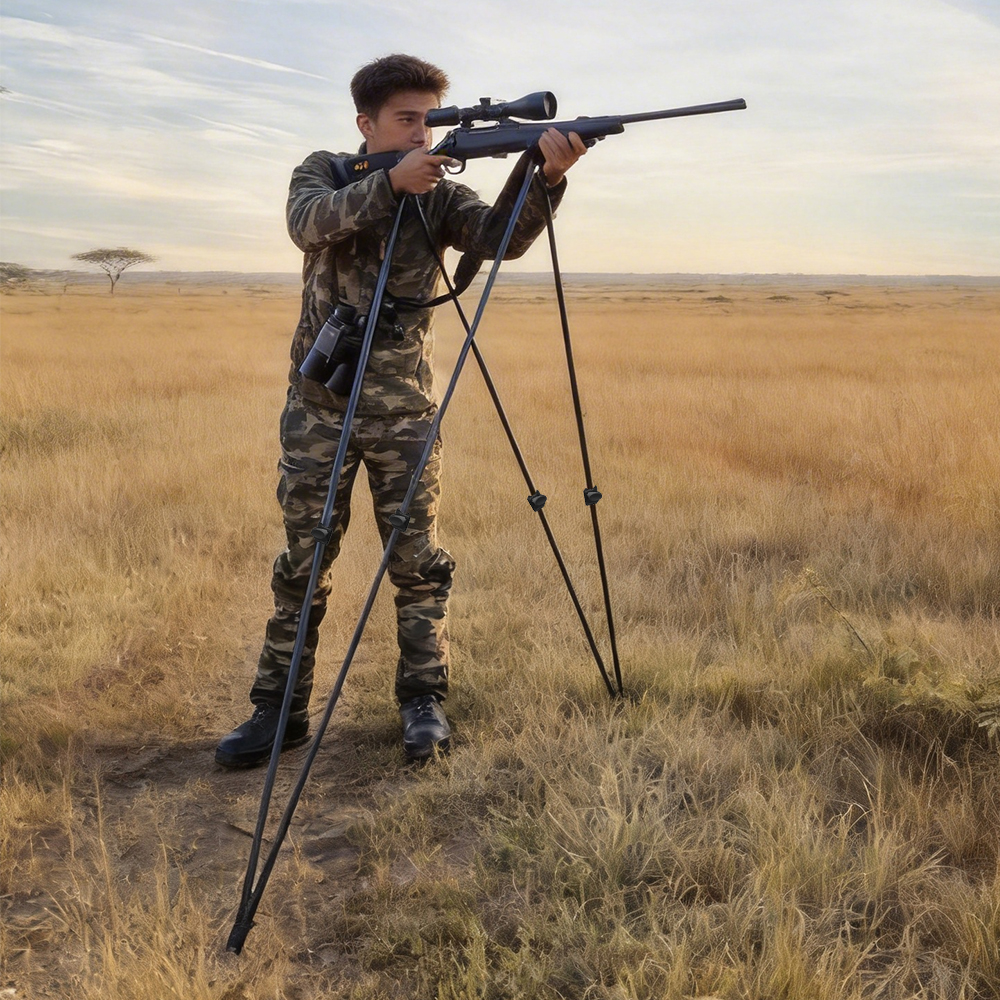
To stock the right products, you have to understand how they are being used in the field. Spot-and-stalk hunting in the American West or the African plains requires a completely different approach than sitting in a tight whitetail blind in the Midwest. When hunters are covering miles of uneven terrain, they use these sticks not just as a rifle rest, but essentially as a trekking pole. This dual-use case is why portability and closed-length dimensions are so heavily scrutinized by end-users.
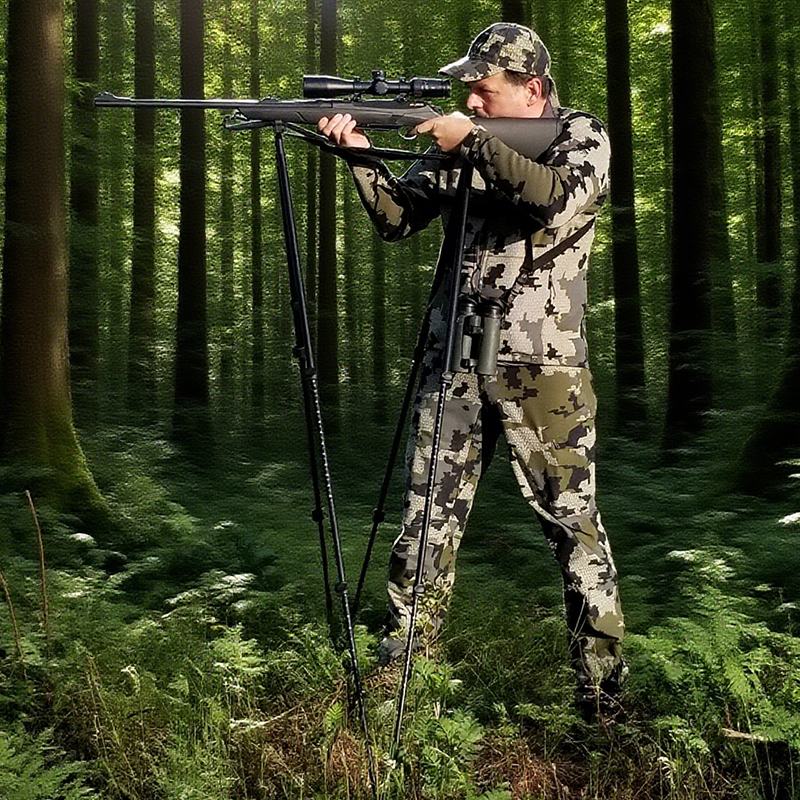
Conversely, when setting up in a blind or a static ambush position, the priority shifts heavily toward absolute stability and the ability to hold a heavy rifle on target for extended periods without muscle fatigue. Buyers should look closely at their regional sales data. If end-users are mostly hunting wide-open spaces where shots frequently exceed 200 yards, the demand for highly stable, multi-leg platforms will naturally outpace simple, single-leg monopods.
Market Drivers
What is driving the shift toward more complex, adjustable models? For one, the demographic of the average hunter is aging. Older hunters physically require more support, both for navigating rough terrain and for stabilizing a heavy firearm. Second, the rise of precision long-range shooting has bled heavily over into the hunting sector. Hunters are taking longer, more calculated shots, and making a 400-yard ethical shot off-hand is incredibly difficult.
Illustrative industry surveys indicate that a significant portion of modern hunters—sometimes estimated at up to 60%, depending on the region—now prefer support systems that can adjust dynamically between 30 and 65 inches (approx. 76 to 165 cm), allowing them to transition instantly from a sitting or kneeling position to a standing position. This expectation of instant, fluid adaptability is exactly why stagnant, fixed-height models are collecting dust on warehouse shelves, while dynamic systems are flying out the door.
Product Specs That Matter
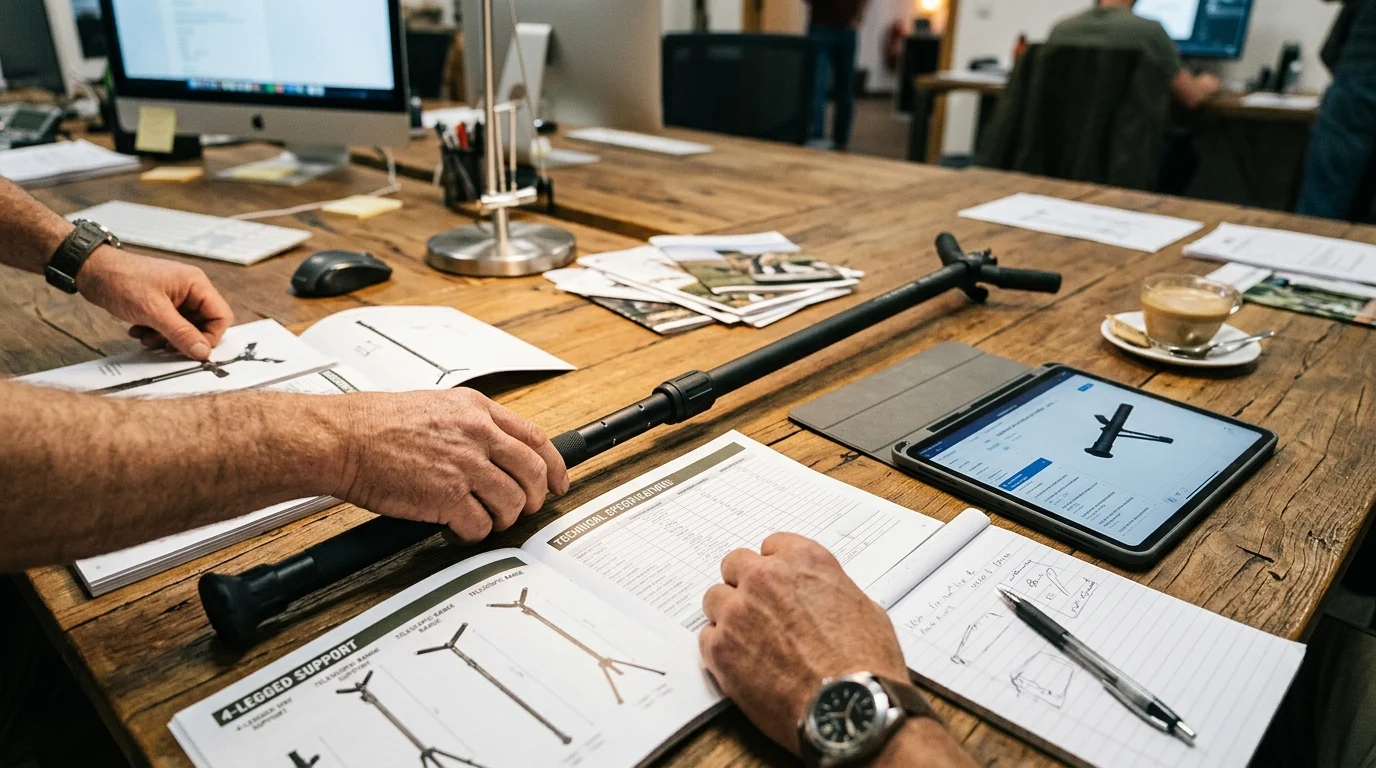
When sitting down with manufacturers to spec out a new line of shooting sticks, the conversation gets technical very fast. You cannot just slap a piece of foam on an aluminum tube, put it in a box, and call it a day. B2B buyers need to scrutinize the engineering, the raw materials, and the micro-components, because these are exactly what the end-user will complain about if they fail in the field. Let’s break down the specifications that actually move the needle on quality, reliability, and price.
Height Adjustment and Stability
Height adjustment mechanisms are the beating heart of these products. A good height-adjustable shooting stick—whether a standard tripod or an advanced 5-legged model—needs to deploy silently and lock solidly without requiring excessive hand strength. While the broader market favors a 76 to 165 cm range, one of the most popular configurations for taller, multi-leg models features a shortened length of around 109 cm (43 inches) for easy packing, extending to a max length of 175 cm (69 inches) for comfortable standing shots.
Materials and Locking Systems
The locking mechanism itself—whether it is a trigger-pull friction lock, a twist-lock, or a cam fliplock—dictates the user experience. Trigger systems are incredibly popular because they allow for one-handed, instantaneous height changes when an animal steps into view. However, buyers must note environmental limits: they are mechanically complex and prone to freezing in sub-zero temperatures if moisture gets inside the housing, though their speed often outweighs this risk for many users. Twist-locks, typically found on premium tripod models, are slower to deploy but offer superior load-bearing strength; they are virtually weatherproof, though they can occasionally jam if exposed to fine grit or sand. A procurement spec sheet needs to clearly define the operating environment of these locking mechanisms to match the target market’s climate.
Beyond the mechanical locks, construction materials dictate both the FOB cost and the retail price point. The industry standard is aircraft-grade aluminum, typically 6061 or 7075 alloys. While 7075 aluminum is actually slightly denser than 6061, its significantly higher tensile strength allows manufacturers to use thinner tube walls, thereby reducing overall weight without sacrificing rigidity. Aluminum is durable, relatively inexpensive, and tends to bend before it snaps, which is an excellent safety feature. However, the premium market has shifted heavily toward composite materials.
A high-end carbon fiber hunting stick can shave roughly 30% off the total weight compared to its aluminum counterpart. For example, a standard aluminum quad-stick might weigh 1.2 kg, while a carbon fiber version drops that to a highly manageable 800 g. That 400 g difference is massive to a hunter carrying gear up a mountain at 10,000 feet of elevation. Buyers should note practical caveats, however: while carbon fiber is ultra-light and stiff, its premium pricing can price out casual-hunter segments, and the material can shatter under a sharp side-impact or heavy crush load.
| Material Type | Typical Weight (Quad Stick) | Relative Cost | Durability Characteristic |
|---|---|---|---|
| 6061 Aluminum | 1.2 kg | Low/Medium | High impact resistance, bends under extreme stress |
| 7075 Aluminum | 1.1 kg (due to thinner walls) | Medium | Higher tensile strength, rigid |
| Carbon Fiber (8-layer) | 0.8 kg | High | Ultra-light, stiff, but can shatter under sharp side-impact |
Grips, Yokes, and Leg Tips
The contact points—where the stick meets the ground and where it meets the rifle—are where cheap models reveal their flaws. Grips need to be made of high-density EVA foam or textured TPR rubber that will not degrade under UV exposure or get slick when covered in rain or sweat.
The yoke (the V-shaped rifle rest) is arguably the most critical component. It must rotate a full 360 degrees silently and accommodate various rifle shapes, from traditional hunting stocks to wider tactical forends. Checking the load rating on the yoke is essential; a quality spec should support at least 50 lbs of downward force without the rotation bearing binding up or snapping. Finally, leg tips require versatility. A bare metal spike is great for ice but terrible for hard rock. The standard spec should be a tungsten carbide tip covered by a threaded or push-on rubber boot, giving the user reliable traction across any terrain.
Height Adjustable vs 4-Legged Shooting Sticks
A major debate in the industry right now is between traditional single-point adjustable supports (like bipods and tripods) and the increasingly popular multi-leg quad and 5-legged systems. From a purchasing perspective, deciding how much capital to allocate to each style can make or break a season’s margins. Analyzing the pros and cons of both reveals a fundamental trade-off: speed versus absolute stability.
Portability and Setup Speed
Traditional adjustable bipods and tripods win the portability and setup speed game hands down. A trigger-operated tripod can typically be deployed from a walking stick configuration to a stable shooting rest in roughly 1 to 3 seconds. That speed is vital in environments like dense timber where game appears suddenly and disappears just as fast. They are also generally lighter and less bulky to strap to the side of a hunting backpack.
On the flip side, a multi-leg system like a 4-legged shooting stick or its 5-legged counterpart is inherently bulkier by design. You are essentially carrying two connected bipods. Deploying a quad stick often requires two hands and can take an estimated 8 to 12 seconds to get perfectly leveled on uneven ground, making them less than ideal for fast-paced hunting styles or highly uneven, rocky terrain. While that doesn’t sound like a long time on paper, in a high-adrenaline hunting scenario, it can feel like an eternity.
Load Capacity and Field Stability
Where the 4-legged models claw back their advantage is in load capacity and unmatched field stability. A standard tripod supports the rifle at a single point, meaning the shooter still has to use their body core and shoulder to stabilize the rear of the stock. A quad stick provides dual-point support—cradling both the forend and the buttstock of the rifle simultaneously.
The difference in stability is staggering. Illustrative field tests and user reports estimate that using a quad or 5-leg stick can reduce perceived reticle sway by an estimated 50% to 75% at 200 yards compared to a standard bipod, though actual results depend heavily on the shooter’s stance and environmental variables. For hunters taking shots at 300 or 400 yards, the quad stick approaches the stability of a benchrest, though performance naturally varies for moving hunters or on highly uneven ground. This dual-point support also dramatically increases the effective load capacity, easily handling heavy 12-14 lb precision hunting rifles without the legs flexing or bowing.
Best Fit by Buyer Type
So, how do you match these models to your buyer types? If retail partners cater mostly to hunters who track game through dense woods where shots are quick, reactive, and usually within 100 yards, a heavy investment in fast-deploying tripods and bipods makes the most financial sense.
However, if supplying outfitters in the West or retailers in regions known for long-range varmint and predator hunting, the 4-legged models command a premium price and high demand. Buyers in these regions will gladly trade setup speed for the guarantee of a rock-solid rest.
| Feature | Height Adjustable Tripod | 4-Legged (Quad) Stick |
|---|---|---|
| Setup Speed | Fast (~1-3 seconds) | Slower (~8-12 seconds) |
| Stability Rating | Good (Single point support) | Excellent (Dual point support) |
| Ideal Environment | Dense woods, fast-moving game | Open plains, long-range precision |
| Retail Price Bracket | $50 – $150 | $100 – $250+ |
Sourcing, Quality, and Compliance
Sourcing sporting goods from overseas is fraught with hidden risks. Procurement teams cannot simply browse a B2B portal, pick the best-looking hunting shooting stick, and wire a 30% deposit hoping for the best. Entire containers of product have been rejected by major retailers because of poor quality control or compliance failures. Building a robust sourcing and QA framework is non-negotiable to protect margins and brand reputation.
Factory Evaluation
Factory evaluation is step one. Volume orders should never be placed without thoroughly verifying the manufacturer’s credentials. At a bare minimum, look for ISO 9001 certification to ensure they have a formalized, auditable quality management system in place. But evaluations must go deeper than just the paperwork.
It is critical to ask specific questions about their CNC machining capabilities. For the internal locking mechanisms to function smoothly without jamming, the factory needs to hold machining tolerances of at least +/- 0.05mm. If a factory outsources their aluminum extrusion or carbon fiber wrapping to third-party sub-suppliers, that introduces a variable they cannot directly control. A vertically integrated supplier who handles tube cutting, anodizing, and final assembly under one roof is vastly preferred.
Sample Testing and Inspection
Once the factory is vetted, sample testing must be ruthless. Accepting a “golden sample” sent via air freight at face value is a common pitfall. When inspecting a live production run, strict AQL (Acceptable Quality Limit) standards should be implemented, usually targeting AQL 1.5 for major defects and 4.0 for minor ones.
The physical testing protocols should mimic years of field abuse. Require 2-meter drop tests onto concrete to ensure the plastic trigger housings don’t shatter in freezing conditions. Mandate static load tests, applying 30 kg of weight directly onto the yoke to check for leg slippage or lock failure. For any metal components, especially internal springs and screws, a 48-hour salt spray test is mandatory to guarantee rust resistance in wet, miserable hunting conditions.
Labeling, Safety, and Packaging
Finally, compliance isn’t just about the physical product; it is heavily reliant on packaging and labeling. In the US and EU markets, adherence to compliance regimes like the EU General Product Safety Regulation (GPSR), general US Consumer Product Safety Commission (CPSC) requirements, relevant ASTM standards, and California Proposition 65 is a critical liability shield. Because product liability standards vary significantly by destination market, if a shooting stick has a trigger mechanism, folding legs, or scissor-action parts, it must feature clear warnings about pinch points.
Packaging must be robust enough to survive the modern, brutal e-commerce supply chain. ISTA 1A standard box drop testing should be a baseline requirement for all master cartons. Whether opting for clamshell blister packs for pegboard retail display or high-denier nylon carry bags for direct-to-consumer shipping, the packaging must protect the carbon fiber or anodized aluminum from scuffs during ocean transit. A scratched product is a returned product, and returns kill B2B profitability.
Buying Strategy and Product Mix
At the end of the day, B2B purchasing is a numbers game. You can have the best-engineered product in the world, but if the logistics, MOQs, and pricing don’t align with cash flow and retail partnerships, profitability suffers. Purchasing strategies need to be just as dialed in as the gear being sold.
MOQ, Lead Time, and Freight
Navigating MOQs (Minimum Order Quantities) and lead times requires careful, seasonal planning. Most reputable factories will demand an MOQ of 500 to 1,000 units per SKU, especially if requesting custom anodized colors or proprietary camouflage patterns printed on the legs. Lead times typically run 35 to 45 days for production, but ocean freight adds another 30 to 40 days to the timeline.
When calculating freight costs, looking closely at the packed dimensions is key. A compact hunting stick that collapses down efficiently to 109 cm is much easier to optimize in a 40HQ container than a longer, fixed-length model. Maximizing container space directly lowers the landed cost per unit, providing more pricing flexibility when negotiating with major retail buyers.
Pricing and Margin Planning
Margin planning is where the real money is made in this category. The hunting accessories market allows for very healthy markups if the perceived value is high. For instance, a well-built aluminum trigger-stick might cost $18 to $22 FOB. Once landed, duty-paid, and packaged, the true cost is roughly $26 to $28.
That item can comfortably retail for $69 to $89, giving distributors and retail partners plenty of room to hit a desired 60-70% gross margin. Carbon fiber models require a higher upfront investment—often $35 to $50 FOB—but they cater to a premium demographic entirely willing to spend $149 to $199+. The key to unlocking those margins is ensuring the packaging, branding, and listed specs justify that premium price tag.
When to Stock One or Both Models
The ultimate question for category managers is often: should inventory focus on fast-deploying tripods, ultra-stable 4-legged sticks, or both? Rather than relying on a generic 80/20 or 70/30 split, buyers should utilize a data-driven framework based on regional sales data, seasonality, and retailer type to determine the right mix.
For example, dedicating a larger portion of an open-to-buy budget to standard height-adjustable tripods and bipods makes sense for retailers in regions with dense forestry, as they are undeniable volume drivers appealing to the widest base of mobile hunters. Conversely, allocating a heavier mix to premium multi-leg models captures a different segment in western or open-plains markets. These will move slightly slower, but they generate significantly higher dollar margins per unit and elevate a brand’s reputation among hardcore precision hunters.
In summary, a well-researched procurement strategy requires balancing fast-deploying tripods for the casual, mobile hunter with ultra-stable 4-legged systems for the precision enthusiast. By carefully vetting factory capabilities, understanding material trade-offs, and aligning product specs with regional hunting styles, B2B buyers can secure reliable margins and build lasting trust with their retail partners.
Key Takeaways
- Segment shooting stick inventory by buyer type, because big-box retailers, specialty outfitters, and guided lodges each value different combinations of price, durability, packaging, and premium construction.
- Stock height-adjustable models as core SKUs because they serve standing, kneeling, and seated shooting positions across a wider range of hunting scenarios.
- Prioritize 4-legged and other multi-leg systems for customers hunting open country or static ambush positions where long-range stability is more important than maximum mobility.
- Use closed length and carry weight as key selection criteria, especially for spot-and-stalk hunters who may carry shooting sticks for miles over uneven terrain.
- Treat carbon fiber and rugged multi-leg designs as premium assortment opportunities for buyers who want lightweight support, reduced fatigue, and confidence with heavier rifle setups.
Frequently Asked Questions
Why are height-adjustable shooting sticks popular with B2B buyers?
They cover multiple hunting positions, from standing to kneeling or seated shots, making them easier for retailers and outfitters to sell across varied customer needs.
What makes 4-legged shooting sticks different from monopods or bipods?
Four-legged models offer greater stability and dual-point support, which helps hunters hold heavier rifles steadier for longer periods, especially in static or long-range setups.
Which buyers typically purchase shooting sticks in bulk?
Big-box sporting goods retailers, specialty hunting outfitters, and guided hunting lodges are the main B2B segments, each prioritizing different mixes of price, durability, portability, and premium materials.
When should distributors prioritize multi-leg shooting stick models?
Prioritize multi-leg models in regions where customers hunt open terrain, take longer shots, or need maximum stability from blinds, plains, hillsides, or guided safari-style setups.
Why does closed length matter for hunting shooting sticks?
Closed length affects portability. Hunters covering long distances often use shooting sticks like trekking poles, so compact, lightweight models are easier to carry and more attractive at retail.
Post time: Jul-07-2026